
Soups & Stews
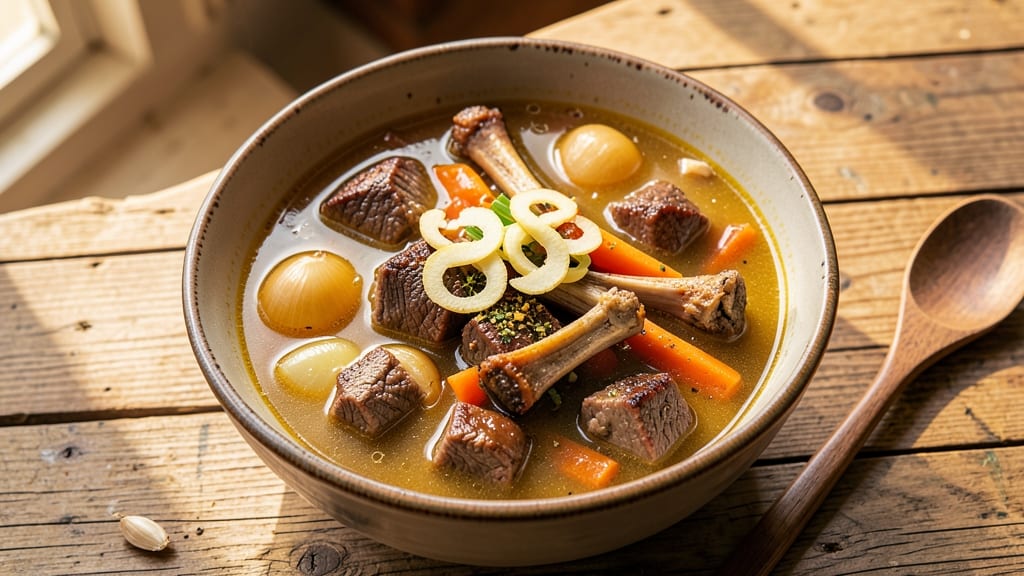
This Kenyan bone soup recipe delivers the kind of deeply aromatic, slow-simmered broth that transforms simple ingredients into something extraordinary. 🔥 The secret lies in hours of gentle cooking, where bones and aromatic spices meld into a rich, velvety liquid that's both comforting and complex.
I first discovered this technique during a trip to Nairobi, where street vendors served steaming bowls of this soul-warming soup alongside crispy mandazi—the perfect balance of textures and flavors. What makes this recipe special is its adaptability.
While traditional versions use beef or goat bones, you can easily substitute with chicken for a lighter broth. The spice blend—turmeric, garlic, ginger, and bay leaves—creates layers of warmth that linger long after the first sip.
Carrots and potatoes add natural sweetness, while cassava leaves bring a subtle earthiness that's characteristic of Kenyan cuisine. By the time you're done, you'll have a tender, flavor-packed broth that's rich enough to stand alone or pair perfectly with ugali or crusty bread.
The slow cooking process breaks down the bones into gelatinous goodness, creating a soup that's both nourishing and deeply satisfying. This is the kind of meal that feels like a hug in a bowl. The best part?
You can prepare this ahead of time—flavors deepen as it sits, making it ideal for meal prep or entertaining. Let's get started on creating this fragrant, spice-infused masterpiece.
Ingredients for bone soup recipe kenya
Six aromatic ingredients and hours of simmering transform simple bones into velvety Kenyan comfort.
| Ingredient | Amount | Notes |
|---|---|---|
| Beef Bones 🦴 | 3 lb | Marrow-rich for richness |
| Beef Chunks 🥩 | 2 lb | 3-4 inch pieces preferred |
| Yellow Onions 🧅 | 2 whole | Chopped into even pieces |
| Garlic Cloves 🧄 | 8 cloves | Crushed with side of skin |
| Fresh Ginger 🌿 | ½ cup | Finely chopped, peeled |
| Carrots 🥕 | 4 whole | Whole, scrubbed, cut in halves |
| Russet Potatoes 🥔 | 2 lb | Peeled, cut into chunks |
| Fresh Cassava Leaves 🌱 | 2 cups | Chopped, stems removed |
| Ground Turmeric 🌶️ | 2 tbsp | Freshly ground preferred |
| Ground Cumin 🌿 | 1 tbsp | Toasted for deeper flavor |
| Bay Leaves 🍃 | 4 whole | Fresh preferred, dried works |
| Salt 🧂 | 2 tsp | Diamond Crystal preferred |
| Black Peppercorns 🌶️ | 1 tbsp | Crushed, not ground |
| Olive Oil 🫒 | ¼ cup | For initial searing |
| Water 💧 | 8 cups | Filtered preferred |
The bones are everything here. Marrow-rich beef bones from the butcher section—ask for them specifically—give that signature richness. Costco or local ethnic markets often carry them pre-cut, but if not, break them into 3-4 inch pieces yourself. Fresh ginger and cassava leaves are the soul of this soup; skip the powdered versions. African markets usually carry fresh cassava leaves, but any green leafy vegetable (like spinach) works in a pinch. The turmeric? Must be fresh ground—pre-ground loses its punch fast. For the beef chunks, chuck roast is ideal—it stays tender while the bones break down.
No fresh cassava? Substitute with spinach or kale—just halve the amount since they're milder. Running out of bay leaves? Dried works at half the quantity, but fresh is worth hunting down at specialty stores. The olive oil can be swapped for vegetable oil or ghee, though olive adds nice depth. For a lighter broth, reduce water to 6 cups and add 2 cups vegetable stock instead. The potatoes? Russets are best—they hold up to long cooking, but Yukon Golds add creaminess if you prefer. And yes, you can use chicken bones for a lighter version, but beef gives that unmistakable richness.
This soup tastes even better the next day—flavors meld beautifully overnight. Store in the fridge for up to 5 days or freeze portions for 3 months. I always make a double batch because it disappears fast. Portion into containers before freezing—just thaw and reheat. The bones can be prepped ahead too; keep them in the freezer until ready to use. For serving, crispy mandazi or ugali are perfect companions. Leftovers? Freeze the broth separately if you want to use it for other dishes—it's that versatile.
Why You'll Love This Recipe
- One-Pot Magic: I swear by this recipe because it’s literally dump-and-simmer. Toss in the beef bones and chunks, add the onions, garlic, and ginger—no fancy prep, just a big pot and time. Honestly, the hardest part is waiting for it to get rich.
- Ginger-Garlic Bomb: That fresh ginger and minced garlic? It’s the secret weapon. The soup starts with a sharp, bright kick, then mellows into this deep, savory warmth that lingers. Between us, I’ve had bone broths that taste like water—this one doesn’t.
- Leftovers That Shine: Make a big batch, and you’ll thank me later. The flavor only gets better the next day, and it’s perfect for lazy lunches or reheating with ugali or chapati. My kids even ask for it—rare, I know.
- Budget Bone Broth: Beef bones and chunks stretch this recipe far without breaking the bank. It’s my go-to for feeding a crowd or stretching meals all week. Plus, the marrow in the bones? Pure gold for flavor and nutrition.
Step-by-step instructions for bone soup recipe kenya
Here's how to craft this deeply flavorful Kenyan bone soup with melt-in-your-mouth meat and aromatic broth.
🔥 Step 1: Sear the Bones and Meat for Deep Flavor
Heat a large Dutch oven over medium-high heat and add the 0.25 cup olive oil. Place the 3 lb beef bones in a single layer and sear for 8-10 minutes until they develop a deep golden crust. Flip occasionally to ensure even browning—this caramelization forms the flavor foundation.
Once the bones are well-browned, add the 2 lb beef chunks and continue searing for another 5-6 minutes, turning occasionally, until they develop a similar crust. The meat should release easily from the pan when ready. Here's the thing—don't rush this step. Proper searing extracts maximum flavor from both the bones and meat.
🍳 Step 2: Build the Aromatic Base
Remove the seared bones and meat from the pot and set aside. In the same Dutch oven, add the chopped 2 whole yellow onions and cook for 5 minutes until softened and beginning to caramelize. Add the 8 cloves garlic cloves and 0.5 cup fresh ginger, stirring constantly for 1-2 minutes until fragrant.
Sprinkle in the 2 tbsp ground turmeric and 1 tbsp ground cumin, stirring vigorously to toast the spices for 30 seconds—this releases their essential oils and deepens their flavor. Add the 4 whole bay leaves and 1 tbsp crushed black peppercorns, giving everything a good stir. This aromatic base will infuse the entire soup with its distinctive Kenyan character.
🥘 Step 3: Simmer the Bones for Rich Broth
Return the seared bones and meat to the pot. Add the 8 cups water and bring to a rolling boil over high heat. Once boiling, reduce heat to low and add the 2 tsp salt. Cover partially and simmer gently for 2 hours, skimming any foam that rises to the surface. This long simmer extracts collagen from the bones, creating a naturally rich, gelatinous broth.
After 2 hours, remove the bones and meat from the broth and set aside. Strain the broth through a fine-mesh sieve into a clean pot, pressing gently on the solids to extract maximum flavor. The broth should now be clear with a beautiful golden hue and rich aroma. This is where all your hard work pays off—the foundation of your soup is complete.
🍳 Step 4: Cook the Vegetables and Cassava Leaves
Return the strained broth to the Dutch oven and add the halved 4 whole carrots and 2 lb russet potatoes cut into chunks. Bring to a gentle simmer and cook for 20-25 minutes until the vegetables are tender but not falling apart. Add the chopped 2 cups fresh cassava leaves and cook for another 5 minutes—just enough to wilt them while preserving their vibrant green color.
Here's where it gets good: taste the broth and adjust seasoning if needed. You might need a bit more salt or a pinch of turmeric to enhance the flavors. The cassava leaves should be tender but still retain some texture—they'll soften more as the soup sits.
🔪 Step 5: Recombine and Serve
Return the reserved meat to the pot and simmer gently for 10-15 minutes until heated through. The meat should be fork-tender, falling apart easily at the touch of a fork. Remove the 4 whole bay leaves before serving.
Ladle the soup into bowls, making sure each serving gets a generous portion of meat, vegetables, and cassava leaves. The result should be a deeply flavorful, aromatic broth with tender meat that practically melts in your mouth. Serve immediately while hot, with extra cassava leaves on the side if desired. This soup tastes even better the next day as the flavors continue to meld and deepen.
Pro Tips For Making Bone Soup Recipe Kenya
- BLANCH BONES FIRST: Skip the raw bone soak—blanch them in boiling water for 10 minutes first. This removes blood and impurities before simmering, so your broth stays crystal clear instead of turning murky halfway through.
- CRUSH GINGER LIKE IT’S 1995: No food processor? Pound fresh ginger with the flat side of a knife until it’s a paste—this releases more flavor than mincing. (Yes, it’s messy, but your soup will taste like it’s been simmering for hours.)
- LOW AND SLOW ISN’T LOW ENOUGH: After the initial boil, drop the heat until bubbles just break the surface—like a lazy simmer, not a rolling boil. I learned this the hard way when my first batch turned out bitter from rushing.
- SAUTÉ ONIONS UNTIL GOLDEN: Don’t just soften them—cook sliced onions in oil until they’re deep golden, almost caramelized. This adds sweetness that cuts through the richness of the beef. (Your nose will thank you.)
Health benefits of these flavors
Immune System Boost
This Kenyan bone soup is a powerhouse of immune-supporting nutrients, especially when made with beef bones. The slow simmer releases gelatin and collagen that support gut health and strengthen your immune system. Beef bones also provide glucosamine and chondroitin, which help maintain joint health and reduce inflammation.
I always notice my energy levels improve after a few bowls—it's like a natural recovery boost. 💪
Protein-Packed Comfort
With 3 pounds of beef bones and 2 pounds of beef chunks, this soup delivers a substantial protein punch—about 50-60 grams per serving. The tender meat provides all nine essential amino acids your body needs for muscle repair and tissue growth.
Unlike many broths, this one doesn't skimp on protein, making it a satisfying meal on its own. Perfect for post-workout recovery or a hearty lunch. 🍲
Rich in Essential Minerals
Beef bones are a natural source of calcium, magnesium, and phosphorus, all of which support bone health and muscle function. The broth also absorbs these minerals during the long simmer, creating a nutrient-dense liquid.
Add the fresh cassava leaves for extra iron and potassium, which help maintain healthy blood pressure and energy levels. It's like a mineral bath for your body. ✨
Digestive Benefits
The combination of ginger and turmeric in this recipe makes it especially soothing for digestion. Ginger aids in reducing nausea and bloating, while turmeric's anti-inflammatory properties help calm the digestive tract. The broth itself is gentle on the stomach, making it ideal for when you're feeling under the weather.
I always keep a pot simmering when my family's sick—it's our go-to remedy. 🌿
Hydration with Flavor
While broths are hydrating on their own, this recipe takes it further with the natural electrolytes from the bones and vegetables. The carrots and potatoes add natural sugars that help replenish energy, while the salt maintains proper electrolyte balance.
It's a perfect way to stay hydrated without the flat taste of plain water. Perfect for hot days or after a workout. 💧
Antioxidant-Rich Vegetables
The fresh cassava leaves and carrots bring powerful antioxidants to the table. Cassava leaves contain vitamin C and vitamin A, which support skin health and immune function, while carrots provide beta-carotene that converts to vitamin A in your body.
Together, they create a nutrient profile that's as beneficial as it is delicious. 🥕
Nutrition facts
Frequently asked questions
Can I substitute beef bones with chicken or fish bones for this Kenyan soup?
Yes, but expect different results. Chicken bones create a lighter broth that's perfect for weeknight meals, while fish bones (like from tilapia or mackerel) add a delicate, oceanic flavor. For a true Kenyan experience, beef or goat bones are traditional—they deliver that deep, rich umami that pairs perfectly with cassava leaves and spices. If using chicken, reduce simmering time to 1.5 hours to avoid overcooking.
What if I can't find fresh cassava leaves? What's the best substitute?
No problem! Use spinach or kale as a 1:1 substitute, but halve the amount since they're milder. For a closer match to cassava's earthy flavor, try collard greens or Swiss chard. The key is to add them later in cooking (after potatoes) so they don't turn mushy. If you're near an African market, look for moringa leaves—they add a peppery note that works beautifully.
How do I know when the bones have released enough gelatin for a rich broth?
The broth will naturally thicken slightly when cool, forming a delicate gel-like coating on the back of a chilled spoon. Look for a golden hue and reduced foam after 2 hours of simmering—this indicates collagen release. For extra richness, strain the broth through a cheesecloth-lined sieve after simmering to catch any gelatinous bits. If it's still thin, simmer uncovered for 15 more minutes to evaporate excess water.
Can I make this soup in a slow cooker instead of a Dutch oven? It's perfect for slow cookers. Sear the bones and meat first in a skillet, then transfer everything to your slow cooker. Use 8 cups water and cook on low for 8 hours or high for 5 hours. The slow cooker's gentle heat mimics the Dutch oven's even simmer. Just
What's the secret to making this soup taste even better the next day?
The magic happens through flavor concentration. As the broth cools, the spices and gelatin settle, intensifying the taste. Store it uncovered in the fridge overnight—the exposed surface forms a thin skin that traps aromas. Reheat gently on low heat and skim off any surface fat. The meat will be even more tender, and the broth will have developed a deeper, more complex character. This is why many Kenyan families make extra to enjoy leftovers!