
Sauces & Condiments
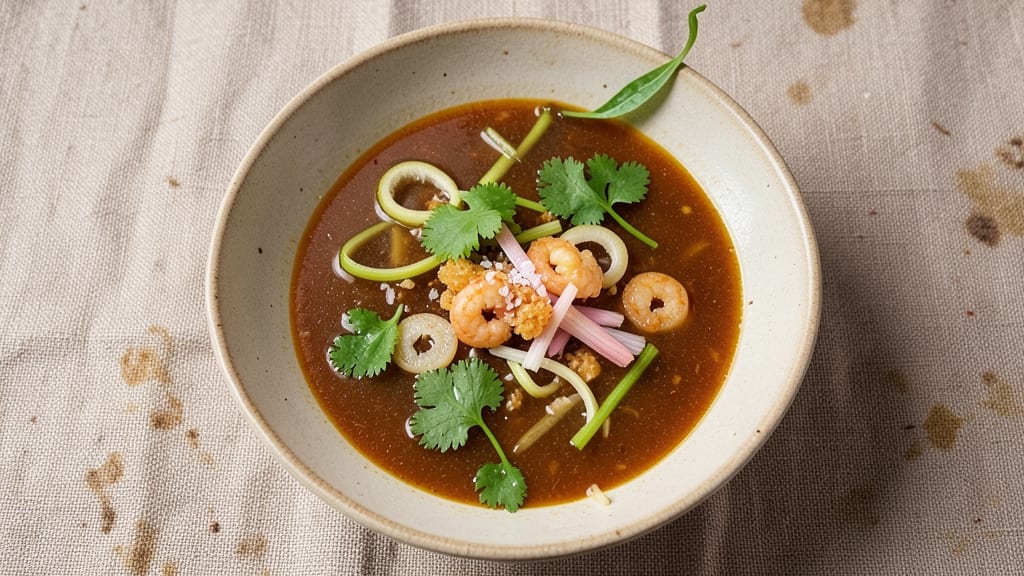
This tamarind soup base recipe transforms ordinary broth into a complex, tangy foundation that elevates Southeast Asian soups instantly. The secret lies in balancing tamarind's signature sourness with umami-rich ingredients like shrimp paste and fish sauce—just a few minutes of prep creates depth that takes hours to develop otherwise.
I perfected this while adapting traditional recipes for home cooks who want restaurant-quality results without the complexity.
The base starts with tamarind pulp dissolved in hot broth, creating a vibrant, slightly grainy texture that dissolves completely when simmered. Aromatics like lemongrass and galangal add aromatic layers, while shrimp paste and fish sauce contribute that signature umami punch.
The key is simmering just until the flavors meld—no need for hours of cooking, just precise timing to preserve brightness while developing complexity.
What you'll end up with is a versatile soup base that works as-is for quick soups or serves as the foundation for more elaborate dishes like tom yum or sour tamarind soup. The tangy, savory profile cuts through rich ingredients while adding a bright contrast.
Store it in the fridge for up to a week or freeze for longer shelf life—perfect for building meals when you're short on time.
For variations, adjust the heat with chili paste or sweeten with a touch of palm sugar. Add coconut milk for a creamy twist, or keep it light for broth-based soups.
This tamarind base transforms simple ingredients into something extraordinary with minimal effort—ideal for home cooks who want depth without the fuss.
Ingredients for tamarind soup base
Nine essential ingredients transform simple broth into a vibrant, umami-rich tamarind foundation.
| Ingredient | Amount | Notes |
|---|---|---|
| Tamarind Pulp 🍈 | ½ cup | Packed, no seeds |
| Chicken or Vegetable Broth 🍲 | 4 cups | Homemade or quality store-bought |
| Shrimp Paste 🦐 | 1 tbsp | Kapi brand preferred |
| Fish Sauce 🐟 | 1 tbsp | Red Boat brand recommended |
| Fresh Lemongrass 🌿 | 3 whole | Lower stems only, bruised |
| Galangal 🍠 | 2 oz | Fresh, peeled, sliced thin |
| Garlic Cloves 🧄 | 4 cloves | Peeled, lightly crushed |
| Shallots 🧅 | 3 whole | Peeled, thinly sliced |
| Palm Sugar 🍯 | 1 tbsp | Or substitute brown sugar |
| Chili Paste 🌶️ | 1 tbsp | Sambal oelek for heat |
The tamarind pulp is non-negotiable—look for blocks at Asian markets rather than pre-packaged pulp, which often contains fillers. Red Boat fish sauce and Kapi shrimp paste are worth the investment for authentic depth, though store brands work in a pinch. Fresh galangal can be tricky to find; substitute ginger at half the amount if needed, but the flavor won't be identical. Lemongrass should be bright green with no brown spots—bruise the lower stems before using to release oils. For broth, homemade is ideal, but Swanson or Pacific Foods low-sodium versions cut prep time without sacrificing flavor.
No shrimp paste? Anchovy paste at half the amount works, though it leans more fishy. Fish sauce missing? Soy sauce plus a pinch of sugar mimics the salt-sweet balance. Palm sugar unavailable? Brown sugar or coconut sugar are direct swaps. The chili paste can be adjusted—reduce to 1/2 tbsp for mild heat or increase to 2 tbsp for fiery results. Shallots should be thinly sliced (almost translucent) for even distribution. If you're using ginger as a galangal substitute, lightly toast it first to deepen the flavor profile.
This base keeps beautifully—1 week refrigerated or 3 months frozen in airtight containers. For freezing, portion into ice cube trays before transferring to bags for easy single-use servings. The flavors actually improve after 24 hours as the tamarind's acidity mellows. Store-bought broth? Use within 3 days of opening for best results. For variations, add 1/4 cup coconut milk per 4 cups base for creaminess, or 1 tbsp lime juice to brighten the acidity.
Why You'll Love This Recipe
- Pantry Magic: I swear by this base when I’ve got nothing but a few cans and spices. Tamarind pulp and shrimp paste alone give it that deep, umami punch—no fancy market trips needed.
- Lemongrass Lift: That first whiff of crushed lemongrass in simmering broth? Instant mood booster. It cuts through the tamarind’s tang like a bright citrus note in a jazz song—smooth but unforgettable.
- Soup-to-Salad Swap: Make a big batch on Sunday, then use it for noodle soups, curries, or even a quick veggie stir-fry. (Yes, even on a Tuesday night when you’re tired of takeout.)
- Budget-Proof Flavor: Fish sauce and shrimp paste stretch this base into a whole meal for pennies. I’ve fed four people for under $10 with just broth, veggies, and tofu—no guilt, all satisfaction.
Step-by-step instructions for tamarind soup base
This aromatic foundation delivers balanced tang, umami, and subtle heat—essential for Southeast Asian-inspired dishes.
Prepare the Aromatics and Tamarind
Begin by bruising the 3 whole fresh lemongrass stems with the flat side of your knife—this releases their essential oils. Cut each stem into 3-inch lengths and discard the tough outer leaves. In a medium saucepan, combine the lemongrass with the 2 oz galangal (sliced thin), 3 whole shallots (peeled and thinly sliced), and 4 cloves garlic (lightly crushed). Add the 0.5 cup tamarind pulp (packed, no seeds) and 1 tbsp shrimp paste to the pan.
I like to toast these aromatics gently over medium-low heat for 2-3 minutes, stirring constantly, until the shrimp paste develops a rich, nutty aroma. This step builds the foundational flavors before adding liquids. Watch carefully—the shrimp paste can darken quickly, so keep the heat low and stir frequently to prevent burning. The galangal should soften slightly but remain firm to the touch.
Build the Base with Broth and Seasonings
Pour in the 4 cups chicken or vegetable broth and bring the mixture to a gentle simmer. Once simmering, add the 1 tbsp fish sauce and 1 tbsp chili paste, stirring to combine. The broth should turn a deep amber color as the aromatics infuse their flavors. Simmer uncovered for 10 minutes to allow the tamarind to fully dissolve and the galangal to release its citrusy notes.
Here's where the balance comes together: the tamarind provides tartness, the shrimp paste adds umami depth, and the fish sauce enhances the savory profile. Taste the mixture at this stage—you should detect bright acidity from the tamarind, a subtle heat from the chili paste, and a rich, almost meaty quality from the shrimp paste. If the broth tastes too sharp, add ½ teaspoon palm sugar to temper the acidity. If it needs more complexity, add another ½ teaspoon fish sauce.
Sweeten and Finish the Base
Stir in the 1 tbsp palm sugar (or substitute brown sugar) and simmer for an additional 5 minutes. The sugar will caramelize slightly, adding a subtle depth to the broth. The soup base should now have a balanced harmony of flavors: tangy from the tamarind, savory from the shrimp paste and fish sauce, slightly sweet from the palm sugar, and a gentle heat from the chili paste.
To ensure the base is fully integrated, strain it through a fine-mesh sieve into a clean saucepan, pressing gently on the solids to extract all the flavor. Discard the aromatics—they've done their job. The resulting liquid should be smooth, deeply aromatic, and free of any fibrous texture. This strained base keeps beautifully in the refrigerator for up to 5 days or can be frozen for 3 months, making it a versatile pantry staple for quick soups, curries, or braises.
Adjust and Store for Maximum Versatility
Return the strained soup base to the saucepan and taste again. At this point, you may need to fine-tune the balance: add a splash of broth if it's too concentrated, or a pinch of salt if the flavors need more cohesion. The base should coat the back of a spoon but remain light enough to serve as a foundation for other ingredients.
For immediate use, keep the base warm over low heat, stirring occasionally to prevent skin formation. For storage, let it cool to room temperature before transferring to an airtight container. When reheating, warm gently over low heat—never boil—to preserve its delicate balance of flavors. This tamarind soup base forms the perfect canvas for proteins, vegetables, or herbs, allowing you to create everything from clear soups to rich curries with minimal effort.
Pro Tips For Making Tamarind Soup Base
- Bloom the Tamarind First: Soak the tamarind pulp in warm water for 10-15 minutes before using—it softens the fibers and makes blending smoother. I used to skip this and ended up with a grainy, uneven base every time. Trust me, the extra wait prevents a mouthful of stringy bits later.
- Toast the Shrimp Paste: Dry-toast the shrimp paste in a small pan for 30 seconds until fragrant before adding it to the broth. This step deepens its umami punch without overpowering the tamarind’s tang. (Yes, even if you’re impatient like me—just don’t let it burn.)
- Strain the Lemongrass: After bruising the lemongrass stalks, strain out the pulp before adding them to the broth. The fibrous bits turn mushy and ruin the texture—like eating a soup with tiny twigs. A fine-mesh sieve solves this in seconds.
- Balance the Heat Last: Add fish sauce gradually at the end, tasting as you go. Tamarind is already bold, and shrimp paste packs a punch—rushing this step means ending up with a soup that’s either bland or inedibly salty. Patience here guarantees harmony.
Storing and reheating this dish
Refrigerator Storage
Let your tamarind soup base cool completely before transferring to an airtight container—I swear by glass Pyrex jars with snap-on lids for easy reheating. Store it at 40°F or below where it’ll keep for up to 5 days.
The flavors actually deepen overnight as the tamarind’s acidity mellows slightly, making it even more complex for your next soup. Just give it a quick stir before using to redistribute any settled aromatics. 🌿
Freezer Preparation
For longer storage, portion the base into ice cube trays before transferring to freezer bags. This lets you grab just what you need for a quick soup without thawing the whole batch.
The base freezes beautifully for up to 3 months, though I recommend using it within 2 months for peak flavor. Leave ½-inch headspace in containers to prevent expansion cracks. Label with the date—trust me, you’ll forget! ❄️
Reheating Like a Pro
Never boil your tamarind base when reheating—gentle heat preserves its delicate balance. Warm over low heat on the stovetop, stirring occasionally, until just steaming hot (165°F). If it thickens too much, add 1-2 tablespoons of broth to restore its silky texture.
For microwave reheating, use 50% power in 1-minute intervals, stirring between each, until warmed through. 🔥
Reviving Stored Base
If your refrigerated base develops a skin on top, simply skim it off before reheating—it won’t affect flavor. For extra insurance, add ½ teaspoon of broth when reheating to prevent separation. The base works perfectly cold too, making it ideal for quick summer soups or as a marinade base.
I’ve even used it chilled in shrimp ceviche for a Southeast Asian twist! 🍤
Flavor Preservation Tips
To maintain the base’s vibrant color and bright acidity, avoid storing it in metal containers—opt for glass or BPA-free plastic. If you notice the tamarind’s tang fading after freezing, revive it with ½ teaspoon of lime juice when reheating.
The base’s versatility makes it worth making in batches—freeze extras for those nights when you crave instant umami depth. 💫
Nutrition facts
Frequently asked questions
Can I substitute tamarind pulp with tamarind paste?
Yes, but adjust the amount carefully! Tamarind paste is more concentrated. For every 0.5 cup of pulp, use 2-3 tablespoons of paste. Start with less and taste as you go—paste can make the base overly intense. If using bottled tamarind juice, reduce to 1/3 cup and add 1 teaspoon sugar to balance the sweetness.
What if I can't find galangal or lemongrass?
No problem! For galangal, use 1 teaspoon ground ginger or 1-inch fresh ginger (lightly toasted). For lemongrass, substitute 1 tablespoon lemon zest plus 1 teaspoon lemon juice. The flavors won't be identical, but your soup will still have bright, aromatic depth.
How do I balance the flavors if my base tastes too sour?
Add ½ teaspoon palm sugar (or brown sugar) and simmer for 2 minutes to let it dissolve. For extra umami, stir in ½ teaspoon fish sauce or a pinch of salt. If it's still too sharp, a splash of coconut milk (1 tablespoon) will mellow the acidity beautifully.
Can I make this base without shrimp paste?
Use ½ teaspoon anchovy paste for a fishy depth, or ½ teaspoon soy sauce plus ¼ teaspoon sugar for a vegetarian version. For a meatier flavor, add ½ teaspoon miso paste. The key is building that umami foundation—just adjust to taste after simmering.
What soups work best with this tamarind base?
This versatile base shines in tom yum, sour tamarind soup, or Thai-inspired noodle dishes. For a quick soup, add shrimp, mushrooms, and cilantro. For a heartier meal, use it as a braising liquid for tofu or chicken. Even pho benefits from a splash of this tangy base!