
Soups & Stews
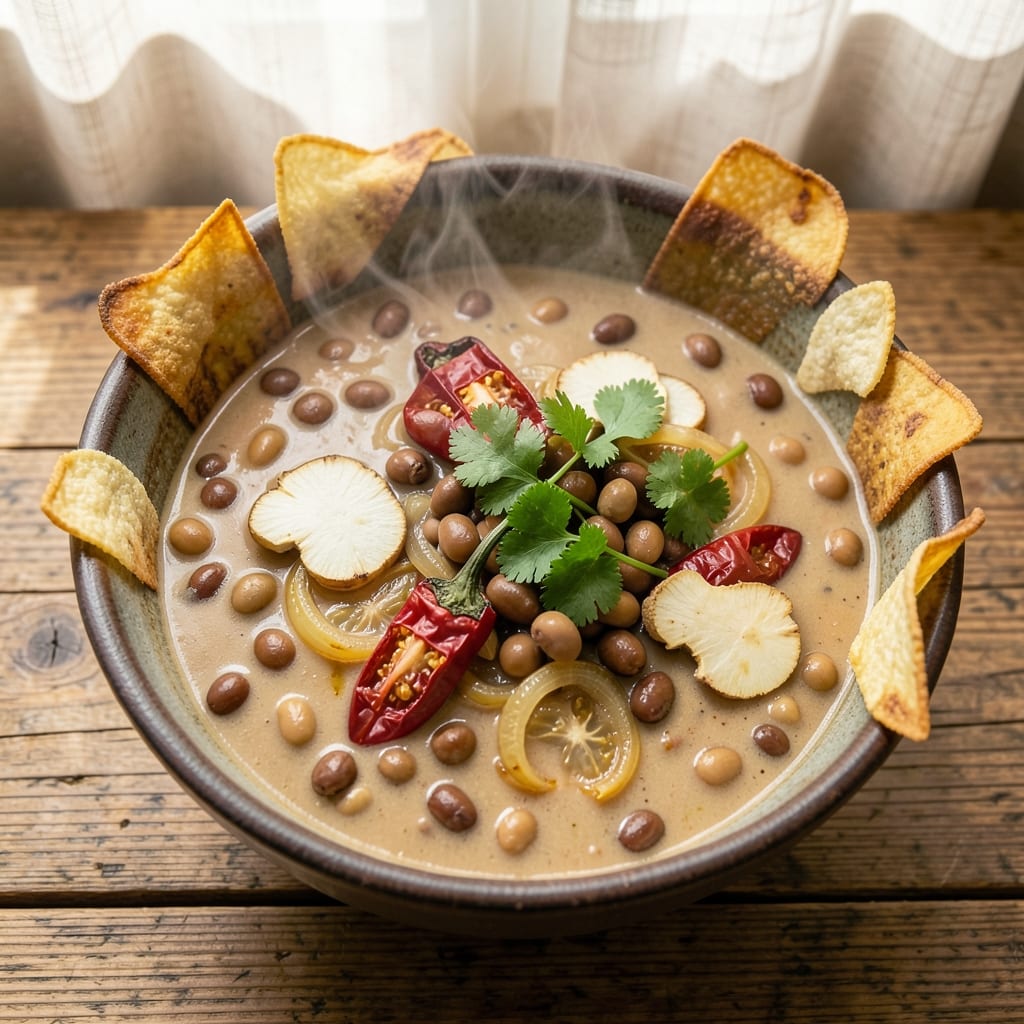
This West African bean soup recipe brings the vibrant flavors of the continent to your kitchen with its aromatic blend of spices and smoky depth. The heart of this dish lies in its slow-simmered beans, tender vegetables, and a rich, earthy base that builds layers of flavor over time. I've perfected this vegetarian version to capture the soul of West African cooking—where every spoonful tells a story of tradition and warmth.
The magic begins with the spices: thyme, ginger, garlic, and a touch of Scotch bonnet pepper create a fragrant foundation that deepens as the soup simmers. Black-eyed peas or cowpeas form the base, absorbing the flavors of sautéed onions, tomatoes, and bell peppers while remaining tender and hearty. The addition of leafy greens like spinach or okra adds a touch of freshness that brightens the dish without overpowering its robust character.
What you'll end up with is a soup that's deeply satisfying and full of complex flavors—smoky, slightly sweet, and tangy all at once. The slow cooking process transforms simple ingredients into something extraordinary, creating a dish that pairs beautifully with fufu, rice, or crusty bread. This is the kind of meal that feels like a hug in a bowl, perfect for sharing with family or enjoying on a cozy evening.
Ready in about 1 hour with minimal prep, this recipe delivers restaurant-quality results that are both nourishing and deeply flavorful. The secret lies in patience and layering flavors gradually—no shortcuts, just pure, authentic taste. Let's bring the flavors of West Africa to your table!
Ingredients for african bean soup
Pantry staples meet West African spices for this soul-warming bean soup.
| Ingredient | Amount | Notes |
|---|---|---|
| Black-Eyed Peas (Dried) 🌱 | 1 ½ cups | Rinsed and picked over |
| Cowpeas (Dried) 🌱 | 1 cup | Substitute for black-eyed peas |
| Yellow Onion 🧅 | 1 whole | Diced, medium size |
| Garlic Cloves 🧄 | 4 cloves | Minced, fresh preferred |
| Fresh Ginger 🌿 | 1 tbsp | Grated, fresh root |
| Scotch Bonnet Pepper 🌶️ | 1 whole | Seeded and minced (use habanero if unavailable) |
| Fresh Thyme 🌿 | 1 tbsp | Leaves only, chopped |
| Dried Thyme 🌿 | 1 tsp | Substitute for fresh thyme |
| Red Bell Pepper 🌶️ | 1 whole | Diced, any color |
| Tomatoes (Canned) 🍅 | 1 can | Diced, San Marzano preferred |
| Vegetable Oil 🫒 | 2 tbsp | For sautéing |
| Vegetable Broth 💧 | 4 cups | Low-sodium preferred |
| Fresh Spinach 🌿 | 2 cups | Chopped, or sub kale |
| Okra (Fresh or Frozen) 🥦 | 1 cup | Sliced, optional |
| Salt 🧂 | 1 ½ tsp | Kosher or sea salt |
| Black Pepper 🌶️ | ½ tsp | Freshly ground |
The beans are the heart of this dish, so pick your favorite variety—black-eyed peas or cowpeas both work beautifully. Trader Joe's and Whole Foods usually carry high-quality dried beans, but any bulk section at a grocery store will do. Look for beans that are plump and free of debris—no shriveled or discolored ones. If you can't find cowpeas, black-eyed peas are a perfect substitute. For the Scotch bonnet, ask your Latin market or specialty store—they often carry it. If you can't find it, a habanero will give you that same fiery kick, just use half the amount. Fresh ginger and thyme are worth the extra trip to the produce section—they make all the difference in that aromatic base.
No Scotch bonnet? Habanero or even jalapeño will work in a pinch, but reduce the amount by half. Fresh thyme is ideal, but dried thyme at one-third the amount gets you close. For the tomatoes, San Marzano cans are the gold standard, but any good-quality canned tomatoes will do. The spinach can be swapped for kale or collard greens if you've got them—just chop them finely. The okra is optional, but if you love it, fresh or frozen works. If you're short on time, skip it and add an extra cup of spinach instead. The vegetable broth matters—low-sodium is key so you can control the seasoning.
This soup tastes even better the next day, so make a double batch if you can. Store leftovers in an airtight container in the fridge for up to 5 days. It reheats beautifully—just warm it gently on the stove with a splash of water or broth. For freezing, portion into containers and it'll keep for up to 3 months. I like to freeze it in individual servings so I can grab a bowl whenever I need a quick, nourishing meal. The flavors only deepen over time, so don't hesitate to make extra.
Why You'll Love This Recipe
- No-Soaking Required: I’ll admit, I used to dread the soak-and-rinse routine with dried beans. Not here—the black-eyed peas and cowpeas just need a quick rinse, then they’re ready to simmer. That fresh ginger? It softens fast, so you’re not stuck waiting for hours.
- Umami Bomb Combo: The garlic and onions caramelize into something rich, while the ginger adds that zingy warmth. Honestly, the first time I tasted this, I thought, "Why haven’t I been doing this all along?" The cowpeas add a nutty depth that makes it feel like a restaurant dish, not just a pot of beans.
- Leftover Magic: This soup actually improves the next day. The flavors meld into something deeper, and it reheats like a dream. I make a big batch on Sundays—enough for lunches all week—and it’s still my go-to when I’m too tired to cook.
- Budget Meal, Big Payoff: Dried beans are my secret weapon for stretching meals without sacrificing flavor. A pound of these peas costs pennies, yet they feed four people heartily. Between us, this is the kind of recipe that makes grocery day feel like a win.
Step-by-step instructions for West African-inspired bean soup
Let's build this hearty, flavor-packed soup with layers of smoky heat and earthy spices.
Soak and Prepare the Beans
Combine the 1.5 cups black-eyed peas and 1 cup cowpeas in a large bowl and cover with plenty of cold water. Let them soak for at least 4 hours or overnight—this ensures they cook through evenly and reduces cooking time. I like to soak mine in the refrigerator overnight for maximum tenderness.
After soaking, drain and rinse the beans thoroughly. Pick through them to remove any small stones or debris that might have slipped in. Transfer them to a large pot and cover with 4 cups fresh vegetable broth. Bring to a boil, then reduce heat to medium-low and simmer for 30 minutes. You want the beans to soften but not break apart—this foundational step builds the soup's rich texture.
Build the Flavor Base
While the beans simmer, heat 2 tablespoons vegetable oil in a large skillet over medium heat. Add the diced yellow onion and cook for 5 minutes until soft and translucent. Stir in the minced garlic cloves, grated fresh ginger, and minced Scotch bonnet pepper, cooking for another 2 minutes until fragrant.
Add the chopped fresh thyme, dried thyme, and diced red bell pepper. Cook for 3 minutes until the bell pepper softens slightly. Pour in the diced canned tomatoes and stir to combine. Let this mixture cook for 5 minutes until the tomatoes break down and the flavors meld together. This aromatic base is what gives the soup its signature depth.
Combine and Simmer
Carefully transfer the bean mixture to the skillet with the flavor base. Stir well to combine everything. Add 1.5 teaspoons salt and 0.5 teaspoon black pepper, then bring the soup back to a gentle simmer. Let it cook uncovered for 20 minutes to allow the flavors to develop and the soup to thicken slightly.
After 20 minutes, stir in the sliced okra (if using) and chopped fresh spinach. Cook for another 5 minutes until the spinach wilts completely. The okra will add a subtle sliminess that balances the hearty beans beautifully. Taste and adjust the seasoning—you might need a touch more salt to bring out all the flavors.
Finish and Serve
Remove the soup from heat and let it sit for 10 minutes to allow the flavors to settle. This resting period is crucial—it lets the soup thicken slightly and the ingredients absorb each other's flavors. Give it a final taste and adjust the seasoning one last time if needed.
Serve the soup warm, preferably with crusty bread or steamed rice to soak up all that delicious broth. Each spoonful should deliver a perfect balance of smoky heat from the Scotch bonnet, earthy depth from the beans, and freshness from the spinach. The okra adds a unique texture that makes this soup truly special—don't skip it if you can find it!
Pro Tips For Making African Bean Soup
- SOAK BEANS SEPARATELY: Dried black-eyed peas and cowpeas need different soaking times—black-eyed peas soften in 1 hour, cowpeas take 2-3. I learned this the hard way when I mixed them and ended up with mushy peas and still-rock-hard cowpeas. Soak them in separate bowls, then combine only after they’re both tender.
- SWEAT ONIONS LOW AND SLOW: African bean soup relies on deep onion flavor, but rushing this step burns them before they caramelize. Cook onions over medium-low heat for 10-12 minutes, stirring often—until they’re golden and translucent, not browned. Skimp here, and your soup tastes like it’s missing something.
- GRATE GINGER FINE: Fresh ginger is non-negotiable, but most recipes call for "grated ginger" without specifying how fine. Use the smallest holes on your grater or pulse in a food processor—this way, it dissolves smoothly into the broth instead of sitting in chunks. Trust me, you’ll taste the difference.
- PUSH BEANS TO DONENESS: The beans should be fork-tender but still hold their shape—mushy beans turn the soup into a gluey mess. After the initial simmer, taste-test: if they’re still firm, add ½ cup water and cook another 10 minutes. No guessing—just check until they’re just done.
Storing and reheating this recipe
Refrigerator Storage
Let your soup cool completely before transferring it to airtight glass containers—I love using Pyrex with snap-on lids. Store in the fridge at 40°F or below for up to 5 days. The flavors actually deepen overnight as the spices meld together beautifully. I always make a double batch because it reheats so well. 🥣
Freezer-Friendly Tips
For long-term storage, portion the soup into quart-sized freezer bags or airtight containers, leaving 1 inch of headspace for expansion. Seal tightly to prevent freezer burn and label with the date. This soup keeps its quality for up to 3 months in the freezer. I like to freeze individual servings so I can grab a bowl whenever I need a quick, nourishing meal. 💫
Stovetop Reheating
My preferred method is stovetop reheating—it preserves the best texture. Pour the soup into a heavy-bottomed pot and warm over medium-low heat for 10-15 minutes, stirring occasionally. Add ¼ cup water or broth if it looks too thick. Taste and adjust seasoning—you might need a pinch more salt after reheating. This method keeps the beans tender and the broth flavorful. 🔥
Microwave Shortcut
For quick lunches, microwave individual portions covered with a damp paper towel. Heat on 70% power for 2-3 minutes, stir, then continue in 1-minute intervals until reaching 165°F. Add a splash of water if the soup looks dry. This method works well for single servings but can make beans slightly mushy if overcooked. 💡
Reviving Texture
If your reheated soup seems too thick, thin it with warm vegetable broth—about 2 tablespoons at a time—until you reach your desired consistency. For extra richness, stir in 1 teaspoon palm oil or a pat of butter before serving. The soup's texture should be creamy but still allow the beans to hold their shape. 🌟
Garnish Before Serving
Before serving, brighten the soup with fresh garnishes like chopped cilantro, a drizzle of palm oil, or a squeeze of lime juice. These finishing touches add freshness and balance the deep flavors. I also like to sprinkle a pinch of red pepper flakes for those who crave extra heat. 🌿
Nutrition facts
Frequently asked questions
Can I substitute cowpeas for black-eyed peas in this recipe?
Cowpeas and black-eyed peas work beautifully together in this West African bean soup. They have similar cooking times and complementary textures. For best results, use a 2:1 ratio (like 1.5 cups black-eyed peas to 1 cup cowpeas) to maintain the soup's hearty consistency. Both varieties bring their own unique flavors—black-eyed peas add a slightly sweeter note while cowpeas contribute a nuttier depth.
How can I make this soup less spicy for kids?
Remove the seeds from the Scotch bonnet pepper before mincing it to reduce heat, or swap it for a milder pepper like bell pepper. For extra mildness, use just ½ of the recommended amount. You can also serve the soup with a side of plain rice or bread to balance the flavors. Always taste as you go—you can adjust the heat level throughout the cooking process.
What's the best way to thicken this soup if it's too watery?
Simmer the soup uncovered for an additional 10-15 minutes to allow excess moisture to evaporate. If that doesn't work, stir in 1-2 tablespoons of cornstarch mixed with a little water, or mash some of the cooked beans directly into the soup. For a more traditional approach, add a handful of chopped okra (it naturally thickens as it cooks).
Can I prepare this soup in a slow cooker?
Yes! Combine all ingredients (except spinach and okra) in your slow cooker and cook on LOW for 6-7 hours or HIGH for 3-4 hours. Stir in the leafy greens during the last 30 minutes of cooking. The slow cooker method enhances the flavors beautifully, creating a more tender bean texture. Just be sure to adjust the seasoning at the end since slow cooking can concentrate flavors.
What are the traditional sides to serve with this West African bean soup?
The classic pairings are fufu (a dough-like staple made from cassava or plantains), rice, or crusty bread. For a complete meal, serve with a side of grilled plantains or a simple cucumber salad. The soup's rich flavors work wonderfully with mild, starchy accompaniments that help balance its hearty texture and complex spices.