
Soups & Stews
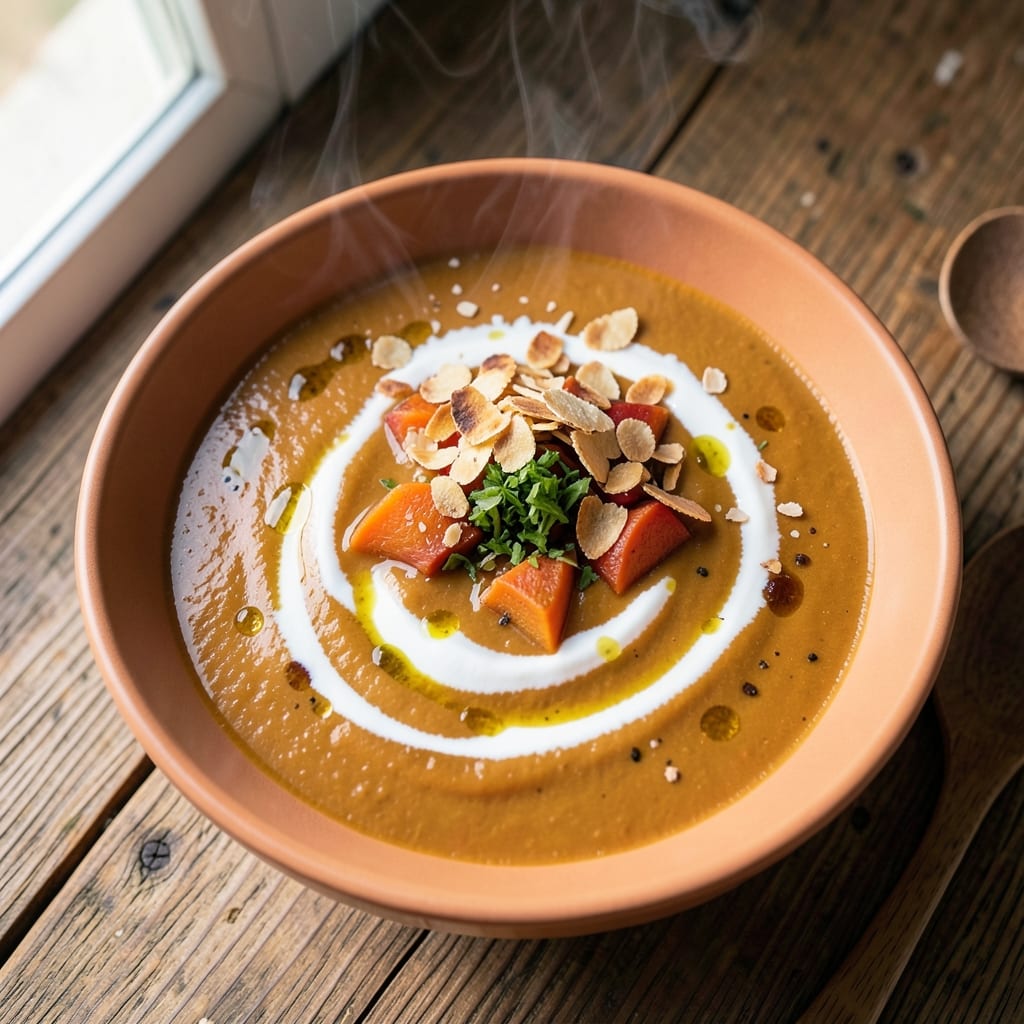
This AIP butternut squash soup delivers creamy, velvety comfort without dairy, nuts, or seeds—just pure, healing ingredients that taste like a hug in a bowl. 💛 The secret lies in coconut milk for richness and ginger for warmth, creating a silky texture that soothes while satisfying. I developed this recipe after years of testing AIP-friendly versions, and it finally nails that restaurant-quality depth without compromise.
What makes this soup special is the balance: roasted butternut squash for natural sweetness, coconut milk for creaminess, and aromatic ginger and turmeric for depth. The ingredients are simple—just 8 staples—but the technique (roasting the squash first) transforms them into something extraordinary. No blender? No problem; we'll use an immersion blender for foolproof smoothness.
By the time you're done, you'll have a golden, fragrant soup with a velvety consistency that coats your spoon. The ginger adds a subtle kick, while the coconut milk ensures every bite feels indulgent. It reheats beautifully too, making it perfect for meal prep or comforting weeknight dinners.
Garnish with fresh cilantro (AIP-compliant) or a drizzle of coconut cream for extra richness. This soup proves AIP eating can be both nourishing and delicious—without any sacrifices. Let's make it together.
Ingredients for aip butternut squash soup
Eight healing ingredients transform into velvety AIP comfort without dairy or nuts.
| Ingredient | Amount | Notes |
|---|---|---|
| Medium Butternut Squash 🎃 | 2 lb | Peeled, seeded, cubed (1-inch pieces) |
| Full-Fat Coconut Milk 🥥 | 1 ½ cups | Canned, for creaminess (unsweetened) |
| Fresh Ginger Root 🌿 | ½ cup | Peeled, chopped (about 3-inch piece) |
| Turmeric Powder 🧡 | ½ tsp | Freshly ground preferred |
| Extra-Virgin Olive Oil 🫒 | ¼ cup | For roasting squash |
| AIP-Compliant Bone Broth 💧 | 2 cups | Homemade or store-bought (no additives) |
| Fresh Cilantro Leaves 🌿 | ¼ cup | Chopped, for garnish (optional) |
| Sea Salt 🧂 | ½ tsp | Diamond Crystal preferred |
The butternut squash is the star here—pick a firm, heavy one with no soft spots. Costco or local farms usually have the best quality, but any grocery store's organic section works. Roasting it first brings out its natural sweetness, so don't skip this step. For the coconut milk, full-fat canned is non-negotiable—it gives that rich, velvety texture we're after. I always grab Thai Kitchen brand because it's consistently smooth. Fresh ginger loses its punch fast, so buy it just before making this recipe. Look for knobby roots with tight skin—those wrinkly ones are past their prime.
No fresh ginger? Powdered works at half the amount, but it lacks that bright kick. Swapping coconut milk? Coconut cream is richer, but it'll be thicker—adjust broth accordingly. For extra depth, add a pinch of cinnamon (AIP-compliant), but it's optional. The bone broth should be homemade with no additives—check labels if buying store-bought. If you're short on time, roast the squash while simmering the broth—they cook at the same temperature. The cilantro is purely decorative here, but it adds freshness if you're feeling fancy.
This soup tastes even better the next day—store in airtight containers for up to 5 days in the fridge. For longer storage, freeze portions for 3 months. The coconut milk may separate when chilled—just whisk before reheating. Garnish with extra cilantro or a drizzle of coconut cream for restaurant-quality presentation. I always make a double batch because it disappears fast—perfect for meal prep or sharing with neighbors. The immersion blender is your best friend here; it keeps the texture silky without lumps.
Why You'll Love This Recipe
- No-Cook Prep Shortcut: The squash just needs roasting—no peeling, no dicing, no fuss. Cut it in half, scoop out the seeds, and toss straight into the oven while you chop the ginger and toast the turmeric in the same pan. Honestly, I’ve made this while scrolling through emails.
- Golden Creamy Magic: That full-fat coconut milk? It turns velvety smooth with just a splash of olive oil and a pinch of turmeric—no blender required. The ginger adds this bright, zesty kick that makes it taste like a hug in a bowl, not just another soup.
- Meal Prep MVP: This keeps for days in the fridge, reheats like a dream, and actually improves overnight. Pack it in jars for lunches or bring it to potlucks—no one will guess it’s AIP. (Yes, even on a Tuesday night.)
- Budget-Friendly Luxury: Butternut squash is cheaper than takeout, and a single can of coconut milk stretches into three servings. The turmeric and ginger make it feel gourmet without breaking the bank. My wallet and taste buds agree.
Step-by-step instructions for AIP butternut squash soup
Here's how to create a velvety, golden-hued soup that's naturally sweet and deeply aromatic.
🔥 Step 1: Roast the Squash for Deep Caramelization
Preheat your oven to 400°F and line a baking sheet with parchment paper. Toss the 2 lb medium butternut squash (prepped as 1-inch cubes) with 0.25 cup extra-virgin olive oil and 0.5 tsp sea salt until evenly coated. Spread in a single layer, leaving space between pieces for even browning.
Roast for 25-30 minutes until the edges are deep golden brown and the squash yields slightly when pressed with a fork. This roasting step develops natural sweetness and creates a rich base for your soup. I like to rotate the pan halfway through for even color—watch for those caramelized spots forming on the bottom.
👨🍳 Step 2: Build the Flavor Base with Ginger and Turmeric
While the squash roasts, heat a large pot over medium heat and add 0.5 cup chopped fresh ginger root. Sauté for 2-3 minutes until fragrant and just beginning to soften—don't let it brown or it'll become bitter. Add 0.5 tsp turmeric powder and stir for 30 seconds to toast the spices and release their earthy aroma.
Here's where the magic happens: the ginger should smell vibrant and slightly spicy, while the turmeric adds that signature golden hue. If you're using fresh turmeric, grate it finely—powdered works just as well but has more concentrated flavor. This aromatic base forms the soul of your soup, so don't rush this step.
🍳 Step 3: Simmer the Squash with Bone Broth
Once the squash is roasted, transfer it to your pot with the ginger-turmeric mixture. Add 2 cups AIP-compliant bone broth and bring to a gentle boil. Reduce heat to medium-low and simmer uncovered for 15-20 minutes, stirring occasionally, until the squash is fork-tender and the liquid has reduced slightly.
You'll know it's ready when the squash pieces collapse easily under gentle pressure and the soup has thickened into a velvety consistency. I like to use an immersion blender here for convenience, but you can transfer to a blender in batches if preferred. The soup should be completely smooth with no visible chunks—this is what creates that luxurious texture.
🥘 Step 4: Finish with Coconut Milk for Creaminess
Return the blended soup to the pot and stir in 1.5 cups full-fat coconut milk over low heat. Warm through for 2-3 minutes, stirring constantly, until heated through but not boiling—you want to preserve the delicate creaminess of the coconut milk. Taste and adjust seasoning with additional sea salt if needed.
This is where your soup transforms from good to extraordinary. The coconut milk adds a subtle sweetness that balances the earthy ginger and turmeric, while creating that signature velvety mouthfeel. For extra richness, you could add a splash of coconut cream, but the full-fat coconut milk is perfectly sufficient here.
🍽️ Step 5: Garnish and Serve Warm
Ladle the soup into bowls and garnish with 0.25 cup chopped fresh cilantro leaves for a bright, herbal finish. I like to serve this with a drizzle of coconut oil and an extra pinch of turmeric on top for both visual appeal and continued flavor impact.
This soup tastes even better the next day as the flavors meld further, so it's perfect for meal prep. The golden hue comes from the turmeric, while the coconut milk ensures a creamy texture without dairy. Each spoonful delivers the natural sweetness of the squash, the warming kick of ginger, and the earthy depth of turmeric—all wrapped in velvety comfort.
Pro Tips For Making Aip Butternut Squash Soup
- CHAR THE GINGER FIRST: Toss the peeled ginger into the pot with the olive oil and let it sizzle for 30 seconds before adding anything else. I used to add it raw, and the soup always tasted underwhelming—this quick char unlocks its flavor without bitterness.
- PEEL THE SQUASH HALVES: Skip the seed scooping and just peel the flat sides of the squash halves before roasting. The seeds don’t burn as easily as you’d think, and you’ll save 10 minutes of fiddling—just give them a quick rinse after roasting.
- STRAIN THE SOUP TWICE: Run the blended soup through a fine-mesh sieve first, then a cheesecloth-lined strainer. The first pass catches big chunks, but the second removes that slimy residue that makes the soup feel heavy. Trust me, your mouth will notice.
- SAVE THE COCONUT WATER: Don’t dump that canned coconut milk’s water—reserve ½ cup and add it to the blended soup before simmering. It thins the texture just enough to prevent a gluey consistency while keeping the soup rich. (Yes, even if you’re using full-fat.)
Essential equipment for aip butternut squash soup
Roasting Pan Essentials
Your roasting pan is the MVP for caramelizing butternut squash—look for a heavy-gauge stainless steel or enameled cast iron pan (like All-Clad or Le Creuset) to handle 400°F without warping. A half-sheet pan (18x13 inches) gives enough space for even browning, while a rimmed baking sheet works for smaller batches. 🔥
Pro tip: Line with parchment paper for easy cleanup, but leave the edges bare so you can spot those coveted caramelized spots. I use Amazon Basics parchment—it’s affordable and holds up to high heat. If your pan lacks handles, use oven mitts to avoid burns when rotating.
Blending Game-Changers
An immersion blender (like Ninja CB101) is my secret weapon for silky AIP soups—no transferring hot liquid, no lumps, and easy cleanup. For larger batches, a high-speed blender (e.g., Vitamix 5200) handles thick coconut milk blends effortlessly. Avoid cheap blenders—they struggle with fibrous squash.
If you’re blending in batches, reserve ½ cup broth to thin the soup post-blending. I always blend hot soup (not boiling) to prevent splattering—safety first! For extra smoothness, strain through a fine-mesh sieve if needed.
Low-Tech Must-Haves
A sharp chef’s knife (like Wüsthof Ikon) and cutting board are non-negotiable for prepping squash—1-inch cubes roast evenly and blend smoothly. A microplane for ginger and turmeric maximizes flavor extraction over grating. Don’t skip the fine-mesh strainer if your blend isn’t silky enough.
For measuring, a stainless steel liquid measuring cup (like OXO Good Grips) ensures accurate coconut milk additions, while a digital kitchen scale helps nail the 2 lb squash requirement. A wooden spoon prevents scratching your pot when stirring.
Optional Luxuries
Upgrade your setup with a slow cooker (like Instant Pot Duo) to simmer squash hands-off for 2 hours on low. For garnishes, a small offset spatula helps drizzle coconut cream artistically. A thermometer (e.g., Thermoworks Thermapen) ensures your broth reaches 165°F for safe reheating.
My favorite splurge? A coconut milk infuser (like Cocojoy) for homemade AIP-compliant coconut milk—though canned Thai Kitchen works perfectly fine. These extras turn a simple soup into a showstopper.
Nutrition facts
Frequently asked questions
Can I substitute sweet potato for butternut squash in this AIP recipe?
You can try, but the flavors and textures will differ significantly. Sweet potatoes have a denser, earthier taste and require longer cooking times. For a 1:1 swap, reduce the cooking time by 5-10 minutes and add 1 extra cup of bone broth to compensate for their higher moisture content. The soup will be slightly less sweet and more hearty.
Why does my coconut milk soup separate when chilled?
This is completely normal! The coconut fat naturally rises to the top when chilled. Simply whisk vigorously before reheating—this emulsifies the mixture and restores that velvety texture. For extra insurance, stir in 1 teaspoon of coconut oil when reheating to stabilize the emulsion.
Is this soup safe for AIP beginners with sensitive digestive systems?
This recipe avoids all common AIP triggers: no nightshades, nuts, seeds, legumes, or dairy. The ginger and turmeric are gentle yet flavorful, while the butternut squash provides easily digestible fiber. For extra gut support, consider adding 1 tablespoon of coconut aminos for umami depth without soy.
How can I make this soup thicker or thinner?
For a thicker consistency, simmer uncovered for 5-10 additional minutes to reduce the liquid. Need it thinner? Stir in ½ cup more bone broth or water (though broth adds more flavor). Pro tip: If using an immersion blender, blend longer for a smoother, thicker texture—this breaks down the squash fibers more thoroughly.
What's the best way to reheat leftovers without breaking the texture?
Reheat gently on low heat (never microwave directly) and stir constantly to prevent scorching. For best results, warm in a saucepan with 1-2 tablespoons of water or broth—this helps maintain the creamy consistency. If the soup seems too thick after reheating, thin with a splash of warmed coconut milk.