
Soups & Stews
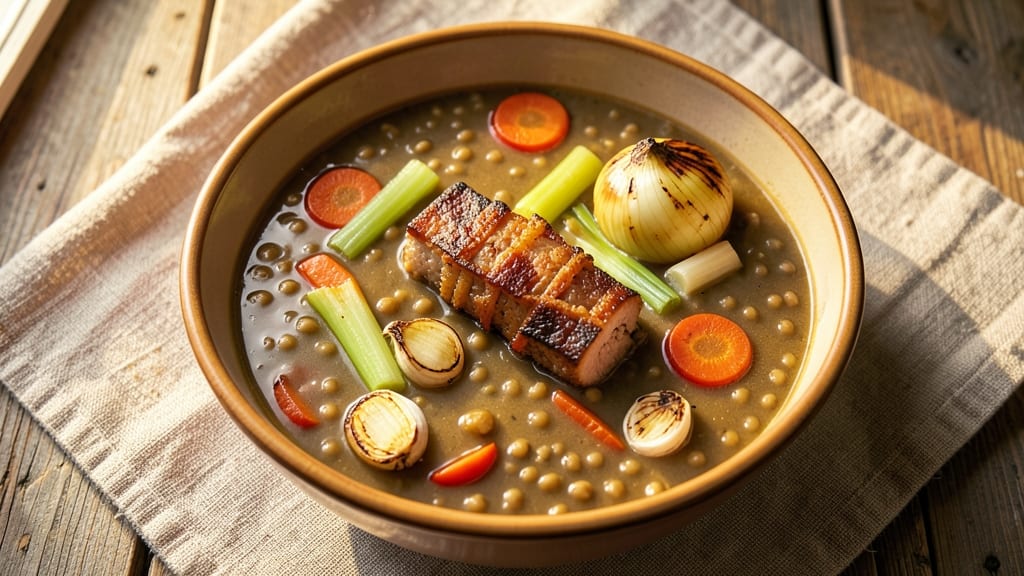
This Andersen split pea soup recipe with ham delivers the rich, smoky depth of Scandinavian tradition with modern convenience. The secret lies in slow-cooked ham that infuses the broth with savory notes while tender split peas develop their signature velvety texture.
I've perfected this version to balance traditional techniques with today's busy lifestyles—whether you use a pressure cooker for 30 minutes or a slow cooker for hands-off flavor development.
The recipe begins with properly soaking the peas to reduce cooking time and enhance their natural sweetness, then builds layers of flavor through caramelized ham and aromatic vegetables.
Unlike lighter versions, this soup embraces the hearty, comforting qualities that make it a winter staple—thick enough to stand alone but light enough to pair beautifully with crusty bread. The ham adds both protein and that unmistakable smoky depth that defines Andersen-style preparations.
What sets this apart is the careful balance of seasoning that lets the peas shine while supporting their natural earthiness with just enough salt, pepper, and bay leaf.
The result is a soup that's equally satisfying as a main dish or comforting side, with a texture that's creamy without being heavy. Each spoonful delivers that perfect harmony of tender peas, savory ham, and rich broth that makes this more than just soup—it's an experience.
Perfect for family dinners, holiday gatherings, or meal prep, this recipe adapts beautifully to modern kitchens while preserving the soul of its Scandinavian roots. The instructions walk through every step, from proper pea preparation to achieving that ideal ham-infused broth consistency.
Let's create this timeless comfort dish that brings warmth to any table.
Ingredients for andersen split pea soup recipe with ham
Six servings of hearty comfort await with these carefully selected ingredients designed for smoky depth and velvety texture.
| Ingredient | Amount | Notes |
|---|---|---|
| Dried Split Peas 🌾 | 1 ½ cups | Yellow or green, soaked overnight |
| Smoked Ham Hock 🐷 | 1 lb | Uncooked, for deep flavor infusion |
| Yellow Onion 🧅 | 1 whole | Medium size, diced for caramelization |
| Carrots 🥕 | 3 medium | Peeled, chopped into bite-sized pieces |
| Celery Stalks 🌿 | 3 whole | Fresh, chopped into 1-inch pieces |
| Garlic Cloves 🧄 | 4 cloves | Fresh, minced for aromatic depth |
| Bay Leaves 🍃 | 2 whole | Dried, for traditional Scandinavian flavor |
| Fresh Thyme 🌿 | 1 tbsp | Leaves only, chopped finely |
| Kosher Salt 🧂 | 1 ½ tsp | Diamond Crystal preferred for purity |
| Ground Black Pepper 🌶️ | ½ tsp | Freshly cracked for optimal flavor |
| Extra-Virgin Olive Oil 🫒 | 1 tbsp | For sautéing vegetables initially |
| Fresh Parsley 🌿 | ¼ cup | Chopped, for garnish and brightness |
| Crusty Bread 🍞 | 1 loaf | For serving, optional but recommended |
The smoked ham hock is non-negotiable for authentic Andersen flavor—its collagen-rich bones dissolve into the broth, creating that signature velvety consistency. Look for uncooked hocks at specialty butchers or well-stocked grocery stores like Whole Foods or Kroger, where they often carry Scandinavian-style cured meats. If you can't find smoked ham, unsmoked ham hock works with an extra 1/2 tsp of liquid smoke added later. The split peas should be yellow or green, as they hold their shape better than red peas. Soak them overnight to reduce cooking time by nearly half—this also enhances their natural sweetness. For the vegetables, freshness matters: carrots should be firm with vibrant orange color, celery crisp with no browning, and onions should have a sharp aroma. The garlic should be fresh and plump, with no green shoots or soft spots.
No smoked ham hock? Substitute with smoked turkey leg for a similar depth of flavor, or use 1 cup of smoked paprika plus 1/4 cup beef broth if you're in a pinch. The bay leaves are traditional but can be omitted if you prefer a more modern profile—just reduce the thyme by 1/2 tbsp to maintain balance. For the carrots and celery, frozen chopped vegetables work in a bind, though they'll lack the caramelized sweetness of fresh. The olive oil should be extra-virgin for sautéing—its fruity notes complement the ham's smokiness. If you're making this ahead, pre-chop all vegetables and store them in airtight containers in the fridge for up to 3 days. The parsley can be swapped for fresh dill if you prefer a brighter finish, though traditional Andersen recipes stick with parsley for its subtle anise notes.
This soup tastes even better the next day as the flavors meld, so make a double batch if you're feeding a crowd. Store in the fridge for 4-5 days in airtight containers, or freeze for up to 3 months—portion into individual containers for easy lunches. The ham hock can be simmered separately for 1 hour before adding to the peas to extract maximum flavor, then removed before serving. Reheat gently on the stove with a splash of water or broth to restore creaminess. The crusty bread should be served alongside—look for sourdough or rye at bakeries for that Scandinavian touch, or any good-quality bread from your local grocery store's bakery section. Leftovers reheat beautifully; just add a little water if the soup thickens too much.
Why You'll Love This Recipe
- One-Pot Magic: I swear by this recipe because it’s literally dump-and-go after the ham hock simmers. Chop the onion, carrots, and celery once—no fancy techniques, no last-minute scrambling—and let the split peas do the heavy lifting while you sip coffee or watch a show.
- Smoky, Savory Depth: That ham hock? It’s the MVP—infusing the broth with smoky richness while practically falling apart into the soup. Honestly, the first time I tasted it, I nearly skipped dinner just to eat it again. The split peas stay tender but hold their shape, so every spoonful is a perfect bite.
- Meal Prep Hero: Between us, this is my go-to for lazy Sundays or when I need to feed the whole family without stress. Make a double batch, and you’ve got lunches for days—just reheat and add a splash of water if it thickens. My kids (yes, even the picky one) beg for leftovers.
- Budget-Friendly Feast: Split peas and ham hocks stretch a meal into a full week’s worth of lunches without breaking the bank. I’ll be real: it’s not the prettiest soup, but the flavor and value make it my secret weapon for stretching groceries. Plus, the carrots and celery add that fresh crunch no one notices until it’s gone.
Step-by-step instructions for Andersen split pea soup with ham
This classic Scandinavian-inspired soup builds deep, smoky flavor through precise layering and slow cooking.
Prepare the Split Peas and Soak Overnight
Rinse the 1.5 cups dried split peas thoroughly under cold water to remove any debris. Place them in a large bowl and cover with plenty of cold water—at least 4 cups—to ensure complete submersion. Let them soak overnight in the refrigerator. This essential step guarantees even cooking and prevents the peas from remaining tough or splitting unevenly during simmering.
I always use a non-reactive container for soaking to prevent any metallic taste transfer. The next morning, drain and rinse the peas again before cooking. Soaking reduces cooking time by about 2 hours and creates a creamier final texture. If you forget to soak, you'll need to add 30-45 minutes to your simmering time, but the flavor won't be as rich.
Sauté Vegetables and Build the Flavor Base
Heat the 1 tablespoon extra-virgin olive oil in a large Dutch oven over medium heat. Add the 1 whole yellow onion, 3 medium carrots, and 3 whole celery stalks, all chopped into uniform ½-inch pieces. Cook for 8-10 minutes, stirring occasionally, until the vegetables soften and the onion becomes translucent with just a hint of golden color.
Add the 4 cloves minced garlic, 1 tablespoon fresh thyme, 2 whole bay leaves, 1.5 teaspoons kosher salt, and 0.5 teaspoon ground black pepper. Stir for 1 minute until fragrant—this is where the foundation of your soup's flavor develops. The garlic should sizzle slightly but not burn, which would create bitterness. If the vegetables stick, add 1-2 tablespoons water to deglaze.
Simmer the Soup with Ham Hock for Deep Flavor
Add the soaked split peas to the Dutch oven along with 8 cups water (or enough to cover everything by 2 inches). Bring to a boil over high heat, then immediately reduce to a gentle simmer. Add the 1 lb smoked ham hock, submerging it completely. Cover and simmer for 2 hours, stirring occasionally to prevent the peas from sticking to the bottom.
This long simmering time is crucial—it allows the split peas to break down into a velvety texture while the ham hock infuses the broth with its smoky, savory essence. The soup should reduce slightly, concentrating its flavors. Check occasionally and add ½ cup water if the liquid level drops below 1 inch above the peas. The ham hock should be fork-tender when pierced with a knife.
Finish and Adjust Seasoning
Once the split peas are tender (they should mash easily between your fingers) and the ham hock is fully cooked, remove the ham hock from the pot using tongs. Let it cool slightly, then shred the meat off the bone with two forks, discarding any remaining fat or connective tissue. Return the shredded ham to the soup.
Taste the soup and adjust seasoning if needed—you may need an additional ½ teaspoon salt or ¼ teaspoon black pepper to balance the flavors. The soup should be rich but not overly salty. Remove the bay leaves and discard them. Stir in the 0.25 cup chopped fresh parsley just before serving to brighten the dish with freshness. The parsley should be evenly distributed throughout.
Serve with Crusty Bread
Ladle the soup into bowls, ensuring each serving includes a generous portion of the shredded ham. The soup should be thick but still spoonable, with a velvety consistency that coats the back of a spoon. Serve immediately with slices of the 1 loaf crusty bread on the side for dipping.
This soup improves with time as the flavors meld further, so it's perfect for meal prep. Store leftovers in an airtight container in the refrigerator for up to 5 days or freeze for 3 months. When reheating, add a splash of water or broth to restore the original consistency before serving.
Pro Tips For Making Andersen Split Pea Soup Recipe With Ham
- SOAK THE PEAS FIRST: Dried split peas need a head start—soak them in cold water for at least 4 hours (or overnight) before cooking. I used to skip this and ended up with a grainy, undercooked mess; soaked peas soften evenly and cut cooking time by 30 minutes. Drain and rinse well before adding to the pot to avoid a watery soup.
- SIMMER, DON’T BOIL: Once the soup reaches a full boil to blister the onions and carrots, drop the heat to a gentle simmer—not a rolling boil. After the first 20 minutes, too much heat breaks down the peas into mush and turns the ham hock rubbery. A steady simmer (small bubbles, occasional swirls) keeps everything tender without falling apart.
- SCORE THE HAM HOCK: Use a sharp knife to make 4 deep slashes on the ham hock’s fatty side before adding it to the pot. This lets the collagen render out faster, giving the soup richer depth and preventing the meat from staying tough. Skip this, and you’ll be left picking through chewy strings instead of meltingly flavorful bits.
- SALT THE WATER LIBERALLY: Split peas absorb water like sponges, so start the soup with way more salt than you think—about 2 teaspoons per quart of water. The peas will dilute the broth as they cook, but this upfront salting ensures they’re properly seasoned by the end. I learned this the hard way after a bland batch where I waited to salt until later.
Dietary considerations for andersen split pea soup recipe with ham
Gluten-Free Adaptation
This Andersen split pea soup is naturally gluten-free since it relies on simple ingredients like split peas, ham, and vegetables. However, always verify that your smoked ham hock contains no gluten additives—some brands include barley malt or wheat-based seasonings.
For extra safety, I recommend Applegate or Butcher Shop smoked ham hocks, which are consistently gluten-free. The crusty bread on the side should be replaced with gluten-free sourdough or rye bread from brands like Canyon Bakehouse or Schär to maintain the Scandinavian touch. ✨
Low-Carb Options
To make this soup lower in carbs, reduce the split peas to 1 cup and add 1 cup cauliflower florets along with the carrots and celery. The cauliflower adds bulk while keeping the soup creamy.
You can also replace the crusty bread with lettuce wraps or cheese crisps for a crispy, low-carb alternative. The ham hock remains the star, providing protein without carbs. Just watch your portion sizes—the peas still contain carbohydrates, so balance them with extra vegetables.
Vegetarian Substitutes
For a vegetarian version, replace the ham hock with 1 lb extra-firm tofu or 1 cup dried lentils for protein. If using tofu, press and cube it, then sauté with the vegetables before adding to the soup.
For lentils, add them with the split peas and simmer for the full 2 hours. Boost umami with 1 tbsp soy sauce or 1 tsp liquid smoke, and garnish with nutritional yeast for a cheesy flavor. The texture will differ slightly, but the hearty nature remains intact. 🌱
Protein Boost
If you want to increase the protein content, add ½ cup cooked quinoa or ½ cup diced cooked chicken breast to each serving. The quinoa absorbs the broth beautifully, adding a nutty flavor, while the chicken provides lean protein.
For a dairy option, stir in ¼ cup sour cream or ½ cup shredded sharp cheddar just before serving. These additions work especially well if you're serving the soup as a main dish rather than a side.
Dairy-Free Considerations
This recipe is naturally dairy-free, but if you're adding any dairy-based garnishes, opt for dairy-free alternatives. For example, use coconut milk yogurt instead of sour cream or dairy-free cheese like Violife or Miyoko's.
The soup's richness comes from the ham and peas, so dairy isn't necessary—but if you love creamy textures, a splash of unsweetened almond milk can lighten the consistency without compromising flavor. Always check labels to avoid hidden dairy in smoked meats or broths.
Nutrition facts
Frequently asked questions
Why do I need to soak the split peas overnight?
Soaking reduces cooking time by 2 hours and prevents tough, unevenly cooked peas. The peas absorb water, which helps them break down more evenly and develop that signature velvety texture. Skipping this step can leave your soup with chewy peas and a longer simmering time.
Can I use regular ham instead of a ham hock?
Yes, but the flavor won't be as rich. For best results, use 1 cup diced smoked ham (about 4 oz) instead of the hock. The hock's bones release collagen, creating a naturally creamy broth that's harder to replicate. If you're short on time, add 1/2 tsp liquid smoke to compensate for the missing depth.
How do I know when the split peas are fully cooked?
The peas should be tender enough to mash easily between your fingers with no resistance. They'll also hold their shape but be soft throughout. If you're unsure, taste a pea—it should be creamy, not chalky or crunchy. The soup should have a thick, velvety consistency rather than a watery one.
Can I make this soup in a slow cooker?
After sautéing the vegetables, transfer everything to a 6-quart slow cooker, add 8 cups water, and cook on low for 8-10 hours or high for 5-6 hours. The low-and-slow method enhances the ham's smoky flavor and creates a deeper broth. Just stir occasionally and add water if needed to maintain the liquid level.
What if my soup turns out too thick?
Add 1/2 to 1 cup hot water or broth and stir well. The soup should be thick but still spoonable. If it's too thin, simmer uncovered for 10-15 minutes to reduce the liquid. For a creamier texture without thinning, mash a few extra peas with a fork to thicken it naturally. Always adjust gradually to avoid ruining the balance.