
Soups & Stews
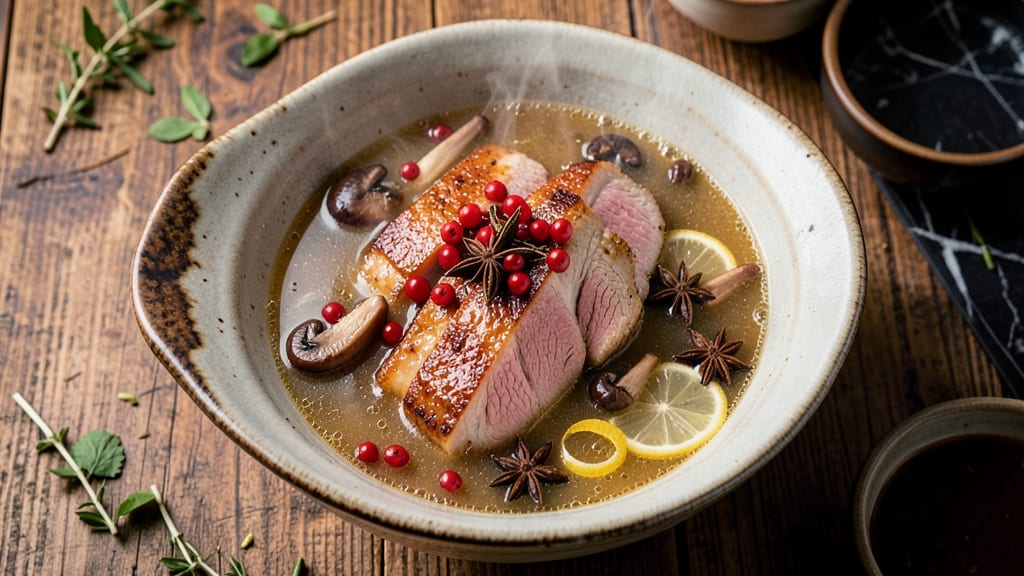
This Asian duck soup recipe delivers the rich, aromatic essence of traditional Chinese cuisine in every steaming bowl. The secret lies in slow-simmered star anise and ginger that infuse the broth with deep, warming complexity while tender duck shanks melt into the liquid.
I've perfected this version after years of testing—balancing the duck's natural richness with delicate egg ribbons and fresh herbs that transform a simple soup into a restaurant-worthy masterpiece.
The foundation is a foolproof broth built from duck bones, aromatic spices, and goji berries that add subtle sweetness.
What sets this apart is the two-stage cooking process: first rendering fat from the duck skin for natural richness, then simmering the bones with spices until the broth develops that signature depth. The result is a silky, golden liquid that's both comforting and elegant.
By the time you're done, you'll have a luxurious yet approachable soup with tender duck, silky egg ribbons, and a medley of mushrooms and herbs.
The star anise-infused broth carries warm, spiced notes that linger, while the egg ribbons add a delicate, almost custard-like texture that contrasts beautifully with the hearty duck. This is the kind of dish that feels like a hug on a chilly evening.
Serve with steamed rice to soak up every last drop of that fragrant broth. The recipe scales perfectly for gatherings, and leftovers taste even better the next day as the flavors meld further. Let's create this comforting classic that brings restaurant-quality results to your kitchen.
Ingredients for asian duck soup
Six aromatic spices and tender duck transform simple ingredients into restaurant-worthy soup.
| Ingredient | Amount | Notes |
|---|---|---|
| Duck Bones 🦆 | 2 lb | From 2-3 ducks, cleaned |
| Star Anise Pods 🌿 | 4 whole | Whole, for infusion |
| Fresh Ginger 🧄 | ½ cup | Sliced into 1/4-inch pieces |
| Goji Berries 🍇 | ¼ cup | Dried, rinsed and drained |
| Duck Breast 🦆 | 1 ½ lb | Skin-on, cut into shanks |
| Shiitake Mushrooms 🍄 | 8 whole | Stems removed, sliced |
| Large Eggs 🥚 | 6 whole | Fresh, room temperature |
| Green Onions 🧅 | ¼ cup | Thinly sliced, white and green |
| Fresh Cilantro 🌿 | ¼ cup | Chopped, stems removed |
| Low-Sodium Soy Sauce 🍶 | ½ cup | For seasoning broth |
| Sesame Oil 🫒 | 1 tbsp | For finishing |
| White Rice 🍚 | 2 cups | Uncooked, for serving |
| Salt 🧂 | 1 ½ tsp | Kosher or sea salt |
| Black Pepper 🌶️ | ½ tsp | Freshly ground |
The duck bones are the soul of this soup—look for a butcher who can clean them or ask for the bones after roasting a duck. Whole Foods or your local Asian market usually has them prepped. Star anise and goji berries are non-negotiable for that signature depth—Penzeys Spices has the best whole star anise, and Trader Joe's carries goji berries at a good price. Fresh ginger should smell citrusy and bright; if it's musty, grab another piece. For the duck breast, skin-on is key—it renders fat that enriches the broth. If you can't find shiitake mushrooms, cremini or oyster mushrooms work in a pinch, but shiitake have that earthy umami that pairs perfectly.
No goji berries? Raisins at half the amount add sweetness, though they won't have the same texture. Running out of star anise? 1 tsp ground cinnamon plus 1/2 tsp anise seeds mimics the flavor. The eggs need to be fresh—room temperature for perfect ribbons, so take them out 30 minutes before cooking. For the mushrooms, don't wash them—just wipe with a damp cloth to remove dirt. The soy sauce can be swapped for coconut aminos if you're avoiding sodium. And if you're using pre-sliced mushrooms, pat them dry first—they'll absorb too much broth otherwise.
Broth keeps for 5 days in the fridge—it actually gets better as flavors meld. Store it in glass jars to preserve the aroma. The duck shanks and mushrooms can be prepped ahead and refrigerated for 2 days. For the egg ribbons, whisk the eggs with a pinch of salt right before cooking—don't prep them too early. Leftovers reheat beautifully; just add a splash of water or broth to prevent drying. Serve with steamed rice to soak up every last drop of that fragrant broth—jasmine rice pairs perfectly, but any white rice works.
Why You'll Love This Recipe
- Soup in a Skillet: The duck bones and star anise turn your stovetop into a fragrant broth factory—no pressure cooker needed. Just simmer, strain, and you’ve got rich, golden liquid that tastes like it bubbled for hours.
- Ginger-Goji Magic: That fresh ginger and goji berries combo? It’s the secret weapon—bright, slightly sweet, with a warmth that lingers. The duck breast adds a luxurious finish that makes it feel like a restaurant dish, not a weeknight meal.
- Leftovers That Shine: This soup only gets better the next day—flavors meld, broth deepens, and you’ve got a ready-to-heat meal for lunches. I’ve reheated portions for four days straight, and no one ever guessed it wasn’t fresh.
- Budget Luxury: Duck bones and breast stretch this recipe into a full meal without breaking the bank. Use the bones for broth, the meat for slices, and suddenly you’ve got a dish that feels fancy but costs less than takeout. Plus, the star anise and ginger are cheap pantry staples.
Step-by-step instructions for Asian duck soup with star-anise broth
This rich, aromatic duck soup delivers deep flavor through slow-cooked bones and silky egg ribbons.
Prepare the Duck Broth Base
In a large stockpot, combine the 2 lb duck bones, 0.5 cup sliced fresh ginger, 4 whole star anise pods, and 0.25 cup rinsed goji berries. Cover with 8 cups cold water (about 3 times the volume of bones) and bring to a rolling boil over high heat. Once boiling, reduce to a gentle simmer and skim off any foam that rises to the surface for the first 10 minutes—this ensures a clear, clean broth.
Simmer uncovered for 3 hours, maintaining a barely bubbling surface. The broth should reduce slightly and develop a deep amber color with a fragrant aroma. If it reduces too much, add hot water as needed to maintain 4-5 cups of liquid. The star anise will infuse the broth with a subtle sweetness, while the ginger adds warmth and the goji berries contribute a delicate tartness.
Cook the Duck Breast and Mushrooms
While the broth simmers, cut the 1.5 lb duck breast into shank portions (about 2-inch pieces) and pat dry with paper towels. In a separate large skillet, heat 1 tablespoon sesame oil over medium-high heat until shimmering. Add the duck pieces in a single layer and sear for 3-4 minutes per side until deeply golden brown and cooked through (internal temperature should reach 165°F). Remove and set aside.
In the same skillet, add 8 sliced shiitake mushrooms and cook for 4-5 minutes until their edges turn golden and any moisture evaporates. Transfer the mushrooms to the broth along with the seared duck pieces. Stir in 0.5 cup low-sodium soy sauce and let the mixture simmer together for 10 minutes to meld flavors. The soy sauce will deepen the umami profile while balancing the broth's sweetness.
Prepare the Silky Egg Ribbons
Bring a small pot of water to a gentle simmer (not a rolling boil). Crack the 6 whole large eggs into a bowl and whisk vigorously until the yolks and whites are fully combined. Slowly drizzle in 1 tablespoon sesame oil while whisking continuously—this creates a natural emulsifier for silky ribbons. The mixture should coat the back of a spoon but still flow freely.
Using a fine-mesh strainer, carefully strain the egg mixture into a small pitcher to remove any potential shell fragments. Hold the strainer over the simmering water and slowly pour the egg mixture in a thin, steady stream. The heat from the water will gently cook the eggs into delicate ribbons. Stir the water gently with chopsticks to help form the ribbons, and let them cook for 1-2 minutes until they reach your desired consistency—silky but still slightly translucent.
Assemble and Finish the Soup
Strain the duck broth through a fine-mesh sieve into a clean pot, pressing gently on the solids to extract maximum flavor. Discard the solids. Return the broth to medium-low heat and add the seared duck pieces and mushrooms. Season with 1.5 tsp salt and 0.5 tsp black pepper, then simmer for 5 minutes to infuse the flavors.
Divide 2 cups cooked white rice among bowls. Ladle the hot broth over the rice, then arrange the silky egg ribbons on top. Garnish with 0.25 cup sliced green onions and 0.25 cup chopped fresh cilantro. Serve immediately while the egg ribbons are still silky and the broth is steaming hot—this dish is all about the contrast of temperatures and textures.
Pro Tips For Making Asian Duck Soup
- BLANCH DUCK BONES FIRST: Skip the slow start—drop duck bones in boiling water for 5 minutes to remove blood and impurities. I used to skip this, and the broth always tasted metallic no matter how long I simmered. Rinse them well after, and you’ll save hours of bitter cleanup later.
- CRUSH STAR ANISE HALFWAY: Lightly smash star anise pods with the side of a knife before adding them—just enough to crack the surface, not pulverize. Whole pods release aroma slowly; crushed ones hit harder. My grandmother swore by this, and the broth smells richer from the first sip.
- PEEL GINGER THINLY: Use a spoon to scrape off just the outer layer of ginger—keep the pale, juicy center intact. Over-peeling dries it out, and you’ll end up with bland broth. Thin slices also infuse faster than thick chunks, so slice against the grain.
- SIMMER GOJI BERRIES SEPARATELY: Toast goji berries in a dry pan for 2 minutes until fragrant, then add them to the soup in the last 5 minutes. This prevents them from turning mushy and losing their chewy texture. I was skeptical until I tried it—now I never skip it.
Make-ahead tips for this asian duck soup
Broth Prep Ahead
The star-anise broth is where all the magic happens, and it actually tastes better the next day as flavors meld. I recommend making it 24 hours ahead—simmer the bones for 3 hours, then let it cool completely before refrigerating in an airtight container.
The aroma alone will make your kitchen smell like a Cantonese restaurant. When reheating, warm it gently on low heat—never boil it again, or you'll lose those delicate infused flavors. 💫
Duck Prep Shortcuts
To save time, sear the duck shanks 1 day ahead and refrigerate them in the broth. The flavors will deepen overnight, and you can reheat everything together. If you're really short on time, buy pre-cooked duck breast from an Asian market—they often sell it vacuum-sealed and ready to slice.
Just slice it into 2-inch pieces and sear briefly to refresh the crust. 🦆
Egg Ribbon Timing
Here's the trick: prepare the egg mixture right before serving—it needs to be fresh for those perfect silky ribbons. But you can prep everything else: strain the broth, chop the mushrooms, and slice the herbs.
Store them separately in the fridge, then assemble everything in 10 minutes when ready to serve. The eggs cook in just 1-2 minutes, so timing is your friend here. ✨
Make-Ahead Serving
This soup reheats beautifully for 3 days in the fridge, making it perfect for meal prep. Store components separately: broth in one container, duck and mushrooms in another, and rice in a third.
When ready to serve, just reheat the broth (don't boil), warm the duck and mushrooms, and cook fresh egg ribbons. The texture won't be quite as silky, but the flavors will still be incredible. 🔥
Freezer-Friendly Tips
For long-term storage, freeze the broth in 1-cup portions in silicone ice cube trays—they're perfect for single servings. The duck shanks and mushrooms freeze well too, but I recommend reheating them separately from the broth to avoid sogginess.
When thawing, use the microwave on defrost setting or place in the fridge overnight. Never refreeze thawed broth, as it can degrade the texture. ❄️
Garnish Prep
Chop all your garnishes—green onions and cilantro—1 day ahead and store them in an airtight container with a paper towel to absorb moisture. They'll keep fresh in the fridge for 3 days—just give them a quick rinse before using.
For extra freshness, store them separately from the soup components to maintain their vibrant color and crisp texture. 🌿
Nutrition facts
Frequently asked questions
Can I substitute chicken or turkey for duck in this recipe?
While you can technically use chicken or turkey, the flavor won't be the same. Duck has a richer, deeper taste that's essential to this soup's character. If you must substitute, use duck breast from another bird (like goose) or add extra goji berries and star anise to compensate for the lost depth. For best results, stick with duck—it's what makes this dish truly special.
How do I make the egg ribbons turn out perfectly silky?
The secret is in the technique! Use room temperature eggs and whisk them vigorously until completely smooth. The key moment is when you drizzle in the sesame oil—this creates the silky texture. Pour the egg mixture slowly into the simmering water in a thin stream while stirring gently with chopsticks. Cook for just 1-2 minutes until they reach your desired consistency—overcooking makes them rubbery.
What if I don't have star anise or goji berries?
No problem! For star anise, use 1 tsp ground cinnamon plus ½ tsp anise seeds as a substitute. For goji berries, try ½ cup raisins (though they won't have the same texture) or dried apricots for a different but still sweet element. Both alternatives will add depth to your broth, just with slightly different flavor profiles.
Can I make this soup in an Instant Pot?
Yes, but with some adjustments. First, sear your duck shanks in a separate pan. Then, add all broth ingredients to the Instant Pot and pressure cook for 60 minutes instead of simmering for 3 hours. For the egg ribbons, use the "steam" function with 1 cup water and cook the eggs separately in a small pot. The Instant Pot will give you a faster broth, but the flavor won't develop quite as deeply as with traditional simmering.
How do I know when the duck is fully cooked?
Use a meat thermometer to check for doneness—duck is safe to eat at 165°F internal temperature. For the shanks, insert the thermometer into the thickest part. The meat should pull away from the bone easily when done, and the juices should run clear. If you don't have a thermometer, cut into a small piece—it should be tender with no pink remaining.