
Soups & Stews
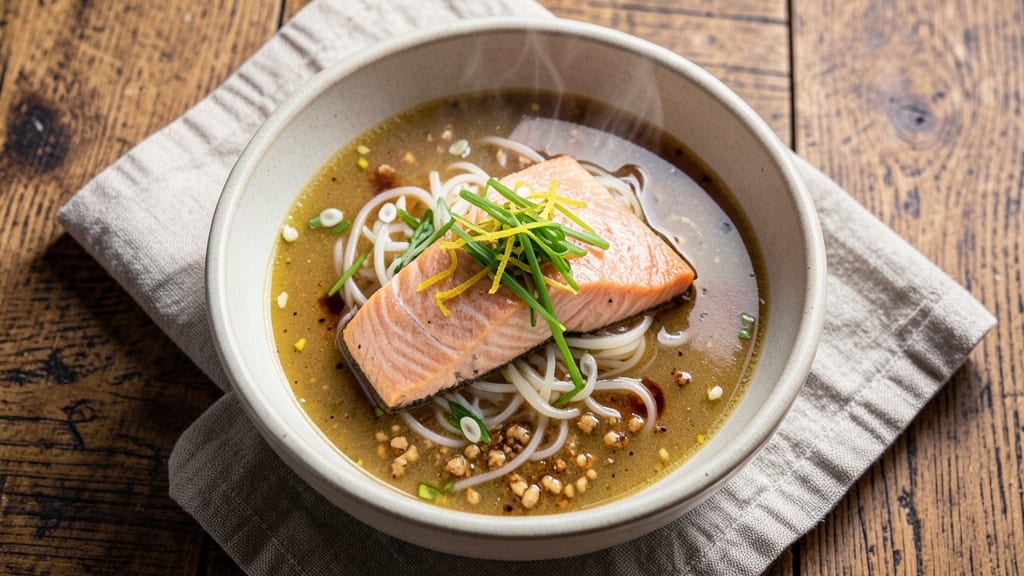
This Asian salmon soup recipe delivers a perfect balance of silky broth, tender salmon, and delicate egg ribbons—each bite is a harmony of umami, citrus, and aromatic ginger.
The secret lies in a slow-simmered broth that extracts deep flavor from ginger, garlic, and star anise, while the salmon poaches to perfection in the same fragrant liquid.
I developed this recipe after years of testing—it’s the kind of dish that feels both comforting and refined, with every ingredient playing its part.
The broth is where the magic happens: a fragrant ginger-lime base infused with soy sauce for depth and a touch of chili for warmth. The salmon, poached gently in this aromatic liquid, stays moist and flaky, while silky egg ribbons add texture and richness.
This isn’t just a soup—it’s a complete meal, packed with protein, fresh herbs, and a brightness that cuts through the richness. The result is a dish that’s elegant enough for dinner guests but simple enough for a weeknight.
What makes this recipe stand out is its versatility. Adjust the spice level to your taste, swap in mushrooms or bok choy for extra texture, or serve it over rice for a heartier meal.
The broth alone is worth the effort—it’s the kind of flavor that lingers, making leftovers taste even better the next day. Whether you’re feeding a crowd or treating yourself to a cozy solo meal, this soup delivers restaurant-quality results at home.
Pair it with steamed jasmine rice or crispy spring rolls for a full Asian-inspired spread. The key to success? Patience in simmering the broth and precision in poaching the salmon. Once you try it, you’ll never go back to store-bought soup again. Let’s get cooking—your taste buds will thank you.
Ingredients for asian salmon soup
Fragrant ginger, silky salmon, and bright lime—just 15 ingredients for a restaurant-worthy bowl.
| Ingredient | Amount | Notes |
|---|---|---|
| Wild-Caught Salmon Fillets 🐟 | 1 lb | Skin-on, center-cut preferred |
| Fresh Ginger Root 🧄 | 3 tbsp | Grated, peeled, fresh only |
| Garlic Cloves 🧄 | 4 cloves | Peeled, minced for depth |
| Lime Zest 🍋 | 1 tbsp | Freshly grated for brightness |
| Vegetable Oil 🫒 | 2 tbsp | Light, for sautéing |
| Low-Sodium Soy Sauce 🥢 | ½ cup | For umami base |
| Star Anise Pods 🌿 | 2 whole | Crushed lightly for aroma |
| Red Chili Flakes 🌶️ | ½ tsp | Adjust for heat preference |
| Large Eggs 🥚 | 4 whole | Fresh, cold for ribbons |
| Green Onions 🧅 | ¼ cup | Sliced, white and green parts |
| Fresh Cilantro 🌿 | ¼ cup | Chopped, stems removed |
| Fish Stock 💧 | 4 cups | Homemade or high-quality store-bought |
| Coconut Milk 🥥 | ½ cup | Light, for creaminess |
| Sesame Oil 🫒 | 1 tbsp | Toasted, for finishing |
| Salt 🧂 | 1 ½ tsp | Kosher, adjust to taste |
The ginger and star anise are non-negotiable for that signature aroma. Fresh ginger from the produce section (not powdered) has the best punch—look for firm, knobby roots. Star anise is a game-changer; grab it in the spice aisle or Asian market. For the salmon, wild-caught center-cut stays moistest—ask the fish counter to skin it if needed. I always buy extra lime because zest is wasted if you don’t use the whole thing. The fish stock? Homemade is ideal, but Pacific Foods brand is my grocery store backup when I’m short on time.
No fresh ginger? Powdered at half the amount works in a pinch, but it lacks depth. Swap star anise for 1 tsp cinnamon plus 1 tsp anise seeds if you’re missing it. For the salmon, cod or halibut work equally well—just adjust cooking time. Coconut milk too rich? Substitute with extra fish stock. The eggs? Room temperature makes ribboning easier, but cold works too if you’re in a hurry. And if you’re avoiding sesame oil, neutral oil for finishing keeps the flavor balanced.
This soup tastes even better the next day—3-4 days in the fridge, covered. For leftovers, I portion into containers with rice on the side so lunches are ready. Freezes beautifully for up to 3 months if you add a splash of coconut milk before sealing. The broth alone keeps for 5 days in the fridge—great for quick meals later. Store sesame oil in the fridge after opening to preserve its flavor.
Why You'll Love This Recipe
- No-Fuss Fish Night: I swear, this soup comes together while you’re waiting for the water to boil. Just sear the salmon skin-side down—that’s it—and the rest is simmering while you chop a few cloves of garlic and grate some ginger. No fancy techniques, no stress.
- Umami Bomb: The moment that ginger and lime zest hit the simmering broth? Chef’s kiss. The salmon adds this rich, buttery depth, while the garlic roasts into sweetness—like a cross between a pho and a zesty seafood stew. Honestly, the first time I made it, I took three bowls.
- Lunchbox Hero: Between us, this soup is perfect for meal prep. The salmon stays tender for days, and the broth gets even better as the flavors meld. Pack it in a thermos for work—your coworkers will think you’re a genius when they smell it at lunch.
- Budget-Friendly Luxury: Wild-caught salmon feels fancy, but here’s the secret: a single fillet stretches across two servings, and the rest of the ingredients cost pennies. I’ve made this for date nights, sick days, and even a potluck—no one ever guesses how easy it was to pull off.
Step-by-step instructions for Asian salmon soup with silky egg ribbons
This fragrant broth comes together with layers of warmth and brightness—let's build it step by step.
Build the Fragrant Base
Heat the 2 tablespoons vegetable oil in a large pot over medium heat. Add the 3 tablespoons grated fresh ginger root and 4 minced garlic cloves, cooking for 2-3 minutes until the ginger becomes aromatic and the garlic turns golden—this is where the soul of your soup begins.
Add the 2 lightly crushed star anise pods and 0.5 teaspoon red chili flakes, stirring for 30 seconds until the spices bloom. Pour in the 4 cups fish stock and bring to a gentle simmer. The broth should smell like a bustling Asian market—bright, earthy, and just a little spicy. This aromatic base will infuse every bite with depth.
Infuse and Simmer the Broth
Add the 1 lb wild-caught salmon fillets (skin-on, center-cut preferred) to the simmering broth. Let them cook gently for 8-10 minutes until the salmon is just cooked through—it should flake easily with a fork but still hold together. The skin will crisp slightly, adding texture to the soup.
Stir in the 0.5 cup low-sodium soy sauce and 1 tablespoon lime zest, letting the broth simmer for another 5 minutes. The lime zest will brighten the flavors while the soy sauce deepens the umami. Taste and adjust the 1.5 teaspoons salt as needed—this is where you balance the seasoning before adding the delicate elements.
Create Silky Egg Ribbons
While the broth simmers, prepare the eggs by whisking together the 4 cold large eggs in a bowl. This cold temperature is key—it creates those signature silky ribbons when dropped into the hot broth. Have a small bowl of cold water nearby for rinsing your fingers.
Carefully drop the eggs one at a time into the simmering broth. They'll curl into delicate ribbons as they cook—this takes about 2-3 minutes. Remove them with a slotted spoon and set aside. The broth should now be rich and fragrant, ready for the final touches.
Finish with Creaminess and Freshness
Reduce the heat to low and stir in the 0.5 cup coconut milk and 1 tablespoon toasted sesame oil. The coconut milk adds a velvety texture, while the sesame oil brings a nutty aroma. Let the soup simmer gently for 2 minutes to meld these flavors together.
Return the egg ribbons to the pot and gently stir in the 0.25 cup sliced green onions and 0.25 cup chopped fresh cilantro. Ladle the soup into bowls, making sure each serving gets its share of those beautiful egg ribbons. The contrast of the warm broth, silky eggs, and fresh herbs makes every spoonful feel like a little celebration.
Pro Tips For Making Asian Salmon Soup
- Sear Salmon First: Hit the salmon with a quick sear in oil—skin-side down—before adding broth. The crispy skin adds texture and flavor, and it keeps the fillets from curling into sad little rolls. I used to skip this, but now I swear by the contrast it gives.
- Mince Ginger Like Snow: Use a microplane or fine grater for ginger—no big chunks or muddy paste. You want it to dissolve smoothly into the soup, not sit as a chewy reminder you rushed. (Yes, even if you’re impatient like me.)
- Don’t Boil the Garlic: Sauté garlic in oil until just golden—about 30 seconds—before adding broth. Let it cook too long, and it turns bitter. I learned this the hard way after a batch of soup tasted like a garlic factory fire.
- Add Lime Zest Last: Toss lime zest in at the very end—after the salmon is cooked and the soup is off the heat. The acid brightens the dish without cooking out, and it keeps the zest from turning into a sad, mushy pile. (Your future self will notice the difference.)
Wine and beer pairings for these flavors
Light White Wine
An off-dry Riesling from Germany or Alsace is my go-to pairing—its bright acidity and honeyed notes complement the ginger-lime broth beautifully. Look for a Keller or Trimbach bottle; their crisp profiles cut through the soup’s richness while enhancing the salmon’s natural sweetness.
Serve slightly chilled (45-50°F) to preserve its freshness. 🍷
Creamy Beer Options
A Japanese junmai sake or light lager like Sapporo balances the soup’s umami without overpowering it. For a craft option, try a Belgian witbier (like Hoegaarden)—its citrusy coriander notes mirror the lime zest in the broth. Avoid heavy stouts or IPAs, which would clash with the delicate egg ribbons.
Dry Sparkling Wine
If you prefer bubbles, a dry Prosecco or Spanish Cava adds effervescence that cleanses the palate between spoonfuls. The lemon and green apple notes in these wines echo the lime zest, while their crisp acidity keeps the meal feeling light. Serve at 40-45°F for the best experience.
Herbal Tea Pairing
For a non-alcoholic option, jasmine green tea with a splash of yuzu juice mirrors the soup’s floral and citrus notes. Brew the tea lightly (2 minutes) to avoid bitterness, then chill. The tea’s delicate aroma enhances the ginger and salmon flavors without competing.
Rice Wine Finisher
Add a shot of chilled Mirin or sake to the soup just before serving—I like Dassai or Gekkeikan—to deepen the umami. The wine’s sweetness and acidity** bridge the gap between the broth and salmon, making every bite more cohesive. 🍶
Nutrition facts
Frequently asked questions
Can I substitute salmon with another type of fish?
Cod, halibut, or sea bass work beautifully—they have similar delicate textures. For a stronger flavor, try snapper or mahi-mahi, but reduce cooking time by 1-2 minutes since these fish cook faster. The key is choosing firm, fresh fillets that stay moist when poached.
How do I make the egg ribbons turn out perfectly?
Use cold eggs straight from the fridge and drop them gently into the simmering broth (not boiling). The water should be at a gentle simmer, not a rolling boil. For extra-silky ribbons, add a splash of coconut milk to the broth before dropping in the eggs. If they break easily, your broth might be too hot—reduce heat slightly.
Can I make this soup ahead of time?
Yes! The broth tastes even better the next day—store it in an airtight container in the fridge for 3-4 days. For serving, reheat gently on the stove (don't boil) and add the egg ribbons just before eating. You can also freeze the broth alone for up to 3 months, but hold off on adding the eggs until reheating.
What if I don't have star anise?
No problem! Swap it for 1 tsp ground cinnamon plus 1 tsp anise seeds (toasted briefly in oil) for similar warmth. For a simpler option, just use extra ginger (4 tbsp) and 1 tsp black peppercorns—they'll still create that aromatic base. The soup will taste different but still delicious!
How can I make this soup spicier or milder?
For extra heat, add 1-2 tbsp sambal oelek or 1 chopped Thai chili with the ginger. To mellow it, reduce the chili flakes to ¼ tsp or omit entirely. You can also add a pinch of sugar to balance any sharpness. Always taste the broth before adding the salmon!