
Soups & Stews
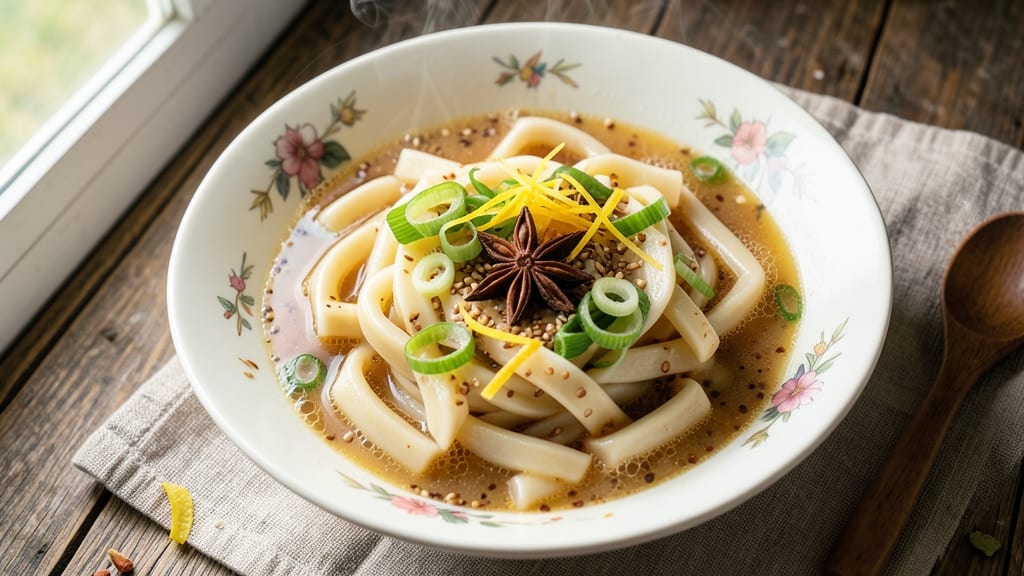
This Asian udon noodle soup recipe delivers the perfect balance of rich miso-ginger broth and slippery wheat noodles that cling to every spoonful. The secret lies in a carefully layered broth—simmered with dashi, aromatic ginger, and umami-packed miso—that transforms simple ingredients into a deeply satisfying bowl.
I’ve perfected this recipe over years of testing, ensuring the noodles stay perfectly al dente while the broth develops a complex, savory depth that lingers long after the last bite.
The process begins with building the broth, where toasting sesame seeds and star anise adds nutty warmth, while fresh ginger and scallions infuse the liquid with bright, fresh notes.
This isn’t just a quick weeknight meal—it’s a labor of love that rewards patience with a soup so flavorful, it feels like a hug in a bowl. The udon noodles, wide and chewy, absorb the broth beautifully, creating that signature slippery texture that defines authentic udon.
What sets this recipe apart is the flexibility—customize it with soft-boiled eggs, thinly sliced mushrooms, or a sprinkle of chili oil for heat. The final touch? Garnishing with scallions, sesame seeds, and a drizzle of soy sauce to elevate every spoonful.
Whether you’re serving a crowd or treating yourself to a comforting solo meal, this udon noodle soup is a game-changer that brings the heart of Asian cuisine to your kitchen.
Ready in about 45 minutes, this recipe serves four generously, with leftovers that taste even better the next day. The key to success? Simmering the broth low and slow—never rush it.
Trust the process, and you’ll have a bowl of udon so delicious, it’ll become your new go-to dinner. Let’s get cooking!
Ingredients for asian udon noodle soup
Rich miso-ginger broth meets slippery udon—just 14 ingredients for a soul-warming bowl.
| Ingredient | Amount | Notes |
|---|---|---|
| Dried Udon Noodles 🍜 | 8 oz | Fresh or dried, cut into 8-inch strands |
| White Miso Paste 🧈 | ¼ cup | High-quality, fermented miso |
| Dashi Stock 💧 | 4 cups | Homemade or quality instant |
| Fresh Ginger 🧄 | 2 tbsp | Grated, fresh for zing |
| Green Onions 🧅 | ½ cup | Thinly sliced, white and green parts |
| Star Anise 🌿 | 1 whole | Whole pod, for aroma |
| Sesame Seeds 🥜 | 1 tbsp | Toasted, for nutty crunch |
| Light Soy Sauce 🥢 | ½ cup | Kikkoman preferred |
| Sesame Oil 🫒 | 1 tbsp | Toasted, for aroma |
| Soft-Boiled Eggs 🥚 | 4 whole | Optional garnish, 6-minute eggs |
| Shiitake Mushrooms 🍄 | 4 whole | Thinly sliced, optional |
| Chili Oil 🌶️ | 1 tbsp | Optional, for heat |
| Salt 🧂 | 1 tsp | Adjust to taste |
| Water 💧 | 6 cups | For broth base |
The miso and dashi are non-negotiable for that deep umami punch. Miso paste from the refrigerated section at Trader Joe's or Whole Foods is my go-to—it's fresher than the shelf-stable stuff. For dashi, I make my own with kombu and bonito flakes (if you're not vegetarian), but Marukome instant dashi works in a pinch. The ginger? Freshly grated makes all the difference—bottled ginger tastes like regret. Star anise adds subtle warmth, but skip it if you're sensitive to strong spices. Toast your sesame seeds in a dry pan for 30 seconds—they'll smell amazing and add crunch.
No miso? Soy sauce plus a dash of white vinegar gets you close, though you'll miss that fermented complexity. Dried udon? Soak it in hot water for 3-4 minutes—don't overcook or it turns mushy. Fresh udon from Asian markets is a game-changer, but dried works fine. The mushrooms? Shiitake or cremini both work—just slice them thin. Soft-boiled eggs are optional but add that restaurant-quality touch. 6-minute eggs are perfect: runny yolk, set white. For heat lovers, chili crisp from Asian grocery stores beats regular chili oil any day.
Broth keeps for 3 days in the fridge—taste even better reheated. Store noodles separately to avoid sogginess. Freeze broth in ice cube trays for quick meals later. Garnishes like sesame seeds and chili oil stay fresh for 6 months in the pantry. Pro tip: Make a double batch of broth—it's the star. The noodles? Use within 2 days of cooking for best texture. Leftovers? Reheat gently with a splash of water to loosen the broth.
Why You'll Love This Recipe
- No Chopping Needed: I swear by this when I’m too tired to dice anything—just slice the ginger thin and toss in the green onions whole. The udon does all the work while you sip your soup.
- Umami Bomb: That white miso paste? It’s the secret weapon—savory, deep, and just a spoonful makes the broth sing. The dashi stock rounds it out like a warm hug in a bowl.
- Meal Prep MVP: Make a big batch on Sunday, and you’ve got lunch covered all week. The noodles soften perfectly when reheated, and the flavor only gets richer as it sits.
- Budget Comfort: Dried udon and miso are dirt cheap, yet this tastes like a fancy ramen shop. Honestly, I’ve fed my whole family for under $10—no guilt, just happy stomachs.
Step-by-step instructions for Asian udon noodle soup
Here's how to create a rich, comforting udon soup with perfect slippery noodles and aromatic miso-ginger broth.
Prepare the Udon Noodles
Fill a large pot with 6 cups water and bring to a rolling boil. Add 1 teaspoon salt and the 8 ounces dried udon noodles. Cook according to package instructions, usually 3-5 minutes, until the noodles are tender but still slightly firm to the bite. They should float to the surface when done.
Drain the noodles immediately in a colander and rinse under cold water for 10 seconds to stop the cooking process. This prevents them from becoming mushy. Set aside in a bowl and toss with 1 tablespoon sesame oil to prevent sticking and add subtle nutty flavor. I like to keep them separate until serving so they don't soak up too much broth.
Build the Miso-Ginger Broth
In a clean pot, combine the 4 cups dashi stock, 0.25 cup white miso paste, 0.5 cup light soy sauce, and 1 whole star anise. Bring to a gentle simmer over medium-low heat for 5-7 minutes, stirring occasionally, until the miso paste dissolves completely and the broth becomes fragrant.
Add the 2 tablespoons grated fresh ginger and 1 tablespoon sesame oil to the simmering broth. The aroma should become noticeably more complex as the ginger releases its zesty oils. Taste and adjust seasoning with additional salt if needed. Remove the star anise pod before proceeding—it's served its purpose for aroma.
Cook the Shiitake Mushrooms
While the broth simmers, heat a separate skillet over medium heat. Add 4 whole shiitake mushrooms that have been thinly sliced and cook for 3-4 minutes until they release their moisture and develop a slightly golden color. The mushrooms should be tender but still retain some bite.
Remove the mushrooms from the heat and set aside. In the same skillet, add 1 tablespoon chili oil and swirl to coat the pan. This adds heat and depth to the soup. The chili oil should be warm but not smoking when you're ready to combine everything.
Assemble and Serve
Return the prepared udon noodles to the pot with the miso-ginger broth. Stir gently to combine, allowing the noodles to absorb some of the flavorful liquid without becoming soggy. Add the cooked shiitake mushrooms and simmer together for 1-2 minutes just to heat through.
Divide the udon soup among four bowls. Top each serving with 4 whole soft-boiled eggs (halved lengthwise), 0.5 cup sliced green onions, and 1 tablespoon toasted sesame seeds. The contrast of the creamy eggs, fresh green onions, and nutty sesame seeds against the rich broth creates the perfect balance of textures and flavors.
Customize to Taste
Before serving, you can adjust the soup's intensity to your preference. For a lighter version, add a splash of hot water to dilute the broth slightly. For more depth, stir in an additional 1 tablespoon white miso paste or a pinch of salt. The beauty of this recipe is its flexibility—adjust the seasoning to suit your taste while maintaining the essential balance of umami, spice, and freshness.
Pro Tips For Making Asian Udon Noodle Soup
- Bloom the Miso Slowly: I learned this the hard way—dumping miso paste straight into boiling dashi kills its flavor. Instead, whisk it into just simmering stock (no rolling boil) and let it melt in for 2 minutes. The heat should be gentle enough to see tiny bubbles, not violent ones. This keeps the umami deep and the soup smooth, not bitter.
- Toast the Ginger Slices: Fresh ginger’s sharpness softens into warmth when toasted. Thinly slice it (about 1/8-inch thick), then dry-fry in a pan for 30 seconds until fragrant—no color needed. Toss these into the broth last minute; they’ll infuse the soup with a dry, spicy depth that raw ginger can’t match. (Yes, even if you’re impatient like me.)
- Prep Noodles Separately: Udon noodles turn mushy if they soak too long in broth. Cook them just until tender (about 2-3 minutes in boiling water), drain, and rinse briefly with cold water. Then add them to the soup for the last 30 seconds of simmering—this keeps them chewy and prevents a gluey mess. Trust me, your soup will thank you.
- Use Cold Stock for Miso: Cold dashi stock (straight from the fridge) dissolves miso paste cleaner than warm. Pour it into a bowl first, then whisk in the miso until fully combined before heating. This avoids clumps and gives you a velvety base. I was skeptical until I tried it—now I never skip it.
Dietary considerations for this dish
Gluten-Free Swaps
Traditional udon noodles contain wheat gluten, but you can easily adapt this recipe for gluten-free diets. Use gluten-free udon noodles made from rice flour (brands like Tao Foods or King Soba offer great options).
For homemade, blend 1 cup rice flour, 1 cup tapioca starch, and ½ cup cornstarch with 1 egg and ½ cup water—roll and cut into noodles. Cook these in boiling water for 3-4 minutes until tender.
Just be mindful: gluten-free noodles absorb broth differently, so add them 1 minute earlier than wheat-based udon. ✨
Vegetarian Adaptations
Skip the dashi (which often contains fish) and use vegetable dashi made from kombu and shiitake mushrooms. Replace miso with white miso (fermented with barley) or chickpea miso (gluten-free).
For protein, add silken tofu cubes (pan-fried until golden) or marinated tempeh. I love thinly sliced daikon radish for crunch—it adds freshness that balances the rich broth. 🌱
Low-Sodium Options
This recipe naturally contains salt from miso, soy sauce, and dashi, but you can reduce it by using low-sodium soy sauce (like San-J Tamari) and cutting the ½ cup soy sauce to ¼ cup.
Boost umami with 1 extra tablespoon white miso paste or 1 teaspoon fish sauce (if not vegetarian). For extra flavor without salt, add 1 clove minced garlic or 1 tsp grated lemon zest to the broth. Always taste as you go—adjust gradually! 💡
Dairy-Free Notes
This udon soup is naturally dairy-free, but watch for hidden sources like butter in some miso pastes. Opt for 100% pure white miso (no additives) and vegetable-based broths. If using soft-boiled eggs, ensure they’re fresh and organic—some brands process eggs with dairy-based coatings.
For extra richness, stir in 1 tablespoon coconut cream at the end, but save it for the final bowl to avoid curdling. 🥚
Allergen-Friendly Tips
For sesame allergies, skip the sesame oil and seeds—replace with toasted pumpkin seeds (for crunch) or extra green onions. If avoiding eggs, top with crispy fried shallots or toasted nori strips instead.
Double-check miso labels for soy allergens (some contain wheat). I always keep allergen-free swaps like tapioca-based udon and nut-free toppings on hand for guests with sensitivities. 🌟
Keto Considerations
Udon noodles are high-carb, but you can create a keto-friendly version by using shirataki noodles (made from konjac yam). Simmer them in the broth for 2-3 minutes to soften. Replace miso with coconut aminos (for soy-free umami) and add extra protein like grilled chicken or shrimp.
Skip the soft-boiled eggs (high in carbs) and garnish with avocado slices or cheese crisps for a low-carb twist. 🥑
Nutrition facts
Frequently asked questions
Can I use instant miso paste instead of fresh?
Instant miso works perfectly in this recipe—just dissolve 1 tablespoon in ½ cup hot water first to create a paste, then add it to the broth. The texture will be slightly smoother, but the flavor remains rich and umami-packed. For best results, use white miso (not red) to match the recipe's brightness.
How do I prevent my udon noodles from getting mushy?
Overcooking is the enemy! Cook udon for just 3-4 minutes in boiling water until they float, then drain immediately and rinse with cold water for 10 seconds to stop cooking. Keep them separate from the broth until serving to maintain their perfect al dente texture. Pro tip: Toss with 1 tablespoon sesame oil after draining to prevent sticking.
Can I make this soup ahead of time?
Yes, but separate the components! Prepare the broth (without noodles) and store it in the fridge for up to 3 days or freeze for 3 months. Cook noodles fresh when serving. Reheat broth gently on the stove—never microwave, as it can make the miso taste bitter. Add fresh toppings like eggs and green onions just before serving for maximum freshness.
What's the best way to add protein to this udon?
Soft-boiled eggs, thinly sliced mushrooms, or shredded chicken work beautifully. For extra richness, try pan-seared tofu cubes (press and marinate first) or shrimp sautéed with garlic and chili oil. Add protein 1 minute before serving to keep it warm and tender. Vegetarians can use silken tofu or tempeh for a meaty texture.
Why does my broth taste too salty?
Miso and soy sauce pack a salty punch! To balance it, add ½ cup hot water to dilute the broth slightly. For extra depth without salt, stir in 1 tablespoon grated ginger or 1 clove minced garlic. Taste as you go—you can always add more water, but you can't remove salt. The key is gradual adjustments!