
Soups & Stews
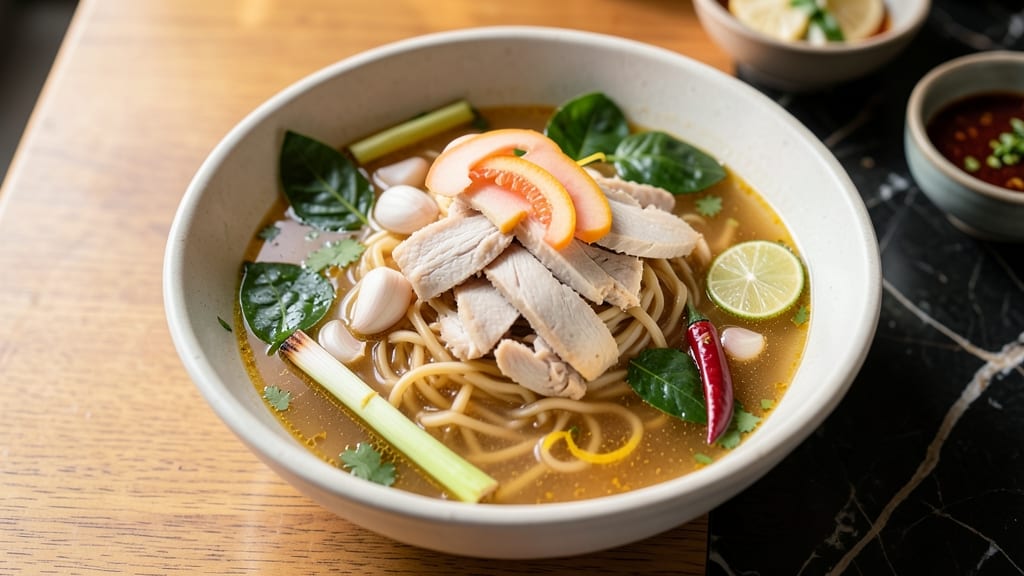
This authentic Thai chicken noodle soup recipe transports you to Bangkok with every steaming bowl—fragrant lemongrass, kaffir lime leaves, and galangal root create a broth so complex, it tastes like a hug. The secret lies in balancing sweet, sour, salty, and spicy flavors through precise seasoning, not overwhelming heat.
I've perfected this recipe after years of testing, ensuring the broth develops deep umami while keeping the noodles perfectly tender.
The foundation is a slow-simmered broth where chicken, ginger, and aromatic herbs infuse for hours, creating layers of flavor that no instant packet can replicate.
We'll use traditional ingredients like coconut milk for richness, fish sauce for depth, and lime juice for brightness—each playing a critical role in that signature Thai taste. The result is a soup that's both comforting and vibrant, with every spoonful telling a story of Thai home cooking.
What makes this recipe truly authentic is the attention to detail: fresh herbs, proper herb toasting, and careful broth reduction to achieve that signature balance. The noodles are cooked just shy of al dente to absorb the aromatic broth without losing structure.
By the time you serve it steaming hot with fresh cilantro, bean sprouts, and lime wedges, you'll understand why this dish is beloved across Thailand.
This isn't just soup—it's a complete culinary experience that delivers restaurant-quality results at home. The instructions walk you through every step, from preparing the aromatic paste to assembling the final bowl with traditional garnishes.
Whether you're cooking for family or hosting dinner guests, this recipe promises an unforgettable Thai dining experience.
Ingredients for authentic thai chicken noodle soup
Fragrant herbs, tender chicken, and aromatic broth make this Thai noodle soup unforgettable.
| Ingredient | Amount | Notes |
|---|---|---|
| Chicken Breast 🍗 | 1 ½ lb | Boneless, skinless, cut into pieces |
| Fresh Lemongrass Stalk 🌿 | 2 whole | Bruised, bottom 6 inches only |
| Kaffir Lime Leaves 🍋 | 4 whole | Fresh, outer leaves removed |
| Galangal Root 🌿 | 3 oz | Fresh, peeled, sliced thinly |
| Fresh Ginger 🧅 | 2 oz | Peeled, sliced into coins |
| Garlic Cloves 🧄 | 6 cloves | Smashed, not minced |
| Coconut Milk 🥥 | 1 can | Full-fat, 13.5 oz can |
| Fish Sauce 🍶 | 2 tbsp | Red Boat brand preferred |
| Thai Bird's Eye Chilies 🌶️ | 2 whole | Seeds removed for mild heat |
| Fresh Cilantro 🌿 | ¼ cup | Stems included, chopped |
| Bean Sprouts 🌱 | 1 cup | Fresh, rinsed well |
| Lime Juice 🍋 | 2 tbsp | Freshly squeezed |
| Egg Noodles 🍜 | 8 oz | Fresh or dried, rice noodles optional |
| Palm Sugar 🍯 | 1 tbsp | Or substitute brown sugar |
| Salt 🧂 | 1 tsp | To taste, adjust carefully |
The galangal and kaffir lime leaves are non-negotiable for authentic flavor—look for them at Asian markets or well-stocked grocery stores. Fresh galangal has a citrusy, peppery kick similar to ginger but with its own unique depth. If you can't find it, substitute extra ginger plus a pinch of turmeric. For lemongrass, grab the thick, pale stalks with tight layers—they bruise easily, so wrap them in a damp towel in the fridge until use. Costco or H Mart usually carry these staples in the frozen or fresh produce sections, and I always buy extra to keep on hand for future Thai dishes.
No coconut milk? Full-fat coconut cream works in a pinch, but the texture will be thicker. Fish sauce is the umami backbone—Red Boat is the gold standard, but any reputable brand will do. Chilies can be adjusted: skip them entirely for a mild version or add more for heat lovers. The palm sugar adds just the right touch of sweetness, but brown sugar or coconut sugar work beautifully if you're out. For the noodles, fresh rice noodles are traditional, but egg noodles hold up better if you're prepping ahead. If your noodles are too thick, break them into smaller pieces before cooking.
This broth develops deeper flavor the next day, so make a double batch and reheat. Store it in the fridge for up to 5 days or freeze for 3 months—the aromatics actually improve with time. For fresh herbs like cilantro and bean sprouts, keep them in separate containers to maintain crispness. The noodles should be cooked just until tender—overcooking turns them mushy. Serve with lime wedges on the side so everyone can adjust the brightness to their taste. Leftovers reheat beautifully, and the broth makes a fantastic base for other Thai dishes.
Why You'll Love This Recipe
- One-Pot Magic: I swear by this—just toss everything in a single pot, and the lemongrass and galangal do all the work. No fancy techniques, no stress, and the broth builds flavor while you prep the noodles.
- Citrusy, Spicy, Soulful: That first sip? Chef’s kiss. The galangal adds a peppery kick, the lime leaves bring bright acidity, and the ginger ties it all together—like a warm hug in a bowl. Honestly, it’s the kind of soup that makes you want to linger at the table.
- Meal Prep MVP: Make a big batch on Sunday, and you’ve got lunch covered all week. The broth stays rich overnight, and the noodles reheat perfectly—my kids actually ask for leftovers, which never happens.
- Budget-Friendly Powerhouse: Chicken breast stretches far, and the aromatic roots (lemongrass, galangal) are cheap but pack a punch. I’ll be real: this recipe feeds four for under $10, and the leftovers taste just as good the next day.
Step-by-step instructions for authentic Thai chicken noodle soup
Here's how to build the fragrant broth and balanced flavors that define this classic dish.
Prepare the Aromatic Base
In a large pot, combine the 1.5 lb chicken breast (cut into pieces), 2 bruised lemongrass stalks (bottom 6 inches only), 4 kaffir lime leaves, 3 oz sliced galangal root, 2 oz sliced ginger, 6 smashed garlic cloves, and 2 whole Thai bird's eye chilies (seeds removed). Add 6 cups water and bring to a boil over high heat. Once boiling, reduce to medium-high heat and skim off any foam that rises to the surface.
Let the broth simmer uncovered for 20 minutes until the chicken is fully cooked and the aromatics have infused deeply. The broth should develop a pale golden color and emit an intense, citrusy aroma from the lemongrass and lime leaves. This foundational step creates the signature complexity of authentic Thai flavors—don't rush it.
Build the Broth with Coconut and Seasonings
Remove the chicken from the broth and set it aside. Strain the broth through a fine-mesh sieve into a clean pot, pressing gently on the aromatics to extract all their flavor. Return the strained broth to the pot and stir in the 1 can coconut milk, 2 tbsp fish sauce, 1 tbsp palm sugar, and 1 tsp salt. Bring the mixture to a gentle simmer over medium heat and cook for 10 minutes to allow the flavors to meld.
Here's where the magic happens: the coconut milk should create a delicate sheen on the surface of the broth, while the fish sauce and palm sugar balance the natural acidity of the citrus and galangal. Taste and adjust the seasoning—you're aiming for a harmonious blend of sweet, salty, sour, and umami. The broth should be fragrant with notes of lemongrass and lime, not overpowering with heat.
Shred the Chicken and Prepare Noodles
Using two forks, shred the cooked chicken into bite-sized pieces. Return the shredded chicken to the pot with the broth and simmer for 5 minutes to absorb all those incredible flavors. Meanwhile, prepare the 8 oz egg noodles according to package instructions—typically 3-4 minutes in boiling water until al dente. Drain and set aside, reserving 1 cup of pasta water.
This is the moment that matters: the chicken should be fully integrated into the broth, and the noodles should be cooked just shy of perfect—they'll finish cooking in the hot soup. The reserved pasta water is your secret weapon for adjusting the soup's consistency later if needed.
Assemble and Finish the Soup
Add the cooked noodles to the pot with the chicken broth and stir gently to combine. Turn off the heat and let the soup rest for 2 minutes to allow the flavors to settle. Then stir in the 1 cup bean sprouts, 0.25 cup chopped cilantro, and 2 tbsp freshly squeezed lime juice. The bean sprouts will add a satisfying crunch, while the cilantro and lime juice brighten the dish with fresh acidity.
Ladle the soup into bowls and serve immediately. Each spoonful should deliver a perfect balance of creamy coconut, aromatic broth, tender chicken, and fresh herbs. The soup will continue to improve as it sits for 5-10 minutes, allowing all the flavors to meld together beautifully. For extra authenticity, serve with a side of fresh lime wedges and additional chili slices on the side.
Pro Tips For Making Authentic Thai Chicken Noodle Soup
- CHAR THE GALANGAL: Use a sharp knife and slice it thinly—no thicker than ¼-inch—so it infuses flavor without turning the broth into a chewy mess. (I learned this the hard way after straining out a chunk that looked like a tree branch.)
- SMASH THE LEMONGRASS: Bruise the stalk with the flat side of your knife before slicing—this releases oils and aroma without making it bitter. (Yes, even if you’re impatient like me, take the extra 10 seconds.)
- SIMMER THE CHICKEN LOW: Once the broth starts, reduce to a bare simmer—no rolling boil. Chicken breast turns rubbery fast, and you want tender, shreddable meat, not sad, dry strips.
- STRAIN THE LIQUOR: Skip the kaffir lime leaves in the broth but add them back at the end with a splash of fish sauce and lime—this keeps the broth clear but gives the final dish that bright, herbal punch. (Your future self will thank you.)
Essential equipment for this dish
Essential Pot
Start with a large, heavy-bottomed pot—I use my 6-quart stainless steel Dutch oven from All-Clad—to handle the simmering process without scorching. The deep sides prevent splattering when adding coconut milk, and the stainless steel conducts heat evenly for consistent cooking.
A fine-mesh sieve (like the OXO Good Grips) is critical for straining the aromatic broth without losing precious galangal or lime leaves. 🌡️
Herb Toolkit
Invest in a mortar and pestle (I love the Kuhn Rikon ceramic one) to bruise lemongrass and ginger—this releases their essential oils for maximum flavor. A sharp chef's knife (like the Wüsthof Classic) is a must for slicing galangal and mincing garlic.
For measuring small quantities, a scalpel or microplane works best for galangal's fibrous texture. Store these tools in a dry, cool place to maintain their sharpness.
Thermometer
A precision thermometer (I use the Thermoworks Thermapen ONE) ensures your broth reaches the ideal simmer range of 185-200°F. This prevents overcooking the delicate aromatics while allowing them to infuse properly.
The instant-read feature lets you monitor the broth's temperature without guesswork, which is especially helpful when balancing the coconut milk's heat sensitivity. 💡
Fresh Ingredient Storage
Keep kaffir lime leaves and galangal root in airtight containers wrapped in a damp paper towel to maintain freshness for up to 5 days in the fridge. Lemongrass should be stored the same way, with the cut ends submerged in water.
For Thai bird's eye chilies, a small glass jar in the fridge preserves their potency for 2 weeks. These steps ensure your soup tastes as vibrant as possible when you're ready to cook. 🌿
Noodle Prep Tools
Use a fine-mesh colander (like the OXO Good Grips) to drain noodles perfectly—it prevents overcooking while retaining some starchy water for later adjustments. A pair of tongs helps transfer hot noodles without sticking.
For portion control, a ladle with a strainer (such as the Norpro Stainless Steel Ladle) makes serving clean bowls effortless. Pre-measure noodles in small bowls before cooking to avoid overcrowding in the pot. 🍜
Nutrition facts
Frequently asked questions
Why does authentic Thai chicken noodle soup need coconut milk if it's not creamy?
The coconut milk adds richness and balances the broth's acidity from lime and galangal, creating that signature Thai harmony. It's not about creaminess but about depth—just 1 can creates a delicate sheen and rounds out the flavors without making the soup heavy. Think of it as the "glue" that ties all the aromatic elements together.
Can I substitute galangal if I can't find it?
Yes, but it won't be identical. Use 2 oz extra ginger plus ½ tsp turmeric for color and warmth. Galangal has a citrusy, peppery kick that ginger alone can't replicate, but this combo works in a pinch. For the best results, look for galangal in frozen sections at Asian markets—it's often sold pre-sliced.
How do I adjust the spice level for kids or sensitive eaters?
Remove the seeds and membranes from the Thai chilies before adding them to the broth, then use just 1 chili instead of 2. For extra mildness, strain the broth before adding noodles to remove all chili particles. Serve with lime wedges on the side so everyone can control their own heat level. →
Can I make this soup ahead of time?
The broth actually improves overnight. Make it up to 2 days ahead and store in the fridge. Reheat gently on low heat, adding a splash of water if it's too thick. For the noodles, cook them fresh and add them to the reheated broth just before serving to maintain perfect texture. The aromatics will intensify, making flavors even more complex.
What if my soup tastes too fishy?
Start with 1 tbsp fish sauce and taste as you go—you can always add more, but you can't remove the flavor. If it's still too strong, balance it with ½ tsp palm sugar or a splash of lime juice. The coconut milk also helps mellow the fishiness. For next time, use ½ tbsp fish sauce and adjust to taste at the end.