
Soups & Stews
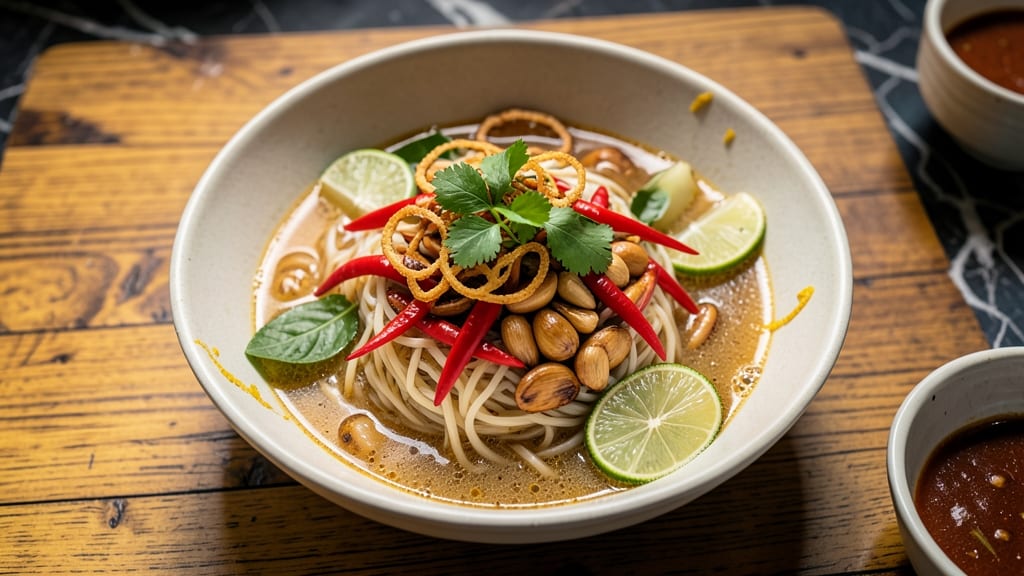
This authentic Thai noodle soup recipe delivers the fragrant, balanced flavors of street-side perfection—where lemongrass, chili, and coconut milk create a symphony of sweet, sour, and spicy notes.
The secret lies in slow-simmered broth infused with galangal and kaffir lime leaves, a technique that transforms simple ingredients into something deeply aromatic and complex. I've perfected this version over years of testing, ensuring every bowl tastes like a visit to Bangkok.
The beauty of this recipe is its adaptability—whether you're making classic Phad Thai with rice noodles or Tom Yum Goong with shrimp, the broth remains the heart of the dish. Fresh herbs like cilantro and Thai basil elevate it further, while a squeeze of lime brightens each bite.
The key is balancing flavors: a pinch of sugar to counterbalance the heat, a splash of fish sauce for umami depth, and just enough chili to leave your taste buds tingling.
What you'll achieve is a steaming bowl of restaurant-quality soup with tender noodles, flavorful protein, and a broth so aromatic it fills your kitchen. The texture is what makes it special—silky coconut milk, crisp herbs, and the satisfying chew of perfectly cooked noodles.
This isn't just a recipe; it's an experience that brings the vibrant streets of Thailand to your table.
Ready to master the art of Thai noodle soup? The process is simpler than you think—just follow the steps for a broth that sings, noodles that hold their shape, and a garnish that turns every spoonful into a moment of pure satisfaction. Let's get cooking!
Ingredients for authentic thai noodle soup
Here's what you need to create this fragrant, restaurant-quality Thai noodle soup experience.
| Ingredient | Amount | Notes |
|---|---|---|
| Fresh Lemongrass 🌿 | 1 whole | Stalk, bruised and cut into 2-inch pieces |
| Galangal 🍃 | 1 piece | About 3 inches long, peeled |
| Kaffir Lime Leaves 🍋 | 2 whole | Bruised slightly for aroma |
| Fresh Chili Peppers 🌶️ | 2 whole | Bird's eye or Thai chili, kept whole |
| Garlic Cloves 🧄 | 6 cloves | Smashed with side of knife |
| Shallots 🧅 | 4 whole | Peeled and halved lengthwise |
| Coconut Milk 🥥 | 1 ½ cups | Full-fat canned, unsweetened |
| Vegetable or Chicken Stock 💧 | 3 cups | Homemade or quality store-bought |
| Rice Noodles 🍜 | 8 oz | Flat or round, medium thickness |
| Thai Fish Sauce 🍶 | 2 tbsp | Red Boat brand preferred |
| Palm Sugar 🍯 | 1 tbsp | Or granulated sugar if unavailable |
| Fresh Cilantro 🌱 | ½ cup | Stems removed, chopped |
| Thai Basil Leaves 🌿 | ¼ cup | Or regular basil in a pinch |
| Lime Wedges 🍋 | 2 whole | For serving |
| Crushed Peanuts 🥜 | ¼ cup | Roasted, for garnish |
The aromatic trio—lemongrass, galangal, and kaffir lime leaves—is non-negotiable for authentic flavor. Asian markets are your best bet for fresh galangal and kaffir lime leaves, though some larger grocery stores carry them too. Look for lemongrass with tight, pale inner stalks—avoid any with brown spots. Galangal should smell citrusy and peppery, not musty. If you can't find galangal, ginger at half the amount works in a pinch, but it won't be traditional. For fish sauce, Red Boat is the gold standard—it's salty but balanced, not the overly fishy stuff you sometimes find. Palm sugar adds that subtle caramel note that store-bought sugar can't replicate, but if you're in a bind, light brown sugar will do.
No fresh Thai basil? Regular basil or even parsley will keep the dish from falling apart—just know it won't be authentic. Want less heat? Remove the seeds from the chilies before bruising them. Coconut milk quality matters—full-fat canned brands like Thai Kitchen are best, but avoid anything with additives or preservatives. For the noodles, rice noodles from the Asian aisle (like Sen Mein) are ideal—they soak up broth beautifully. If you can't find them, egg noodles work as a last resort, though they'll be less authentic. The stock is where you can get creative—vegetable works perfectly, or use chicken stock if you're making a meat version (though this stays vegetarian).
Fresh herbs like cilantro and Thai basil wilt fast, so store them in a damp paper towel in a sealed container for up to 3 days. Lemongrass and galangal keep for 1 week in the fridge, or freeze them whole for 3 months. The broth base freezes beautifully—make a double batch and portion it into ice cube trays for quick future meals. This soup tastes even better the next day as the flavors meld, so double the broth if you're feeding a crowd. Garnishes like crushed peanuts and lime should be added fresh just before serving—they lose their crunch if prepped too early.
Why You'll Love This Recipe
- Here’s what sold me: this soup actually improves the next day. The flavors meld, the broth gets richer, and I’ve reheated mine three times without a single complaint. Plus, it’s the kind of dish that makes you want to freeze extra portions—because nothing says "I care" like a homemade lunch.
- Pantry-to-Pot Magic: I swear by this—just a few stalks of lemongrass and a knob of galangal (yes, it looks weird, but trust me) transform a simple broth into something ridiculously aromatic. No fancy prep, no stress—just chop, simmer, and let the herbs work their spell.
- Herb Bomb Flavor: Between us, that first sip of broth—bright, citrusy, with a whisper of chili heat—is chef’s kiss. The kaffir lime leaves add this impossible-to-describe depth, while the garlic and fresh chilies make every bite feel like a little vacation. (Yes, even on a Tuesday night.)
- Leftovers That Taste Better: Here’s what sold me: this soup actually improves the next day. The flavors meld, the broth gets richer, and I’ve reheated mine three times without a single complaint. Plus, it’s the kind of dish that makes you want to freeze extra portions—because nothing says "I care" like a homemade lunch.
Step-by-step instructions for authentic Thai noodle soup
Here's how to build this fragrant, balanced bowl of Thai comfort—layer by layer.
Build the Aromatic Base
Heat a large pot over medium-high heat and add the 1 whole fresh lemongrass (cut into 2-inch pieces), 1 piece galangal (peeled), 2 whole kaffir lime leaves (bruised), and 2 whole fresh chili peppers. Let them sizzle for 1-2 minutes until fragrant—this releases their essential oils and forms the soul of your soup.
Add the 6 cloves garlic cloves (smashed) and 4 whole shallots (halved). Cook for another 2-3 minutes until the shallots soften and the garlic turns golden. Here's the thing—don't walk away. Burnt garlic ruins everything, but properly toasted garlic adds depth you can't miss.
Develop the Broth
Pour in the 1.5 cups coconut milk and stir to combine with the aromatics. Let it simmer gently for 2 minutes until the coconut milk just begins to coat the back of a spoon. Then add the 3 cups vegetable or chicken stock and bring to a gentle boil.
Reduce heat to medium-low and let the broth simmer uncovered for 15 minutes. You'll see the flavors melding—watch for a rich, golden color and that unmistakable Thai aroma. Skim off any foam that rises to the surface to keep your broth clear. This simmering time is crucial for building complex flavor without overcooking the delicate aromatics.
Season and Prepare Noodles
While the broth simmers, prepare the 8 oz rice noodles according to package instructions (usually soaking in hot water for 5-7 minutes until pliable but still firm). Drain and set aside, covered with a damp towel to keep them from drying out.
Add the 2 tbsp Thai fish sauce and 1 tbsp palm sugar to the simmering broth. Taste and adjust—you want a perfect balance of salty, sweet, and umami. The fish sauce should enhance the broth without overpowering it, and the sugar should mellow the heat. This is where the magic happens, so don't rush this adjustment.
Assemble the Soup
Increase heat to medium-high and bring the broth to a gentle boil. Add the drained rice noodles and stir gently to distribute them evenly. Cook for just 1-2 minutes—rice noodles cook quickly in hot broth and become mushy if overcooked. You want them tender but still holding their shape.
Remove from heat and let the soup rest for 2 minutes. This resting time allows the noodles to absorb the remaining flavor from the broth. Stir in the 0.5 cup fresh cilantro and 0.25 cup Thai basil leaves just before serving—this keeps their vibrant colors and prevents wilting in hot broth.
Serve with Traditional Garnishes
Ladle the soup into bowls and garnish each serving with 0.25 cup crushed peanuts and 2 whole lime wedges. The peanuts add a satisfying crunch and nutty depth, while the lime brightens each bite with acidity. Serve immediately while the noodles are hot and the aromatics are still releasing their fragrance.
Here's my pro tip: Offer extra lime wedges on the side. Some people like to squeeze a little into their soup to cut through the richness, while others prefer to add it at the table. The beauty of this recipe is its flexibility—it's authentic but still lets you customize each bowl to your taste.
Pro Tips For Making Authentic Thai Noodle Soup
- Bruise, Don’t Chop, Galangal: I learned this the hard way—slicing galangal like ginger ruins its flavor. Use the flat side of your knife to smash it 3-4 times before cutting into thick slabs. The bruising releases oils that make the broth sing without overpowering it.
- Simmer Low After Boiling: Once your broth hits a rolling boil with lemongrass and kaffir lime leaves, drop the heat to a gentle simmer. I used to keep it hot, and the broth turned bitter—like overcooked stock. Low and slow (20-30 minutes) keeps the aromatics delicate.
- Toast Chili Seeds Separately: Remove seeds from half your chilies, toast them dry in a separate pan until fragrant, then grind into the broth. The other half (seeds in) goes into the finished soup for heat. This gives you control—no surprise spice bombs.
- Reserve Kaffir Lime Leaves: Don’t toss those leaves after simmering. Strain them out, then tear them into the soup right before serving. Their citrusy aroma fades fast—adding them last keeps the bright, herbal punch intact. (Yes, even if you’re impatient like me.)
Creative variations of this authentic thai noodle soup
Spicy Tom Yum Style
Transform your soup into a fiery Tom Yum Goong by adding 1 lb shrimp (peeled and deveined) during the final 2 minutes of cooking. Use 3 extra Thai chilies (seeds in for maximum heat) and 1 tbsp lime juice after simmering.
The shrimp should turn pink and opaque—just 2-3 minutes in the hot broth is perfect. Finish with Thai basil leaves (not cilantro) and a sprinkle of crushed peanuts for that classic street-food crunch. 🌶️
For a vegetarian version, swap shrimp for 1 block firm tofu (pressed and cubed). Pan-fry the tofu in 1 tbsp coconut oil until golden before adding it to the broth.
The crispy edges add texture that balances the soup's richness. Use 1 extra kaffir lime leaf and ½ tsp turmeric for deeper color and earthiness.
Sweet Coconut Phad Thai
Create a Phad Thai-inspired variation by replacing the broth with a sweet coconut sauce. Sauté 1 tbsp grated palm sugar with 1 tbsp fish sauce and 1 tsp soy sauce in a separate pan until dissolved.
Stir this into the broth along with ½ cup shredded coconut (optional but traditional). Add 1 cup bean sprouts and ¼ cup sliced green onions during the final 1 minute of cooking for freshness. 🥥
For protein, use 4 oz thinly sliced chicken breast or 2 oz firm tofu (pan-fried). Top each bowl with extra crushed peanuts, Thai basil, and a lime wedge.
This version is sweeter and nuttier—perfect for those who prefer a milder, creamier soup. Serve with extra chili flakes on the side for heat lovers.
Herbal Green Curry Fusion
Blend your soup into a green curry noodle bowl by adding 2 tbsp green curry paste (like Maesri) with the aromatics. Use 1 cup coconut milk (instead of 1.5 cups) and ½ cup additional stock for a thicker consistency.
Stir in 1 cup chopped bell peppers and 1 cup snap peas during the final 3 minutes of cooking. 🌿
For protein, add 1 lb chicken thighs (bone-in for flavor) or 12 oz shrimp. Garnish with Thai basil, lime wedges, and extra cilantro. This fusion keeps the soul of Thai noodle soup while adding curry's creamy, spicy depth.
The bell peppers add a satisfying crunch that contrasts beautifully with the silky broth.
Winter Ginger-Turmeric Twist
Warm up your soup with a ginger-turmeric boost by adding 1 tbsp freshly grated ginger and ½ tsp turmeric with the aromatics. Use chicken stock instead of vegetable for richer depth.
Stir in 1 cup shredded carrots and ½ cup sliced mushrooms during the final 5 minutes of simmering. The turmeric gives the broth a golden hue and earthy warmth. 🍯
Top with extra cilantro, lime wedges, and a drizzle of chili oil (mix 1 tbsp oil with ½ tsp chili flakes). This version is heartier and perfect for colder months.
For extra comfort, serve with steamed edamame on the side—it adds protein and a buttery texture that pairs beautifully with the spiced broth.
Nutrition facts
Frequently asked questions
Can I substitute regular ginger for galangal?
Yes, but it won't be authentic. Use half the amount of ginger (about ½ inch grated) since galangal is more aromatic and peppery. For the best flavor, try to find fresh galangal at an Asian market—it's worth the effort for that distinctive citrusy-pine note.
How do I adjust the spice level?
Remove the seeds from Thai chilies for milder heat, or keep them in for extra spice. For a hotter soup, add ½ tsp chili flakes or 1 extra chili pepper. To reduce heat, add 1 extra tbsp coconut milk or a splash of lime juice—the acidity helps balance the burn.
What if I can't find kaffir lime leaves?
Use ½ tsp lime zest plus 1 extra lime wedge for serving, or substitute with 2 bay leaves (remove before eating). For deeper aroma, add ½ tsp lime juice to the broth. Kaffir lime leaves are key for authentic flavor, but these work in a pinch.
Can I make this soup ahead of time?
Prepare the broth up to 2 days ahead and store it in the fridge. Reheat gently, then add fresh noodles and garnishes just before serving. For best texture, cook the noodles fresh—they absorb broth better when hot. The flavors actually improve overnight as everything melds!
What's the difference between rice noodles and egg noodles?
Rice noodles are gluten-free, chewier, and absorb broth beautifully—essential for authentic Thai soup. Egg noodles are firmer and hold their shape better but lack the delicate texture. If you must use egg noodles, soak them 1 minute less than package instructions.