
Soups & Stews
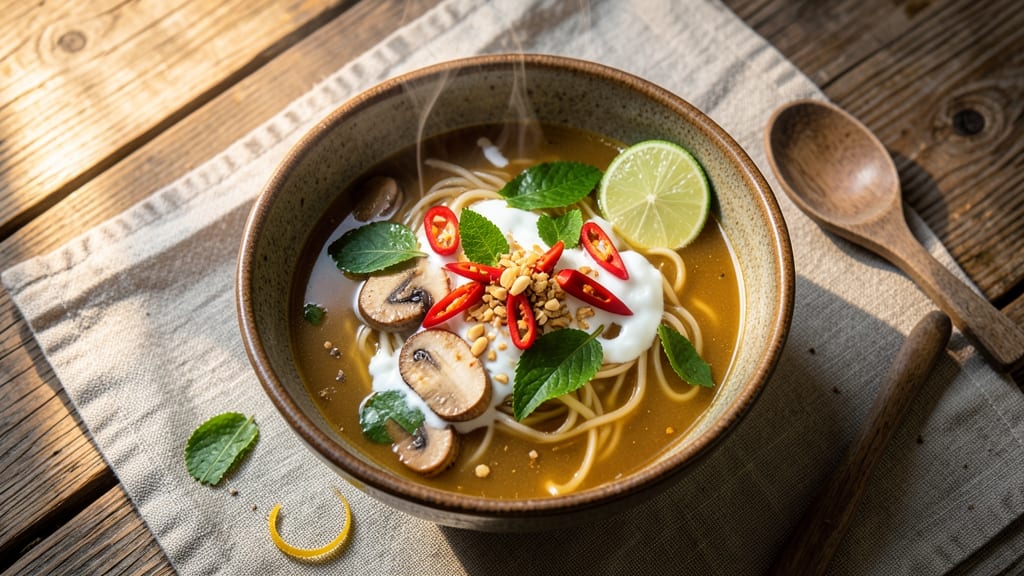
This authentic vegetarian tom yum soup brings the bold, aromatic essence of Thailand to your kitchen without compromising on traditional flavors.
The secret lies in balancing herbal heat—lemongrass, galangal, and kaffir lime leaves—with the bright tang of lime and the creamy depth of coconut milk, all simmered into a complex, fragrant broth.
I’ve perfected this recipe over years of testing, ensuring every spoonful delivers that signature Thai zing while keeping it vegetarian-friendly with tofu, mushrooms, and crisp vegetables.
The foundation of great tom yum is the broth: a bold, citrusy base built from vegetable stock, lime juice, and fresh herbs.
Unlike many adaptations, this version skips shortcuts—we toast whole spices and let them steep for maximum aroma, then simmer just until the flavors meld without losing their bright, spicy edge.
The tofu and mushrooms absorb the broth beautifully, adding tender protein that holds its shape while soaking up all that herbal punch.
What you’ll end up with is a restaurant-quality soup—aromatic, tangy, and just spicy enough to wake up your taste buds—served with fresh cilantro, Thai basil, and lime wedges for that final burst of freshness.
The contrast of creamy coconut milk and fiery chili creates a perfectly balanced bowl that’s as nourishing as it is exciting. This isn’t just a vegetarian version; it’s a true taste of Thailand in every sip.
Perfect for weeknight dinners or impressing guests, this soup comes together in 30 minutes with ingredients you can find at any grocery store. The key is freshness—never dried herbs or powdered spices—and a little patience letting the flavors develop.
Trust me, once you taste the difference, you’ll never go back to store-bought.
Ingredients for authentic vegetarian tom yum soup
Fresh herbs and aromatic spices create this vibrant, vegetarian-friendly Thai masterpiece in one pot.
| Ingredient | Amount | Notes |
|---|---|---|
| Vegetable Stock 💧 | 4 cups | Homemade or quality store-bought |
| Coconut Milk 🥥 | 1 can | Full-fat, 13.5 oz can (not carton) |
| Lemongrass Stalks 🌿 | 3 whole | Bruised, bottom 4 inches only |
| Galangal Slices 🌿 | 3 oz | Fresh, peeled (substitute ginger if needed) |
| Kaffir Lime Leaves 🍋 | 4 whole | Bruised, stems removed |
| Lime Juice 🍋 | ½ cup | Freshly squeezed, about 4 limes |
| Fish Sauce 🍜 | 1 tbsp | Vegetarian fish sauce substitute |
| Red Curry Paste 🌶️ | 2 tbsp | Mae Ploy or similar (check for vegetarian) |
| Extra-Firm Tofu 🍱 | 1 lb | Pressed, cubed into 1-inch pieces |
| Shiitake Mushrooms 🍄 | 8 oz | Fresh, stems removed, sliced |
| Green Beans 🌱 | 1 cup | Trimmed, cut into 1-inch pieces |
| Thai Chili Peppers 🌶️ | 2 whole | Adjust to taste, seeds removed |
| Garlic Cloves 🧄 | 4 cloves | Minced, about 1 tbsp |
| Brown Sugar 🍚 | 1 tbsp | Light or dark, packed |
| Fresh Cilantro 🌿 | ¼ cup | Chopped, for garnish |
| Thai Basil 🌿 | ¼ cup | Chopped, for garnish |
| Lime Wedges 🍋 | 4 whole | For serving |
The herbs are non-negotiable for authentic flavor. Kaffir lime leaves and lemongrass are the soul of this dish—find them at Asian markets or well-stocked grocery stores like Whole Foods. Galangal? It’s that ginger-like root with brown skin—if you can’t find it, double the ginger but reduce to half the amount. For tofu, press it for 30 minutes before cubing to avoid a soggy soup. The mushrooms should be fresh and firm, not slimy or dried out. Trader Joe's often carries great shiitake mushrooms in their frozen section if fresh isn’t available.
No fish sauce? Vegetarian fish sauce is a must—brands like Red Boat Vegetarian Fish Sauce work perfectly. Short on time? Soy sauce at half the amount gets you close, though it lacks that umami depth. The red curry paste can be swapped for Thai green curry paste if you prefer milder heat. For the chili peppers, serrano peppers work too, but adjust the amount based on your spice tolerance. The brown sugar balances the acidity—don’t skip it, even if you’re watching sugar intake. Fresh herbs are essential for garnish, but if you must use dried, reduce to one-third the amount and know it won’t have the same punch.
This soup tastes even better the next day—flavors meld beautifully when refrigerated. Store in an airtight container for 4-5 days or freeze portions for up to 3 months. For freezing, cool the soup completely first to prevent ice crystals. The tofu and mushrooms hold up well, but the broth may thicken slightly—just add a splash of water when reheating. Serve with jasmine rice for the full Thai experience, and always include those lime wedges—they’re non-negotiable for that final citrus zing.
Why You'll Love This Recipe
- No-Fuss Ingredients: I swear by this recipe because it uses pantry staples—vegetable stock, coconut milk, and a few aromatic stalks. No obscure ingredients to hunt down; just simmer, taste, and adjust. (Yes, even if your galangal looks like ginger’s lumpy cousin.)
- Zesty, Creamy Balance: The galangal and kaffir lime leaves give it that signature Thai heat, while the coconut milk softens it into something silky and addictive. Honestly, the first sip makes me forget it’s vegetarian—it’s that bold.
- Double-Duty Dish: Make a big batch on Sunday and eat it all week: over rice, with noodles, or as a light lunch. My roommate’s a picky eater, but he always finishes his bowl. (That’s saying something.)
- Budget Meal Magic: A single lemongrass stalk and a few lime leaves stretch across multiple servings, and coconut milk’s cheaper than takeout. Between us, this recipe saved me $40 last month alone—while still tasting like a restaurant.
Step-by-step instructions for authentic vegetarian tom yum soup
Here's how to build this vibrant soup layer by layer—balancing heat, sour, and umami just like Thai street vendors do.
Prepare the Aromatics and Protein
First, prep all your aromatic ingredients for maximum flavor extraction. Using a rolling pin or the flat side of a knife, bruise the 3 whole lemongrass stalks (bottom 4 inches only) and 3 oz galangal slices—this releases their essential oils. Remove the stems from the 4 whole kaffir lime leaves and tear them in half. Finely mince the 4 cloves garlic and slice the 8 oz shiitake mushrooms (stems removed) into ¼-inch pieces. Trim the 1 cup green beans and cut into 1-inch lengths.
Press the 1 lb extra-firm tofu between paper towels for 15 minutes to remove excess water, then cube into 1-inch pieces. Set all prepped ingredients aside—they'll infuse the broth with their distinct flavors as they simmer. The galangal and lemongrass are the soul of this soup; don't skip bruising them, or you'll miss that earthy depth.
Build the Spiced Base
In a large pot or Dutch oven, combine the 4 cups vegetable stock and 2 tbsp red curry paste. Bring to a boil over medium-high heat, then immediately reduce heat to medium-low and let it simmer for 5 minutes—this allows the curry paste to bloom and release its aromatic oils. Add the bruised lemongrass stalks, galangal slices, kaffir lime leaves, 2 whole Thai chili peppers (seeds removed), and 1 tbsp brown sugar. Stir gently and simmer for another 5 minutes—you should smell that complex herbal aroma developing.
This is where the magic happens. The galangal and lemongrass will infuse the broth with their citrusy, peppery notes, while the chili peppers add subtle heat. If you're using ginger as a substitute for galangal, reduce the amount by half—ginger's flavor is milder. The brown sugar here isn't sweetening; it's balancing the acidity and adding a touch of caramelized depth.
Add Vegetables and Tofu
Add the prepped shiitake mushrooms, green beans, and tofu cubes to the simmering broth. Stir gently to combine, then bring the heat back up to medium-high. Let it boil vigorously for 3-4 minutes—this ensures the tofu and vegetables absorb the aromatic broth rather than just sitting in it. Reduce heat to medium-low and simmer uncovered for 8-10 minutes, stirring occasionally, until the green beans are tender-crisp (they should still have a slight bite) and the tofu is heated through.
Here's the thing—don't overcook the vegetables. You want them to retain some texture so they don't turn to mush. The tofu should be warm all the way through but not falling apart. If the soup starts to reduce too quickly, add ½ cup water to maintain the proper consistency. The broth should coat the back of a spoon but still allow you to see through it slightly.
Finish with Coconut Milk and Acid
Reduce heat to low and stir in the 1 can coconut milk (do not boil after adding). The coconut milk will create a velvety texture while tempering the spice. Add the 1 tbsp fish sauce (vegetarian substitute if needed) and 0.5 cup lime juice, stirring well to combine. Taste and adjust seasoning—you want a balance of herbal heat, sour tang, and umami richness. If it needs more acidity, add a splash more lime juice; if it needs more depth, add another ½ teaspoon fish sauce. Simmer gently for 2 more minutes to let the flavors meld.
This is where the soup comes together. The coconut milk softens the edges of the spice, while the lime juice brightens everything up. The fish sauce ties all the flavors together, creating that signature umami punch. Don't be afraid to taste as you go—this is where you fine-tune the balance. Traditional tom yum soup is all about contrast, and you're aiming for a perfect harmony of heat, sour, and savory.
Serve with Fresh Herbs and Lime
Remove the pot from heat and discard the lemongrass stalks, galangal slices, kaffir lime leaves, and chili peppers—they've done their job and are now too fibrous to eat. Ladle the soup into bowls, then garnish each serving with 0.25 cup chopped fresh cilantro and 0.25 cup chopped Thai basil. Serve immediately with 4 whole lime wedges on the side for squeezing extra acidity.
For an authentic touch, serve with steamed jasmine rice on the side. The contrast of the cool, slightly sour soup against the warm rice is pure comfort. Each spoonful should deliver layers of flavor—herbal heat from the galangal and lemongrass, bright acidity from the lime, creamy richness from the coconut milk, and that essential umami from the fish sauce. This is the kind of soup that gets better the second time you make it, as you refine your balance of flavors.
Pro Tips For Making Authentic Vegetarian Tom Yum Soup
- BLEND GALANGAL FIRST: I learned this the hard way—grating galangal fresh is non-negotiable, but don’t toss the scraps in whole. Pulse them in a food processor with a splash of stock first, then strain. This extracts the fiery, citrusy punch without the fibrous texture that ruins the soup’s silky balance.
- STEAM LEMONGRASS STALKS: Skip the bruising—split the lemongrass stalks lengthwise and give them a quick steam in boiling water for 30 seconds. This softens them enough to crush easily with your palm (no knife needed) while keeping the essential oils intact. Overlooking this step means muddy, bitter broth.
- LOW-AND-SLOW SIMMER: After adding coconut milk, resist the urge to boil. A gentle simmer at 160°F (70°C) for 10 minutes lets the flavors marry without curdling the milk. I used to rush it, and the soup always tasted disjointed—patience here makes all the difference.
- SALT THE STOCK LAST: Vegetable stock varies wildly in saltiness. Taste it first, then add the full seasoning (fish sauce substitute, lime juice, sugar) after the soup has simmered. Adjusting at the end guarantees the right balance—no guessing mid-cook. Trust me, your taste buds will notice.
Perfect pairings for authentic vegetarian tom yum soup
Herbal Heat Pairings
Balance the soup's spice with cooling sides like jasmine rice or coconut rice, which soak up the broth beautifully. I love serving it with steamed bok choy—its mild bitterness contrasts perfectly with the soup's herbal notes.
For extra crunch, add quick-pickled cucumbers (slice cucumbers, toss with 1 tbsp rice vinegar, ½ tsp sugar, and pinch of salt) for a refreshing bite. 🌿
Creamy Contrasts
Add richness with Thai coconut curry or creamy pumpkin soup as a complementary starter. The coconut milk in both dishes echoes the tom yum's creamy finish while offering different flavor profiles.
For a lighter option, serve with cucumber-lime salad—toss diced cucumbers with 1 tbsp lime juice, 1 tsp honey, and 2 tbsp chopped mint for a bright, zesty contrast. 🥥
Beverage Harmony
Pair with Thai iced tea—its sweet, creamy notes balance the soup's heat and acidity. For a lighter option, try jasmine green tea, which complements the lemongrass and galangal flavors.
If you prefer beer, a light lager like Singha or Sapporo cuts through the richness without overpowering the dish. 🍹
Garnish Upgrades
Elevate the dish with crispy fried shallots (store-bought or homemade) for texture and depth. A drizzle of chili oil (mix ½ cup neutral oil with 2 tbsp chopped Thai chilies and toast until fragrant) adds smoky heat. For a smoky touch, sprinkle with toasted sesame seeds right before serving. 🌶️
Spice Level Control
Offer extra lime wedges on the side for guests to adjust acidity and heat. Keep a small bowl of chili flakes nearby for those who want more kick. For a cooling counterpoint, serve with chilled coconut water—its natural sweetness tempers the spice beautifully. 💦
Nutrition facts
Frequently asked questions
Can I make this soup without coconut milk?
The coconut milk adds essential creaminess that balances the spice, but you can substitute ½ cup full-fat Greek yogurt or ½ cup cashew cream for a dairy-free alternative. For a lighter version, omit it entirely and add 1 extra tablespoon fish sauce to maintain umami depth. The broth will be thinner but still vibrant!
How do I adjust the spice level for kids or sensitive palates?
Remove the seeds from the Thai chilies before adding them to reduce heat. For milder spice, use 1-2 bird's eye chilies instead of Thai chilies. After cooking, serve with extra lime wedges—the acidity helps neutralize spice. If needed, strain out the chilies before serving.
What can I substitute if I can't find galangal?
Use double the amount of fresh ginger (about 6 oz) as a substitute, but reduce it to half the amount since ginger is milder. For best results, toast the ginger slices lightly in a dry pan before adding to enhance their aroma. The flavor won't be identical, but it'll still deliver that citrusy, peppery kick!
Can I make this soup ahead of time?
Yes! Store the soup in an airtight container in the fridge for 4-5 days or freeze for up to 3 months. Reheat gently on the stove, adding 1-2 tablespoons water if the broth thickens. The flavors actually improve overnight as they meld together—just add fresh herbs and lime before serving.
Why does my soup taste bland compared to traditional versions?
Traditional tom yum relies on fish sauce for umami depth—use a high-quality vegetarian fish sauce like Red Boat. Also, ensure you're using fresh herbs (especially kaffir lime leaves) and bruising the lemongrass/galangal to release their oils. Simmering the broth longer (up to 10 minutes) helps concentrate flavors too!