
Soups & Stews
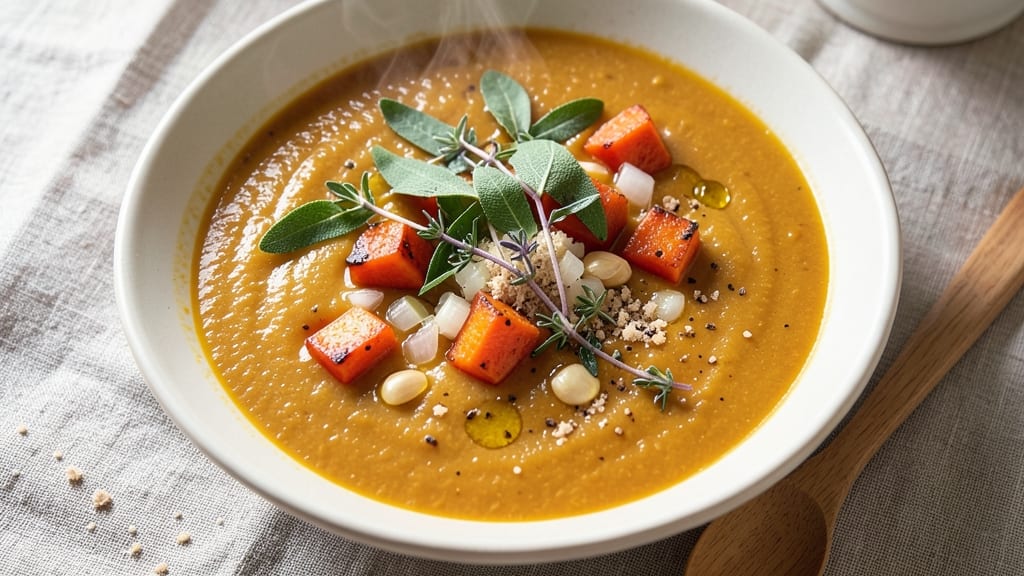
This award-winning butternut squash soup delivers restaurant-quality depth with every spoonful—silky smooth texture, warm spiced notes, and a touch of toasted sage that lingers like autumn in a bowl. ✨ The secret lies in roasting the squash first to concentrate its natural sweetness, then blending it with aromatic vegetables and a touch of cream for velvety richness.
What sets this recipe apart is the balance of flavors: caramelized squash, earthy thyme, and a whisper of nutmeg that enhances without overpowering.
The slow simmer allows all ingredients to meld into a harmonious broth, while optional garnishes like toasted pumpkin seeds or chive oil add visual appeal and textural contrast to justify its award-worthy status.
The result is a soup so luxurious it feels like a celebration—creamy yet not heavy, sweet yet savory, with just the right amount of spice to warm you from the inside out. Perfect for cozy evenings, holiday gatherings, or impressing guests without the fuss of elaborate cooking.
Whether you serve it with crusty bread or a sprinkle of fresh herbs, this soup transforms simple ingredients into something extraordinary. Ready to make your own award-winner? Let's get started with the recipe.
Ingredients for award winning butternut squash soup
Sixteen ingredients transform into velvety butternut squash soup with award-winning depth and aromatic complexity.
| Ingredient | Amount | Notes |
|---|---|---|
| Butternut Squash 🎃 | 3 lb | Peeled, cubed, roasted first |
| Yellow Onion 🧅 | 1 whole | Medium size, diced |
| Garlic Cloves 🧄 | 4 cloves | Peeled, minced |
| Fresh Sage Leaves 🌿 | ½ cup | Chopped, toasted lightly |
| Fresh Thyme Leaves 🌿 | 1 tbsp | Or 1 tsp dried thyme |
| Ground Nutmeg 🌶️ | ¼ tsp | Freshly grated preferred |
| Heavy Cream 🥛 | 1 cup | Full-fat for richness |
| Vegetable Broth 💧 | 4 cups | Low-sodium preferred |
| Extra-Virgin Olive Oil 🫒 | ¼ cup | For roasting and finishing |
| Salt 🧂 | 1 ½ tsp | Diamond Crystal kosher |
| Black Pepper 🌶️ | ½ tsp | Freshly cracked |
| Pumpkin Seeds 🥜 | ¼ cup | Toasted, for garnish |
| Chives 🌿 | 2 tbsp | Chopped, for garnish |
The butternut squash is the foundation—opt for sweet, dense varieties like 'Long Island Cheese' or 'Sugar Pie' for superior flavor. Whole Foods Market and local farmers markets often carry the best quality, especially in autumn. Look for squash that's firm, heavy for its size, and has a golden hue without soft spots. Roasting before blending intensifies its natural sweetness, so don't skip this step. Costco sells pre-cubed squash in bulk if you prefer convenience, though fresh is always superior. For the herbs, Penzeys Spices offers exceptional quality, but even grocery store fresh sage and thyme work beautifully when properly toasted.
No fresh sage? Dried sage at one-third the amount works in a pinch, though it lacks the same depth. Substitute rosemary for thyme if needed—it has a similar earthy profile. The heavy cream can be swapped for coconut milk for a dairy-free version, though the texture will differ slightly. Vegetable broth is essential; avoid chicken-based stocks to maintain vegetarian integrity. For nutmeg, pre-ground is fine, but freshly grated nutmeg from a microplane adds an extra layer of warmth. The pumpkin seeds can be omitted if you're avoiding nuts, though they add a delightful crunch. Chive oil (simmer chives in olive oil) elevates presentation without altering the soup's essence.
Roasted squash can be prepped 2 days ahead and stored in the freezer to save time. The finished soup reheats beautifully—gentle heat on the stove preserves its silky texture. Garnishes like toasted pumpkin seeds and chives should be added just before serving to maintain freshness. Portion into airtight containers for storage; it keeps for 4-5 days in the refrigerator or 3 months in the freezer. For holiday gatherings, double the batch—this soup is always a crowd-pleaser and reheats even better the next day as flavors meld further.
Why You'll Love This Recipe
- Foolproof Roast: I swear by roasting the squash first—it caramelizes the edges and turns that starchy center into velvety silk. No blender struggles here; just scoop, blend, and you’re golden.
- Herb Bomb: That combo of sage and thyme? It’s like autumn in a bowl. The thyme adds a bright punch, while the sage brings this deep, earthy warmth that makes it taste like a hug from your favorite chef.
- Weeknight Hero: Make a double batch on Sunday—it reheats beautifully for lunches all week. Pair it with crusty bread, and suddenly you’ve got dinner covered without stressing over takeout menus.
- Budget Magic: Butternut squash is cheap, hearty, and lasts forever. I’ve stretched one into three meals: soup, roasted wedges, and even a breakfast hash. Fresh herbs might cost a little, but a few leaves go a long way.
Step-by-step instructions for award-winning butternut squash soup
This method delivers velvety texture and deep flavor through precise roasting and layering.
🔥 Step 1: Roast the Butternut Squash and Aromatics
Preheat your oven to 400°F and line a baking sheet with parchment paper. Toss the 3 lb butternut squash cubes with 2 tablespoons of the extra-virgin olive oil, ½ teaspoon salt, and ¼ teaspoon black pepper. Spread them in a single layer on the sheet.
In a separate bowl, toss the diced yellow onion and 4 cloves minced garlic with 1 tablespoon of the extra-virgin olive oil. Arrange these on the same baking sheet. Roast for 30-35 minutes until the squash is tender when pierced with a fork and the edges are deep golden brown.
While roasting, lightly toast the 0.5 cup chopped fresh sage leaves and 1 tablespoon fresh thyme leaves in a dry skillet over medium-low heat for 1-2 minutes until fragrant. This enhances their flavor dramatically—don't let them burn. Set aside for later.
🍳 Step 2: Build the Soup Base
Transfer the roasted squash, onion, and garlic to a large pot. Add 4 cups vegetable broth, scraping up any browned bits from the baking sheet—they're packed with flavor. Bring to a gentle boil, then reduce heat to medium-low and simmer for 10 minutes to meld the flavors.
Use an immersion blender to purée the soup directly in the pot until completely smooth. For a silky texture, strain through a fine-mesh sieve if needed. This step ensures no lumps remain—critical for that award-winning velvety consistency.
Return the soup to the stove and stir in the 0.25 teaspoon ground nutmeg and the toasted sage and thyme leaves. Simmer uncovered for 5 minutes to allow the nutmeg's warm aroma to develop fully. The soup should smell rich and earthy at this stage.
🥘 Step 3: Finish with Cream and Season
Reduce heat to low and gradually whisk in the 1 cup heavy cream to prevent curdling. The soup will lighten in color and become luxuriously smooth. Simmer gently for 3-4 minutes—just enough to warm through without breaking the cream.
Taste and adjust seasoning with additional salt and black pepper as needed. The soup should be well-seasoned but not salty—remember, the broth was low-sodium. Here's the thing—nutmeg can be potent, so start with the full ¼ teaspoon and adjust carefully.
🍽️ Step 4: Garnish and Serve
Ladle the soup into bowls and immediately garnish with toasted pumpkin seeds and chopped chives. For the seeds, toast 0.25 cup pumpkin seeds in a dry skillet over medium heat for 3-4 minutes until fragrant and lightly browned. The chives add a bright contrast to the rich soup.
Serve immediately with crusty bread or oyster crackers. The contrast of textures—creamy soup, crisp seeds, and tender bread—elevates this from ordinary to extraordinary. Each spoonful should deliver that perfect balance of sweet squash, earthy herbs, and velvety cream.
Pro Tips For Making Award Winning Butternut Squash Soup
- CHAR THE ONIONS LOW: I used to burn them every time—now I swear by 10 minutes on medium-low with a splash of water. The onions should caramelize into a deep amber, not turn into charred hockey pucks, or your soup will taste like smoke instead of sage.
- ROAST THE SQUASH FIRST: Cut the squash into even 1-inch cubes, toss with olive oil, salt, and pepper, then roast at 400°F for 25 minutes before blending. This deepens the natural sweetness and gives the soup a velvety texture—no one will guess you didn’t simmer it for hours.
- STRAIN THE HERBS: After simmering, remove the sage and thyme stems and give the leaves a quick press with a spoon to release their oils, then strain them out. Fresh herbs add brightness, but left in, they’ll turn the soup into a muddy, bitter mess—trust me, I’ve tasted it.
- PUREE WITH STARCH: Add a splash of coconut milk or a mashed potato to the blended soup before serving. The extra fat and starch make it actually creamy without heavy cream—it’s the difference between a smooth bowl and one that separates like a bad relationship.
Troubleshooting great award winning butternut squash soup
Lumpy Texture Fix
If your soup turns out lumpy despite blending, strain it through a fine-mesh sieve or use a nutribullet for extra smoothness. For future batches, pulse the squash and broth in a high-powered blender (like a Vitamix) for 30-45 seconds after simmering.
The immersion blender works great, but a countertop blender ensures no chunks remain. 🥄
Overly Thick Soup
Too thick? Thin with warm vegetable broth, 1 tablespoon at a time, until reaching your desired consistency. Avoid cold liquids—they can cause the cream to separate.
For a richer fix, whisk in 1-2 tablespoons of heavy cream while heating gently. If using coconut milk, add it gradually to maintain stability. 🥛
Burnt or Bitter Flavor
Burnt squash happens when roasted too long. Keep an eye on it after 30 minutes—it should be tender but not charred. For bitter notes, reduce the nutmeg to ⅛ teaspoon and increase fresh thyme for balance.
If the broth tastes off, start fresh with 4 cups fresh vegetable broth instead of canned. 🌶️
Cream Separating
This occurs when heat is too high or cream is added too quickly. Always whisk in cream over low heat and avoid boiling. For a quick fix, whisk in 1 tablespoon of cold water to re-emulsify. To prevent it, simmer the soup no higher than 180°F after adding cream. 🔥
Weak or Bland Flavor
Boost flavor by roasting the squash longer (up to 40 minutes) for deeper caramelization. Add 1 extra clove of garlic or ½ teaspoon smoked paprika to the base. For a tangy kick, stir in 1 teaspoon of apple cider vinegar at the end.
Fresh herbs like sage and thyme are non-negotiable—dried versions won’t deliver the same depth. 🌿
Soggy Bread Pairing
To keep bread crispy, toast it just before serving and place it on a wire rack over a baking sheet. For extra crunch, brush with garlic-infused olive oil before toasting.
If using oyster crackers, serve them in a separate bowl to avoid sogginess. The contrast of textures is key—don’t let the soup’s richness overpower the bread! 🍞
Nutrition facts
Frequently asked questions
Can I make this soup without heavy cream for a lighter version?
Replace the 1 cup heavy cream with ½ cup coconut milk for a dairy-free option, or use ½ cup Greek yogurt blended into the soup for tangy richness. For a neutral taste, ½ cup unsweetened almond milk works, though the texture will be slightly thinner. Always add dairy substitutes gradually while heating to prevent curdling.
How do I store leftovers to maintain the best texture?
Let the soup cool completely, then transfer to airtight containers with a thin layer of plastic wrap pressed directly on the surface to prevent skin formation. It keeps for 4-5 days in the fridge or 3 months in the freezer. Reheat gently on low heat, stirring occasionally, and add a splash of warm broth if it thickens too much. Never microwave directly from frozen—thaw overnight first.
What's the best way to reheat this soup without breaking the cream?
Reheat only to 160°F—never boil. Use a pot on low heat and stir frequently. For extra insurance, whisk in 1 tablespoon of cold water if the cream starts to separate. If using the microwave, cover with a damp paper towel and heat in 30-second intervals, stirring between each. The goal is to warm through without agitating the cream.
Can I substitute another winter squash like acorn or kabocha?
Yes! Acorn or kabocha work beautifully—they're slightly sweeter and denser. Use the same 3 lb quantity, but reduce roasting time to 25-30 minutes since they soften faster. For deeper flavor, add ½ teaspoon of cinnamon alongside the nutmeg. The texture will be slightly firmer, so blend longer for that velvety finish.
Why does my soup taste bland even after following the recipe?
Blandness often comes from under-roasted squash or weak broth. Boost flavor by roasting the squash 5-10 minutes longer (up to 40 minuteshomemade vegetable broth if possible, and don't skip the toasted herbs—they're flavor powerhouses! For an extra kick, finish with 1 teaspoon of apple cider vinegar or a pinch of smoked paprika. Fresh herbs are non-negotiable here.