
Soups & Stews
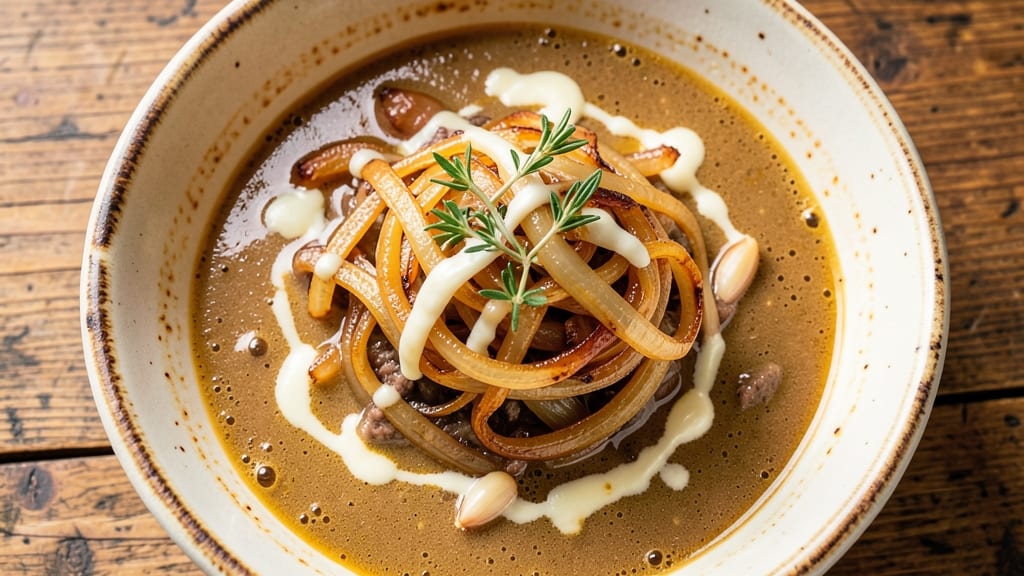
This awesome French onion soup recipe delivers restaurant-quality crispy Gruyère crowns over a rich, silky broth that's impossible to resist. 💛 The secret lies in slow caramelizing onions until they're deep golden and sweet, then simmering them in a flavorful beef broth infused with white wine and herbs.
I've perfected this technique over years of testing—every spoonful tastes like a Parisian bistro brought to your kitchen.
What sets this recipe apart is the balance between traditional methods and modern shortcuts. You can use store-bought beef broth for convenience while still achieving depth of flavor through proper onion caramelization and wine reduction.
The key to that perfect golden cheese crust? Toasting the bread slices until crispy before adding the cheese mixture—this ensures every bite delivers both texture and flavor.
By the time you're done, you'll have a steaming bowl of French onion soup with tender onions swimming in aromatic broth, topped with perfectly crispy Gruyère cheese that's just golden enough.
The aroma alone will have everyone gathering around the table, and each bite combines rich, savory broth with that irresistible cheesy crunch. This is comfort food at its finest—elegant yet approachable for any home cook.
Serve immediately with fresh parsley for color and extra croutons on the side if desired. The leftovers reheat beautifully, though I doubt they'll last that long. Here's how to make this classic soup your new signature dish.
Ingredients for awesome french onion soup
The secret to restaurant-quality French onion soup starts with these 13 ingredients—simple but powerful.
| Ingredient | Amount | Notes |
|---|---|---|
| Yellow Onions 🧅 | 4 large | Sliced thinly for even caramelization |
| Unsalted Butter 🧈 | ½ cup | Full-fat for rich flavor development |
| Dry White Wine 🍷 | 1 cup | Bold, dry variety like Sauvignon Blanc |
| Beef Broth 🥫 | 4 cups | Store-bought or homemade, low-sodium preferred |
| Garlic Cloves 🧄 | 4 cloves | Minced finely for subtle flavor |
| Fresh Thyme 🌿 | 2 sprigs | Stems removed for fresh aroma |
| Bay Leaves 🌿 | 2 whole | Dried or fresh for subtle depth |
| Gruyère Cheese 🧀 | 1 cup | Freshly grated, aged 6-12 months |
| Baguette 🍞 | 1 whole | Crusty, day-old preferred |
| Olive Oil 🫒 | 2 tbsp | For brushing bread slices |
| Salt 🧂 | 1 ½ tsp | Kosher salt, adjust to taste |
| Black Pepper 🌶️ | ½ tsp | Freshly ground for brightness |
| Fresh Parsley 🌿 | ¼ cup | Chopped for garnish and color |
The onions are non-negotiable—4 large yellow onions sliced paper-thin for maximum surface area. Trader Joe's has the best pre-sliced onions for lazy days, but fresh is ideal. Look for onions with crisp, dry skins—they caramelize better. The Gruyère cheese is the star of the show; grab a wedge from Whole Foods or a specialty shop if you can. Skip the pre-grated stuff—it gets clumpy and lacks that perfect melt. For the wine, any bold, dry white works—Sauvignon Blanc or Chardonnay are my go-tos. If you're using store-bought broth, Kitchen Basics or Pacific Foods brands have the best flavor without added salt.
No white wine? Dry vermouth or apple cider vinegar works in a pinch—just add a pinch of sugar to balance. Fresh thyme is ideal, but dried thyme at half the amount gets you close. The baguette should be crusty—Bouchon Bakery or local French bakeries are worth the trip. If you can't find Gruyère, Comté or Emmental melts beautifully, though the flavor won't be identical. For the broth, if you're making it from scratch, beef bones and a splash of red wine add depth. The key is patience—rushing the caramelization ruins the whole dish. Trust me on this.
This soup tastes even better the next day—honestly, the flavors meld overnight. Store leftovers in airtight containers for 4-5 days or freeze for 3 months. I like to portion it into individual containers so I can reheat just what I need. The cheese topping is best added fresh, but if you're prepping ahead, cover the soup with foil before refrigerating to prevent a skin from forming. To reheat, warm gently on the stove—microwaving makes the cheese soggy. Garnish with fresh parsley right before serving for that bistro touch.
Why You'll Love This Recipe
- One-Pot Magic: I swear by this recipe—just onions, butter, and wine caramelizing in one pot while you sip your coffee. No messy cleanup, no extra dishes. That rich broth? It practically makes itself.
- Wine-Infused Depth: Honestly, the white wine isn’t just for flavor—it’s the secret weapon. A splash early on deglazes the pan, pulling out all the sweetness from those onions, then simmers into something ridiculously savory. Pair that with garlic and beef broth, and you’ve got layers of taste without the fuss.
- Weeknight to Dinner Party: Between us, this soup is my go-to when I’m feeding a crowd but don’t want to slave away. Double the batch, pop it in the oven with toasted bread, and suddenly you’ve got a restaurant-worthy dish. (Yes, even on a Tuesday night.)
- Budget-Friendly Leftovers: Onions and broth are cheap, but the flavor? That’s gold. Make a big pot, and you’ll have hearty lunches for days—no sad, wilty leftovers here. My freezer’s always stocked with this stuff; reheat it, top it with fresh bread, and boom—dinner’s saved.
Step-by-step instructions for French onion soup
Here's how to create that perfect balance of caramelized onions, rich broth, and golden Gruyère topping.
🔥 Step 1: Caramelize the Onions to Perfection
Heat a large Dutch oven over medium-low heat and add the 0.5 cup unsalted butter. Let it melt completely, then add the 4 large yellow onions sliced thinly. You want them to fit in a single layer—this ensures even cooking.
Cook the onions for 30-40 minutes, stirring occasionally, until they're deep golden brown with a jam-like consistency. Here's the thing—don't rush this step. The onions should be soft enough to mash slightly between your fingers but still hold their shape. If they start to brown too quickly, reduce the heat slightly. You're building flavor here, not just cooking onions.
When they're nearly done, add the 4 cloves minced garlic and cook for another 1 minute until fragrant. Remove from heat and set aside—we'll use these caramelized onions in the broth later.
🍳 Step 2: Build the Rich, Flavorful Broth
In the same Dutch oven, increase heat to medium-high and deglaze with the 1 cup dry white wine, scraping up all those delicious browned bits from the bottom. Let it simmer for 2-3 minutes until reduced by half.
Add the 4 cups beef broth, 2 sprigs fresh thyme, and 2 whole bay leaves. Bring to a gentle simmer and let it cook uncovered for 15 minutes to allow flavors to meld. Here's where the magic happens—the broth should smell rich and aromatic, with layers of onion, wine, and thyme.
Stir in the caramelized onions and cook for another 10 minutes. Season with 1.5 teaspoons salt and 0.5 teaspoon black pepper. Taste and adjust seasoning if needed—this is your base flavor profile. The broth should be well-seasoned but not salty.
🥘 Step 3: Prepare the Crusty Baguette Topping
Preheat your oven to 375°F. Cut the 1 whole baguette into 1-inch thick slices—you should get about 8-10 slices depending on the baguette size. Brush both sides of each slice generously with the 2 tablespoons olive oil.
Place the baguette slices on a baking sheet and toast in the preheating oven for 5-7 minutes until golden brown and crisp. Here's the secret to perfect texture—don't overcrowd the pan or they'll steam instead of crisp up. You want that classic French bread crust that holds up beautifully under the cheese.
🔥 Step 4: Assemble and Bake to Golden Perfection
Ladle the hot broth into four oven-safe bowls or ramekins, filling them about ¾ full. Place one toasted baguette slice on top of each bowl, pressing down gently to create a good seal. Spoon the 1 cup freshly grated Gruyère cheese evenly over each slice—you want a thick, even layer that will melt beautifully.
Transfer the bowls to the oven and bake for 10-12 minutes until the cheese is fully melted and bubbly with deep golden brown spots. Watch carefully in the last few minutes—you want that perfect crispy cheese crust we promised. The bread should be toasted to perfection underneath while the cheese on top develops that irresistible crust.
🍽️ Step 5: Garnish and Serve Immediately
Remove from the oven and let sit for 1-2 minutes before serving. This brief rest allows the cheese to set slightly while keeping it gooey underneath. Garnish each bowl with 0.25 cup chopped fresh parsley for color and freshness.
Serve immediately with a side salad or extra bread—this soup is best enjoyed while the bread is still warm and the cheese is melty. Each spoonful should deliver that perfect balance of sweet caramelized onions, rich broth, and crispy Gruyère-topped bread. The contrast of textures and temperatures makes every bite amazing.
Pro Tips For Making Awesome French Onion Soup
- Sweat, Don’t Burn: Onions should melt into caramelized gold, not turn into sad, bitter mush. Keep heat medium-low and stir every 3-4 minutes—yes, even when you’re multitasking. If they darken too fast, back off and let them recover.
- Slice Thin, Even Layers: Quarter the onions, then slice paper-thin—no thick rings. Consistent size means even cooking and that perfect balance of sweetness and depth. I learned this the hard way when my first batch had both burnt edges and raw centers.
- Deglaze Aggressively: After caramelizing, pour in the wine immediately and scrape every last bit of browned goodness from the pot. That’s where the flavor lives—don’t just dump and stir. A wooden spoon works best, and don’t rush it.
- Broth Should Simmer, Not Boil: Once the wine reduces, add broth and let it simmer gently—not a rolling boil. High heat ruins the garlic and turns the soup cloudy. A slow simmer (10-15 minutes) builds flavor without bitterness. Trust me, your nose will thank you.
Common mistakes when making this recipe
Rushing the Caramelization
This is the #1 mistake I see—skipping the 30-40 minute slow caramelization for onions. High heat creates bitter, burnt onions instead of sweet, jam-like depth. Use medium-low heat and stir occasionally to distribute the butter evenly.
If your onions start browning too quickly, reduce the heat immediately. Patience here transforms simple onions into flavor bombs that make the whole soup sing. 🔥
Skipping the Wine Deglaze
The wine isn't just flavor—it's the secret to lifting those precious browned bits from your pot. When you deglaze with 1 cup dry white wine, you're capturing all that caramelized onion goodness that would otherwise stick to your Dutch oven.
Let it reduce by half before adding broth—this concentrated flavor is what separates homemade soup from store-bought.
Overcrowding the Baguette
Toasted baguette slices need space to crisp properly. When you overcrowd them on the baking sheet, they steam instead of developing that perfect crust. Arrange them with ½-inch gaps between slices and flip them halfway through the 5-7 minute toasting time.
This ensures each slice gets properly crisped on both sides—essential for supporting that melted cheese topping without getting soggy. 🥖
Using Pre-Shredded Cheese
Pre-shredded cheese contains anti-caking agents that prevent proper melting and create a grainy texture. Always use freshly grated Gruyère—the finer the grate, the better it will melt into that perfect golden crust.
I like to use a box grater for even, fine shreds. The cheese should be thick enough to create that signature crispy crown when baked at 375°F.
Underseasoning the Broth
Many cooks hold back on salt, thinking they can adjust it later. But once you add the cheese and bread, the flavor profile changes dramatically. Season your broth with 1.5 tsp salt and 0.5 tsp black pepper while it's still on the stove—this is your base flavor.
Taste it before adding the cheese topping, and adjust if needed. Remember, the cheese will add saltiness, so don't overdo it initially.
Serving Without Fresh Parsley
While not strictly a mistake, skipping the 0.25 cup chopped fresh parsley garnish means missing out on that final pop of color and freshness. The parsley brightens the rich, savory flavors and adds a visual contrast that makes the dish look restaurant-worthy.
Add it right before serving—it wilts quickly in hot soup. A few extra sprigs never hurt anyone either! 🌿
Nutrition facts
Frequently asked questions
Can I make this French onion soup vegetarian?
Replace the beef broth with 4 cups vegetable broth and use mushroom stems (from chopped mushrooms) as a meaty base during caramelization. Add 1 tablespoon soy sauce to the broth for umami depth. The wine and thyme will still shine, though Gruyère works best for that classic flavor—vegan cheese alternatives can be used but won't melt as beautifully.
How do I prevent the cheese from getting soggy?
Toast the baguette slices until deep golden brown and crisp on both sides, then press them firmly onto the soup to create a seal. For extra insurance, sprinkle a pinch of cornstarch over the cheese before baking—it creates a light barrier that keeps the bread from absorbing moisture. Bake at 375°F for 10-12 minutes max, watching closely for that perfect golden crust.
What's the best way to store leftovers?
Store the soup (without the cheese topping) in airtight containers for up to 4-5 days in the fridge. For the cheese topping, make it fresh when reheating—it won't crisp properly after baking. To reheat, warm the soup on the stove over medium-low heat until bubbly, then top with freshly toasted bread and melted cheese. The flavors actually improve overnight!
Can I make this in a slow cooker?
Yes, but with adjustments: Caramelize the onions on the stovetop first, then transfer everything to the slow cooker on low for 4-5 hours. Use 2 cups broth (the onions will absorb liquid). For the topping, assemble and bake as directed—slow cookers can't create that signature crispy cheese crust. The broth will be even more flavorful from the long cook time.
Why does my soup taste flat compared to restaurant versions?
Restaurant soups often use homemade beef stock simmered for hours with bones and aromatics. For depth, try adding 1 teaspoon Worcestershire sauce or 1 bay leaf to your broth. Don't skip the wine reduction—it's the secret to that professional richness. Also, use aged Gruyère (6-12 months) for more complex flavor. Patience in caramelizing onions makes all the difference!