
Soups & Stews
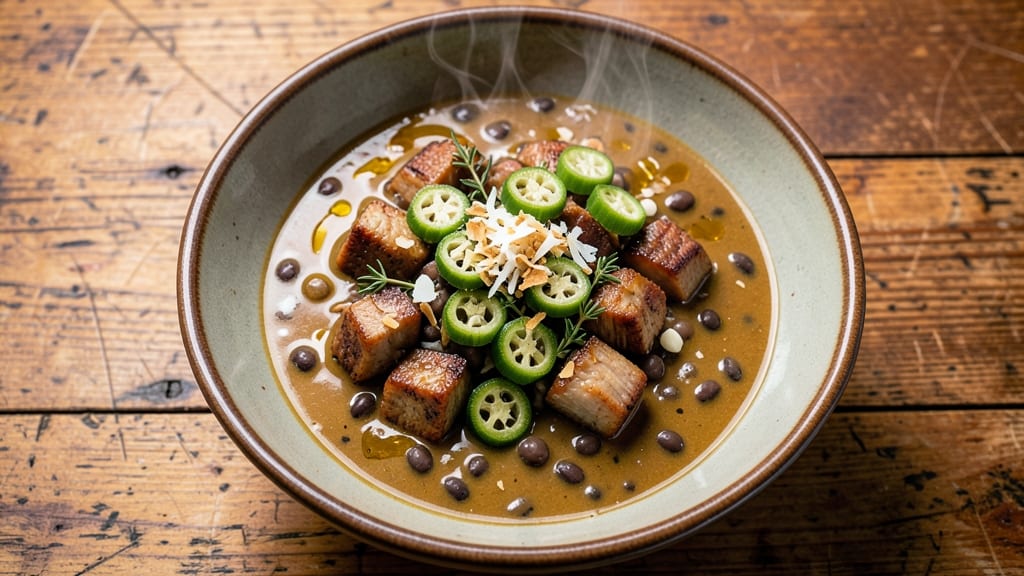
A Bahamian peas soup recipe brings the Caribbean's soul-warming flavors to your kitchen—where tender cowpeas, smoky salted pork, and creamy coconut create a symphony of textures and tastes. This slow-simmered dish transforms simple ingredients into a hearty, aromatic masterpiece that's been passed down through generations. The key lies in patience: letting flavors meld over hours, with Scotch bonnet peppers adding just enough heat to wake up every spoonful.
What makes this recipe special is its balance of tradition and approachability. You'll start with a rich base of onions, garlic, and thyme—foundational flavors that build depth before adding the star ingredients: cowpeas (often called "peas" in Bahamian cuisine) and okra, which thicken the soup naturally.
The coconut milk adds a velvety richness that softens the earthiness of the okra while keeping the dish light enough for summer evenings.
By the time you serve this soup, you'll have a pot full of tender cowpeas, perfectly cooked pork, and a sauce that's creamy yet still bright with citrus notes from lime.
The slow simmer ensures every ingredient is infused with flavor, while the final touch of fresh herbs adds a burst of freshness. This is comfort food at its finest—warm, satisfying, and full of the kind of love that comes from generations of family gatherings.
The best part? This recipe comes together in one pot, making it perfect for weeknight dinners or special occasions. Serve it with crusty bread to soak up every last drop of that flavorful broth, or pair it with steamed rice for a complete meal.
The leftovers only get better as the flavors continue to develop, so make extra if you can.
Ingredients for bahamian peas soup
Cowpeas, smoky pork, and creamy coconut—this Bahamian soup is all about rich flavors and tender textures.
| Ingredient | Amount | Notes |
|---|---|---|
| Cowpeas (Black-Eyed Peas) 🌱 | 2 cups | Dried, soaked overnight |
| Salted Pork (or Ham Hock) 🐷 | 1 lb | Cut into bite-sized pieces |
| Okra 🌿 | 1 lb | Fresh, trimmed and sliced |
| Yellow Onion 🧅 | 1 whole | Large, chopped |
| Garlic Cloves 🧄 | 4 cloves | Minced |
| Fresh Thyme 🌿 | ¼ cup | Stems removed, chopped |
| Scotch Bonnet Pepper 🌶️ | 1 whole | Seeds removed, chopped |
| Coconut Milk 🥥 | 1 can | 13.5 oz can, full-fat |
| Tomato Paste 🍅 | 2 tbsp | Squeeze tube or jarred |
| Fresh Lime 🍋 | 2 whole | Juiced, zest optional |
| Fresh Cilantro 🌿 | ¼ cup | Chopped, for garnish |
| Salt 🧂 | 1 ½ tsp | Adjust to taste |
| Black Pepper 🌶️ | ½ tsp | Freshly ground |
| Vegetable Oil 🫒 | 2 tbsp | For sautéing |
The cowpeas are the heart of this dish, soaking overnight is non-negotiable—they need time to soften properly. Trader Joe's or H-E-B usually carry dried cowpeas in the international aisle, but if you can't find them, black-eyed peas work just as well. The salted pork adds that signature smoky depth—look for hocks or bellies at Latin markets or the meat counter. Fresh okra matters too; avoid the pre-cut kind—it bruises easily. For the Scotch bonnet, handle with care—the oils can burn your skin. If you can't find it, a habanero with seeds removed works in a pinch.
No coconut milk? Full-fat canned coconut cream is a game-changer for richness, but light coconut milk plus extra oil gets you close. Fresh thyme is ideal, but dried at one-third the amount works if you're in a hurry. The tomato paste can be the squeeze-tube kind—no waste, easy to measure. Limes should be juicy; Mexican limes from the grocery store are perfect for this. For the Scotch bonnet heat, start with half and adjust to taste—you can always add more, but you can't take it out!
This soup tastes even better the next day, so make extra. Store in the fridge for 4-5 days or freeze for 3 months—the flavors deepen over time. To reheat, add a splash of water or coconut milk. The pork gets extra tender with longer simmering, so don't rush it. Leftovers? Perfect for rice bowls or sandwiches. The okra thickens the soup naturally, but if it's too slimy, strain some of it out before serving.
Why You'll Love This Recipe
- One-Pot Magic: I swear by this recipe—just toss everything in one pot, and the salted pork renders its own flavor into the peas. No fancy steps, no extra bowls to wash.
- Smoky-Sweet Symphony: That slow-cooked ham hock? It melts into the soup, leaving behind a deep, savory richness that pairs perfectly with the earthy cowpeas and crisp okra. Honestly, the first bite makes you forget it’s a weeknight meal.
- Leftovers That Shine: This soup actually gets better the next day—more tender, more flavorful. I make double batches on Sundays so I can reheat it all week, and no one ever complains.
- Budget-Friendly Feast: Cowpeas and salted pork stretch this recipe into a hearty meal without breaking the bank. Between us, it’s my go-to for feeding a crowd or stretching groceries when money’s tight.
Step-by-step instructions for Bahamian peas soup
Here's how to create this hearty, flavor-packed Bahamian soup with tender cowpeas and rich coconut.
Prepare the Base Ingredients
Start by soaking the 2 cups of dried cowpeas overnight in plenty of water. This ensures they cook evenly and stay tender. Drain them thoroughly before using. Cut the 1 lb salted pork into bite-sized pieces and trim the 1 lb okra, slicing it into ½-inch rounds. Chop the 1 whole yellow onion and mince the 4 cloves garlic cloves.
Remove the seeds from the 1 whole Scotch Bonnet pepper and chop it finely—this adds heat without overwhelming the dish. Chop the 0.25 cup fresh thyme, removing the stems first. Juice the 2 whole fresh limes and set aside. The lime juice will brighten the flavors at the end.
Sauté the Aromatics
Heat the 2 tbsp vegetable oil in a large pot over medium heat. Add the salted pork pieces and cook for 5 minutes until lightly browned. Remove the pork and set it aside. In the same pot, add the chopped onion and cook for 3-4 minutes until softened and translucent.
Add the minced garlic, chopped Scotch Bonnet pepper, and chopped thyme. Cook for another 1-2 minutes until the garlic is fragrant and the mixture is sizzling. This step builds the flavor foundation—don't rush it. Stir in the 2 tbsp tomato paste and cook for 30 seconds until it darkens slightly.
Simmer the Soup
Return the salted pork to the pot and add the drained cowpeas, sliced okra, and 6 cups of water. Bring the mixture to a boil, then reduce the heat to low and let it simmer uncovered for 45 minutes. Stir occasionally to prevent sticking. The soup should reduce slightly, and the cowpeas will begin to soften.
After 45 minutes, add the 1 can coconut milk, stirring well to combine. Season with the 1.5 tsp salt and 0.5 tsp black pepper. Continue simmering uncovered for another 30 minutes, until the cowpeas are tender but not mushy and the okra has softened. Taste and adjust the seasoning if needed.
Finish and Serve
Remove the pot from heat and stir in the freshly juiced limes. The acidity balances the richness of the coconut milk and enhances the flavors. Let the soup sit for 5 minutes to allow the flavors to meld. Taste again and adjust the seasoning if necessary—Bahamian soup should be bold and well-seasoned.
Ladle the soup into bowls and garnish each serving with the chopped 0.25 cup fresh cilantro. Serve immediately with crusty bread or steamed rice to soak up the rich broth. The soup will continue to thicken slightly as it cools, so serve it while it's hot for the best texture and flavor.
Pro Tips For Making Bahamian Peas Soup
- Parboil the Peas: Cowpeas need a quick 5-minute soak in boiling water first—this softens them just enough to absorb flavor without turning mushy. I learned this the hard way when my first batch turned to paste after hours of simmering. Trust me, skip the long soak and save yourself time.
- Render the Pork Slow: Start with a ham hock or salt pork on low heat until the fat renders out and the meat pulls away cleanly—about 30 minutes. High heat makes the fat burn and ruins the soup’s depth. Sounds tedious, but it’s the thing that matters most for that rich, smoky base.
- Slice Okra Thin: Cut okra into ½-inch rounds, not thick chunks—this keeps it tender instead of slimy. I used to chop it roughly, and it always ended up rubbery. A sharp knife and quick cuts make all the difference for that creamy texture without the gunk.
- Simmer, Don’t Boil: Once everything’s in the pot, keep it at a gentle bubble—low enough that you barely see movement. Boiling toughens the peas and turns the okra to mush. I was skeptical until I tried it, and now I never rush this step.
Creative variations of this dish
Spicy Scotch Bonnet Twist
For those who love heat, add an extra ½ Scotch Bonnet pepper (seeds removed) when sautéing the aromatics. This doubles the fiery kick without overpowering the coconut creaminess.
If you're serving kids or heat-sensitive guests, set aside a portion before adding the pepper—you can always blend it into the broth later for a milder version. 🌶️
Coconut-Free Version
Skip the coconut milk entirely and replace it with 1 cup evaporated milkstrong> or heavy creamstrong> for a lighter, dairy-based richness. Add 1 tbsp butterstrong> at the end to enhance the velvety texture.
This works surprisingly well and cuts down on prep time if you're avoiding coconut allergies or dietary restrictions.
Seafood Fusion
Swap the salted pork for 1 lb firm white fishstrong> (like snapper or mahi-mahi) cut into chunks, or add ½ lb shrimpstrong> in the final 10 minutesstrong> of cooking.
The seafood absorbs the coconut and lime flavors beautifully, making this a perfect summer variation. Serve with lime wedges for squeezing over each bowl.
Okra-Free Thickening
If okra isn't your thing, blend ½ cup of the cooked cowpeasstrong> with ¼ cup waterstrong> until smooth, then stir it back into the soup. This creates a naturally thickened broth without the slimy texture some people dislike.
For extra body, add 1 tbsp cornstarchstrong> mixed with 2 tbsp cold waterstrong> at the end and simmer for 2 minutesstrong>.
Herb Variations
Swap the thyme for ½ cup fresh parsleystrong> or ¼ cup fresh basilstrong> for a brighter, more Mediterranean-inspired twist. For a deeper, earthier flavor, add 1 sprig fresh rosemarystrong> when sautéing the onions—remove it before serving.
These herb swaps change the flavor profile dramatically while keeping the soup's soul intact.
Slow Cooker Adaptation
Transfer all ingredients (except fresh herbs and lime juice) to a 6-quart slow cookerstrong> and cook on strong>LOW for 7-8 hoursstrong> or strong>HIGH for 4-5 hoursstrong>. The slow cooker's gentle heat ensures the cowpeas stay tender while developing deeper flavor.
Stir in the coconut milk and lime juice during the last 30 minutesstrong> of cooking to prevent curdling. ✨
Nutrition facts
Frequently asked questions
What's the difference between cowpeas and black-eyed peas?
Cowpeas (often called "peas" in Bahamian cooking) are larger, creamier, and hold their shape better than black-eyed peas. They have a slightly nutty flavor and are the traditional choice for this dish. While black-eyed peas work in a pinch, they'll be softer and may break down more during cooking.
Can I make this soup without salted pork?
Try smoked turkey neck, ham hock, or even 1 lb firm tofustrong> for a vegetarian version. For seafood lovers, swap in ½ lb shrimpstrong> or 1 lb white fishstrong> (like snapper) during the last 10 minutesstrong> of cooking. The key is maintaining the smoky/savory base—so use smoked paprika or liquid smoke if needed.
Why does my soup taste too slimy?
Overcooked okra or too much coconut milk can create sliminess. Strain out some okra if needed, or reduce the coconut milk to ½ canstrong>. For extra thickness, blend ½ cup cooked cowpeasstrong> with ¼ cup waterstrong> and stir it back in. Always simmer uncovered to prevent excess moisture.
How do I store leftovers?
Store in an airtight containerstrong> in the fridge for 4-5 daysstrong> or freeze for 3 monthsstrong>. The flavors actually improve overnight! Reheat gently with a splash of water or coconut milk. For freezer storage, cool completely first to prevent ice crystals.
What's the secret to perfect cowpea texture?
Soak them overnight and drain well before cooking. Use plenty of water (at least 6 cupsstrong>) and simmer gently—never boil vigorously. The cowpeas should be tender but still hold their shape. If they're mushy, you've overcooked them. For extra tenderness, add a pinch of baking soda to the soaking water.