
Soups & Stews
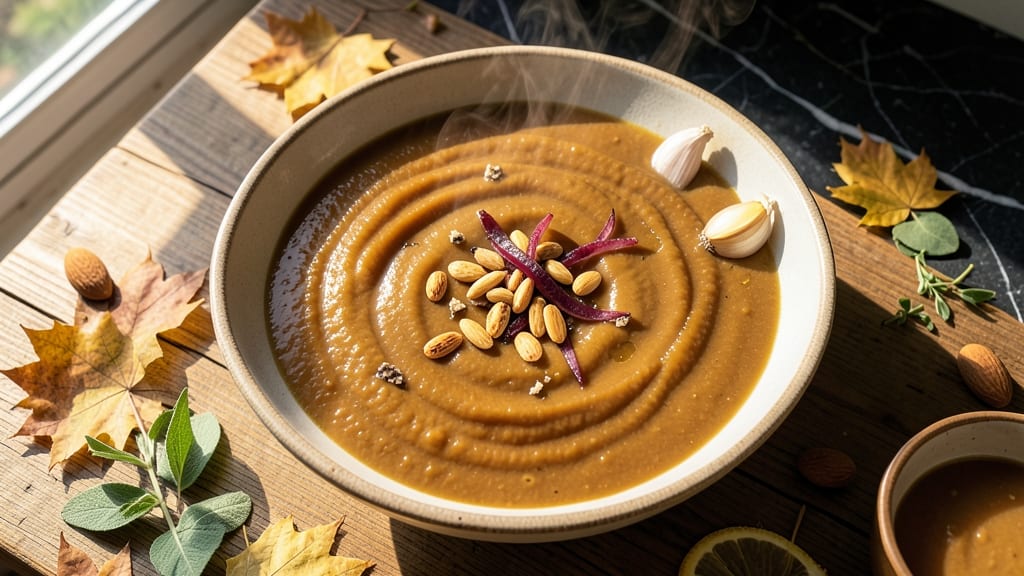
This banana nut squash soup recipe transforms humble winter squash into a velvety, spiced masterpiece with toasted almond crunch—perfect for cozy evenings. 💛 The secret lies in roasting the squash first, which deepens its natural sweetness and creates a rich, caramelized foundation for the broth.
This vegetarian-friendly version skips meat entirely but delivers hearty, satisfying flavor through aromatic spices and a touch of creaminess. What sets this soup apart is the balance of flavors: warm cinnamon and nutmeg complement the squash's natural sweetness, while toasted almonds add textural contrast and nutty depth.
The slow simmer reduces the broth to a luxuriously thick consistency, ensuring every spoonful is packed with flavor. Unlike many soups, this one gets better as it sits—allowing the spices to meld and the almonds to infuse the broth with their rich, toasty notes.
By the time you're done, you'll have a soup that's creamy yet light, sweet yet subtly spiced, with a satisfying crunch in every bite. The aroma alone—warm squash, toasted almonds, and spiced broth—will fill your kitchen with comfort.
Serve with crusty bread or a simple salad to round out the meal. The best part? This recipe scales effortlessly—double the batch for leftovers that reheat beautifully. Here’s how to make it.
Ingredients for banana nut squash soup
Pantry staples meet cozy spices—everything you need for velvety banana nut squash soup.
| Ingredient | Amount | Notes |
|---|---|---|
| Butternut Squash 🎃 | 3 lb | Peeled, cubed, seeds removed |
| Yellow Onion 🧅 | 1 whole | Medium size, chopped |
| Garlic Cloves 🧄 | 3 cloves | Peeled, minced |
| Unsalted Butter 🧈 | ½ cup | Cold, cubed |
| Vegetable Broth 💧 | 4 cups | Low-sodium preferred |
| Almonds 🥜 | ½ cup | Raw, toasted |
| Coconut Milk 🥥 | ½ cup | Full-fat, canned |
| Ground Cinnamon 🌶️ | 1 tsp | Freshly ground preferred |
| Ground Nutmeg 🌶️ | ½ tsp | Freshly grated |
| Salt 🧂 | ½ tsp | Sea salt preferred |
| Black Pepper 🌶️ | ½ tsp | Freshly cracked |
| Maple Syrup 🍯 | 2 tbsp | Pure, grade B |
| Fresh Thyme Leaves 🌿 | 1 tbsp | Chopped, or 1 tsp dried |
| Olive Oil 🫒 | 2 tbsp | Extra-virgin for roasting |
The squash is the star, so grab a 3-pound butternut—smaller ones are fine, but bigger means more caramelized flavor. Trader Joe's often has pre-cubed squash, which saves time, but roasting whole chunks gives better texture. Look for squash with smooth skin and no soft spots—those bruises turn mushy. The almonds? Raw, not roasted—you'll toast them yourself for maximum crunch. Toasting them in a dry pan until golden adds that nutty depth the soup needs. And don't skip the coconut milk—it's what gives that creamy texture without being heavy.
No butternut squash? Delicata or kabocha work too—just adjust cooking time. Short on almonds? Cashews or pecans toast up beautifully, though they'll change the flavor slightly. Fresh thyme is ideal, but dried works at one-third the amount. The maple syrup adds natural sweetness—substitute agave or brown sugar if needed. For extra richness, swap half the vegetable broth for cashew cream (soaked cashews blended with water). And if you're watching calories, use light coconut milk—just know the texture will be slightly thinner.
Toasted almonds keep for 2 weeks in an airtight container, but they're best fresh. The soup reheats beautifully—just add a splash of water or broth if it thickens too much. Portion into jars for easy lunches—5 days in the fridge, 3 months frozen. For make-ahead prep, roast the squash and store it in the freezer until ready to cook. The aroma alone will have your kitchen smelling like autumn in minutes.
Why You'll Love This Recipe
- One-Pot Magic: I swear by this recipe—just roast the squash and onions until caramelized, then blend with garlic and broth. No extra pots, no extra mess, and honestly, the smell alone makes my kitchen feel like a cozy hug.
- Creamy Without Dairy: That velvety texture comes from the squash itself, but the real star? A splash of coconut milk (if you’re adding it) or just letting the butter and roasted garlic melt into the broth. It’s rich, it’s satisfying, and somehow still light enough for lunch or dinner.
- Weeknight to Potluck: Between us, this soup is my secret weapon for busy nights—ready in under 40 minutes—but it also impresses at gatherings. Serve it with crusty bread, a sprinkle of toasted walnuts, or even a swirl of maple syrup for a sweet-savory twist. (Yes, even on a Tuesday night.)
- Budget-Friendly Leftovers: A single butternut squash lasts me three meals, and the broth stretches easily. Freeze portions for those days when takeout feels like too much effort. I’ll be real: my lunchbox gets packed with this for days.
Step-by-step instructions for banana nut squash soup
Here's how to create this velvety, spiced soup with perfect texture and nutty crunch.
🔥 Step 1: Roast the Squash and Onion for Deep Flavor
Preheat your oven to 400°F and line a baking sheet with parchment paper. Toss the 3 lb butternut squash cubes and chopped yellow onion with 2 tbsp olive oil, 0.5 tsp salt, and 0.5 tsp black pepper. Spread them in a single layer—they need room to roast, not steam.
Roast for 25-30 minutes until the squash is tender when pierced with a fork and the edges are golden brown. Here's the thing—roasting caramelizes the natural sugars in the squash, giving your soup that rich, sweet depth that sets it apart from boiled versions. Don't skip this step, even if it means an extra 10 minutes of oven time.
🍳 Step 2: Sauté Aromatics and Build the Base
While the squash roasts, heat 0.5 cup unsalted butter in a large pot over medium heat until it foams. Add the 3 minced garlic cloves and cook for 30 seconds until fragrant—you'll smell that sweet garlic aroma filling your kitchen. Be careful not to let it brown or it'll turn bitter.
Add the roasted squash and onion directly from the baking sheet (no need to scrape—those crispy bits are flavor gold). Pour in the 4 cups vegetable broth and bring to a gentle simmer. The mixture should bubble softly, not violently. Let it cook for 10 minutes to meld the flavors while you prepare the toasted almonds.
👨🍳 Step 3: Toast Almonds and Spice the Soup
In a dry skillet over medium heat, toast the 0.5 cup almonds for 3-4 minutes until they're golden brown and smell heavenly. Watch them closely—they burn faster than you think. As they toast, transfer them to a plate and set aside to cool completely.
Return to your soup pot and stir in the 1 tsp ground cinnamon, 0.5 tsp ground nutmeg, and 1 tbsp chopped fresh thyme leaves. Let the soup simmer uncovered for another 5 minutes to allow the spices to bloom and infuse the liquid. You'll notice the kitchen filling with that warm, spiced aroma—this is where the magic happens.
🥘 Step 4: Blend Until Silky Smooth
Use an immersion blender to purée the soup directly in the pot until completely smooth. If you prefer using a countertop blender, carefully transfer the hot soup (in batches if needed) and blend until silky. Here's the trick—I always blend with the lid slightly ajar to let steam escape. This prevents pressure buildup and makes the blending process much safer.
Return the soup to the pot and stir in the 0.5 cup coconut milk and 2 tbsp maple syrup. Taste and adjust seasoning—you might need a pinch more salt or a splash of broth to reach your preferred sweetness level. The soup should be creamy, aromatic, and just sweet enough to balance the spices.
⏰ Step 5: Finish with Toasted Almonds and Serve
Ladle the warm soup into bowls and top each serving with 1-2 tablespoons of the toasted almonds. That crunch contrast is what makes this soup special—each bite delivers creamy squash, warm spices, and nutty crunch all at once. I like to serve it with a drizzle of coconut milk on top for extra richness.
This soup tastes even better the next day as the flavors continue to meld. Store leftovers in the refrigerator for up to 3 days or freeze for 3 months. When reheating, add a splash of broth or water to restore the creamy texture. The toasted almonds keep their crunch even after reheating, so save those for garnishing fresh.
Pro Tips For Making Banana Nut Squash Soup
- Roast the Squash First: I learned this the hard way—raw butternut squash turns to mush if you try to sauté it first. Roast the peeled, cubed squash at 400°F (200°C) for 25-30 minutes until fork-tender before adding it to the pot. The caramelized edges and concentrated sweetness make the soup taste like it simmered for hours.
- Sweat Onions Low and Slow: Onions burn faster than you think, especially with butter. Start them over medium-low heat for 8-10 minutes, stirring often, until they’re translucent and just beginning to soften—not golden. This builds flavor without bitterness, and you’ll thank yourself when the soup doesn’t taste like a sad, overcooked onion.
- Toast the Nuts Separately: Skip tossing nuts straight into the pot—they’ll release oils and turn greasy. Dry-toast them in a separate pan over medium heat for 3-5 minutes until fragrant, then add them to the soup at the very end. This keeps them crisp and prevents the broth from turning oily.
- Salt the Broth Early: Vegetable broth often lacks punch, and adding salt at the end won’t fix it. Taste the broth before combining it with the squash mixture, and season it generously—at least ½ teaspoon per cup. The soup will taste balanced, not bland, and you won’t need to adjust later. (Yes, even if you’re impatient like me.)
Wine and beer pairings for this recipe
Warm White Wine
This soup’s sweet-spiced profile pairs beautifully with off-dry white wines that mirror its caramelized squash and nutty depth. A Viognier from California (like Ramey Wine Cellars) offers floral notes and subtle honeyed sweetness that complement the maple syrup and coconut milk.
For something lighter, try a Gewürztraminer from Alsace—its lychee and spice echoes the soup’s cinnamon and nutmeg. Serve the wine slightly chilled (50-55°F) to let its bright acidity cut through the richness. 🍷
Spiced Red Wine
If you prefer red, go for Pinot Noir with earthy undertones and a touch of fruitiness. A Willamette Valley Pinot (like Domaine Serene) balances the soup’s sweetness with its red fruit and spice, while a French Beaujolais adds a juicy, peppery kick.
Keep it slightly cooler than room temperature (55-60°F) to preserve its freshness. Avoid heavy Cabernets—they’ll overpower the delicate spices.
Creamy Beer Pairings
For beer lovers, a Belgian Witbier like Hoegaarden or Stella Artois (with a splash of lemon juice) cleanses the palate between bites. The coriander and citrus notes in these beers contrast the soup’s sweetness beautifully.
Alternatively, a honey ale (like Allagash Honey Farmer) enhances the caramelized squash flavors with its malty sweetness. Serve both at 45-50°F for the best experience. 🍺
Non-Alcoholic Options
Skip the alcohol? A sparkling apple cider (like Martinelli’s) adds effervescence to cut through the soup’s creaminess. For a warmer option, try ginger tea with a splash of honey—its spicy warmth mirrors the cinnamon and nutmeg in the soup.
Chill the tea slightly (40-45°F) to enhance its refreshing qualities. These pairings keep the cozy, autumnal vibe without the booze. 🍎
Garnish as a Pairing
Don’t underestimate the power of garnishes to elevate your drink pairing! A drizzle of coconut cream on the soup before serving enhances the wine’s or beer’s creamy notes. Fresh mint leaves on the rim of your glass add a bright contrast to the soup’s warmth.
Even a pinch of cinnamon sprinkled on the soup’s surface will harmonize with the spiced flavors in your drink. 🌿
Nutrition facts
Frequently asked questions
Why does roasting the squash make this soup taste better?
Roasting caramelizes the natural sugars in the squash, creating a deeper, sweeter flavor that builds the soup's foundation. This method also develops a rich, nutty aroma that's impossible to achieve with boiling alone. The crispy edges add textural contrast that elevates every spoonful.
Can I make this soup without coconut milk for a lighter version?
Replace the coconut milk with 1/2 cup Greek yogurt or cashew cream (blend soaked cashews with water) for a lighter texture. For extra richness, blend 1/4 cup silken tofu with the soup after blending. Just reduce the broth by 1/4 cup to maintain balance.
How do I fix soup that's too thick or too thin?
For thick soup, stir in 1-2 tbsp warm water or broth until creamy. If too thin, blend in 1/4 cup mashed roasted squash or simmer uncovered for 5-10 minutes to reduce. The coconut milk will naturally thicken as it cools, so adjust while warm.
What's the best way to reheat leftovers without losing texture?
Reheat gently on the stove over low heat with a splash of broth or water. Never microwave directly—it breaks the creamy emulsion. For best results, add 1 tsp toasted almonds fresh after reheating to restore that perfect crunch.
Can I substitute other winter squash varieties?
Yes! Delicata (peeled) or kabocha work beautifully—just reduce roasting time by 5-10 minutes. Butternut's mild sweetness is ideal, but acorn squash adds more earthy depth. For every 1 lb substitution, add 1/2 tsp extra cinnamon to complement the flavor differences.