
Soups & Stews
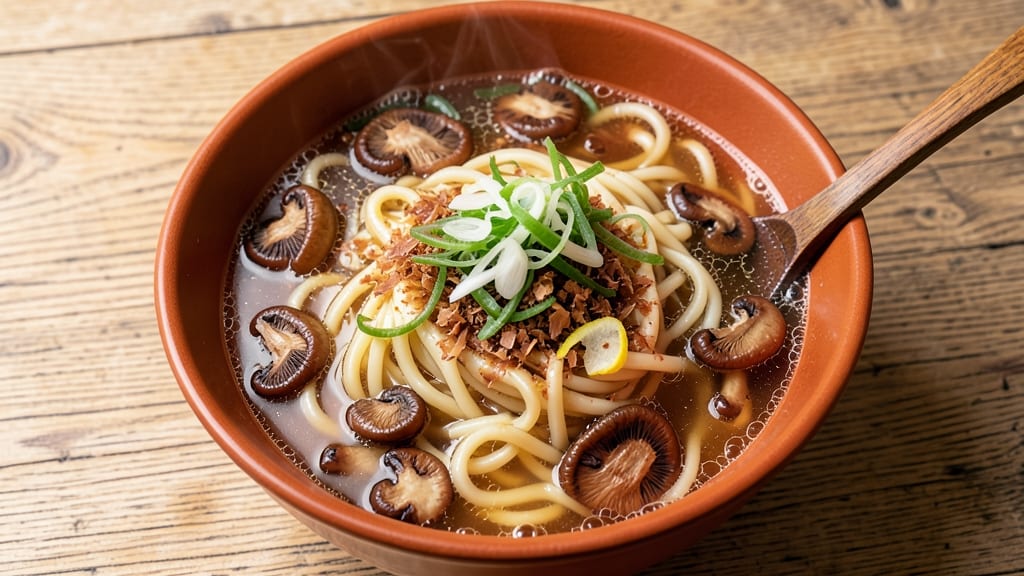
This basic udon soup recipe delivers the perfect balance of silky noodles and aromatic broth—comfort in a bowl. The secret lies in a rich dashi base (or kombu-bonito alternative) that simmers with soy sauce and mirin, creating depth without overpowering.
I've perfected this version to be approachable yet restaurant-worthy, using simple techniques that yield maximum flavor.
What sets this udon apart is the two-step broth process: first building the umami-rich foundation, then adjusting seasoning to taste. Fresh udon noodles (or dried) cook in just minutes, absorbing the fragrant liquid while maintaining their signature slippery texture.
The broth should be savory yet clean, with just enough salt to enhance rather than dominate.
By the time you assemble your bowl, you'll have hot, fragrant broth swimming with tender udon, topped with optional ingredients like soft-boiled eggs, sliced mushrooms, or crisp nori.
The contrast of textures—creamy noodles, tender toppings, and silky broth—makes every spoonful satisfying. This is the kind of soup that warms you from the inside out.
The beauty of this recipe lies in its versatility: use it as a light lunch or hearty dinner, and adjust toppings based on what you have. Whether you're a beginner or seasoned cook, the techniques here are straightforward but deliver professional results. Let's get cooking!
Ingredients for basic udon soup
Silky noodles, aromatic broth, and simple techniques—this is comfort in a bowl.
| Ingredient | Amount | Notes |
|---|---|---|
| Dried Udon Noodles 🍜 | 8 oz | Fresh or dried, cut into 4-inch lengths |
| Dried Kombu 🍃 | 1 piece | 8x10-inch sheet, rinsed |
| Bonito Flakes 🐟 | ½ cup | High-quality, for dashi base |
| Dried Shiitake Mushrooms 🍄 | 4 whole | Rehydrated in hot water |
| Green Onions 🧅 | 3 whole | Thinly sliced, for garnish |
| Fresh Ginger 🧅 | 1 tbsp | Finely grated, aromatic |
| Soy Sauce 🥢 | ¼ cup | High-quality, for depth |
| Mirin 🍶 | ⅛ cup | Sweet rice wine, essential |
| Sesame Oil 🌿 | 1 tsp | Toasted, for finishing |
| Neutral Oil 🫒 | 1 tbsp | For soft-boiled eggs |
| Large Eggs 🥚 | 4 whole | Soft-boiled, optional topping |
| Nori Sheets 🍣 | 4 pieces | Crisp, for garnish |
| Salt 🧂 | 1 tsp | Kosher, for seasoning |
| White Pepper 🌶️ | ¼ tsp | Freshly ground, optional |
The kombu and bonito flakes create the umami-rich dashi base—essential for authentic flavor. Japanese markets carry high-quality dried kombu, but the grocery store works too if it's fresh and fragrant. For bonito, look for flakes that are pale and free of fishy odor. Dried shiitake mushrooms add earthy depth; rehydrate them in hot water for 20 minutes before using. Fresh udon noodles are ideal, but dried works perfectly—just cook them separately and add at the end to avoid mushiness. The ginger should be peeled and grated fresh for maximum aroma.
No kombu? Mushroom broth or kombu substitute packets work in a pinch, though the flavor won't be identical. Short on mirin? Dry sherry or a mix of sugar and water (1 tbsp sugar + 2 tbsp water) can stand in, but mirin's sweetness is key. The soy sauce should be light or regular, not dark or tamari—this keeps the broth clean and savory. For the soft-boiled eggs, use room-temperature eggs and cook them in simmering water for exactly 6 minutes. If you're vegetarian, swap bonito for extra kombu or dried mushrooms—just increase the kombu to 2 pieces for depth.
Broth keeps for 3 days in the fridge—reheat gently and adjust seasoning with a splash of soy sauce or mirin. Udon noodles are best fresh, but dried noodles last months in a cool, dry place. For extra flavor, toast the dried shiitake mushrooms in a dry pan before rehydrating. Store nori sheets in a dry, airtight container to maintain crispness. The soft-boiled eggs hold for 2 days in the fridge, but add them fresh for the best texture—just peel and slice them right before serving.
Why You'll Love This Recipe
- No-Fuss Pantry Magic: I swear by this recipe when my fridge is bare—just dried udon, kombu, and bonito flakes transform into something rich and satisfying. No chopping, no measuring cups, and zero waste.
- Umami Bomb: That first sip? Pure flavor payoff. The kombu and shiitake mushrooms soak up water like sponges, releasing deep, savory notes while the bonito flakes add a smoky, salty kick—no broth packet needed.
- Lunchbox Hero: Between us, this is my go-to for meal prep. Cold udon holds up surprisingly well, and the shiitake-mushroom broth stays flavorful for days. Pack it with a sprinkle of green onions, and suddenly you’ve got a lunch that feels fancy.
- Budget Comfort: Honestly, I make this when I’m broke or lazy—both work. Dried ingredients last forever, and a single batch feeds two people for days. The only thing costlier is my willpower to stop eating it straight from the pot.
Step-by-step instructions for basic udon soup
Here's how to craft a traditional udon soup with rich umami broth and perfectly tender noodles.
Prepare the Dashi Broth Foundation
Start by rinsing the 1 piece dried kombu under cold water to remove any debris. Place it in a clean pot with 6 cups of cold water and bring to a gentle simmer over medium heat. Once simmering, reduce heat to low and let it steep for 10 minutes - you'll see delicate bubbles forming around the kombu edges. This step extracts the kombu's natural glutamate, creating the umami base.
Remove the kombu immediately after 10 minutes to prevent bitterness. Increase heat to medium-high and add the 0.5 cup bonito flakes, stirring gently. The flakes will dissolve completely in about 2-3 minutes, creating a cloudy, fragrant broth. Strain through a fine-mesh sieve into a clean pot, discarding any remaining solids. This clear, aromatic liquid is your dashi foundation - the heart of your udon soup.
Build the Umami-Packed Broth
Return the strained dashi to medium heat and add the 4 whole dried shiitake mushrooms (previously rehydrated in hot water for 20 minutes) and the 1 tbsp finely grated fresh ginger. Simmer gently for 5 minutes until the mushrooms soften and release their earthy flavors into the broth. The aroma should be deeply savory with hints of ginger's warmth.
In a small bowl, whisk together the 0.25 cup soy sauce and 0.125 cup mirin until fully combined. Slowly pour this mixture into the simmering broth while stirring continuously. The broth should develop a rich amber color and deep umami aroma. Add the 1 tsp salt and 0.25 tsp white pepper, stirring until dissolved. Taste and adjust seasoning if needed - this is your flavor checkpoint before adding the noodles.
Cook the Udon Noodles Perfectly
While the broth simmers, prepare the 8 oz dried udon noodles according to package instructions (typically 4-5 minutes in boiling water). Drain immediately and rinse briefly under cold water to stop the cooking process. The noodles should be al dente - firm to the bite but not hard. Divide the cooked noodles evenly among 4 serving bowls.
Here's the pro tip: Ladle the hot broth over the noodles in each bowl, filling them about 75% full. The noodles will absorb some liquid as they sit, so don't overfill. The broth should be steaming hot when it covers the noodles - this ensures they finish cooking perfectly in the bowl.
Assemble and Garnish for Presentation
For each serving, gently stir the noodles in the bowl to coat them evenly with broth. Add 1 whole soft-boiled egg (prepared by boiling eggs for 6 minutes in water with 1 tbsp neutral oil, then cooling in ice water) to each bowl. The egg should be runny inside with just a slightly set exterior.
Top each serving with 1 piece nori sheet (lightly toasted for 10 seconds in a dry pan) and 3 whole green onions (thinly sliced on the bias). Drizzle with 1/4 tsp sesame oil per serving and finish with a sprinkle of additional white pepper. The contrast of textures - slippery noodles, creamy egg, crisp nori - makes each bite satisfying.
Pro Tips For Making Basic Udon Soup
- SOAK KOMBU FIRST: I learned this the hard way—tossing dried kombu straight into boiling water wastes its flavor. Instead, soak it in cold water for 10 minutes before adding to the pot. The longer it steeps, the deeper the umami, and you’ll taste the difference without extra salt.
- REHYDRATE SHIITAKES PROPERLY: Dried shiitake mushrooms need a good soak—15 minutes in hot water, not just a quick rinse. If you’re short on time, microwave them in water for 3 minutes first, then finish soaking. Overlooking this step leaves them chewy and underwhelming.
- CONTROL THE BONITO FLAKES: Don’t dump bonito flakes all at once—they burn fast and turn bitter. Sprinkle them in two batches, 30 seconds apart, right before turning off the heat. This keeps their aroma bright and avoids that acrid aftertaste.
- SALT THE WATER LATE: Udon noodles absorb water like sponges. Add salt only after the broth starts simmering, not when the water first boils. Otherwise, the noodles turn mushy and lose their satisfying bite. Trust me, a little patience here makes all the difference.
Pro cooking tips for perfect results
Broth Temperature Control
Keep your udon broth at a gentle simmer—never a rolling boil—to preserve the delicate flavors of kombu and bonito. I use a low-medium heat setting and watch for tiny bubbles breaking the surface.
If the broth boils vigorously, reduce heat immediately to prevent bitterness from over-extraction. A thermometer reading of 185-195°F is ideal for maintaining umami without overcooking the ingredients. 🌡️
Noodle Timing Tricks
For perfect udon texture, cook noodles just 1 minute less than package instructions suggest. They'll finish cooking in the hot broth. Rinse them briefly in cold water after draining to stop cooking immediately—this prevents mushiness.
I divide the noodles into bowls before adding broth to ensure even distribution and prevent overcrowding. 🍜
Egg Soft-Boiling Mastery
For runny-yolk perfection, use room-temperature eggs and cook them in simmering water with 1 tbsp neutral oil for exactly 6 minutes. The oil prevents cracking and creates a protective barrier.
Immediately transfer eggs to ice water for 2 minutes to halt cooking. Peel just before serving to maintain texture. 🥚
Seasoning Adjustments
Taste your broth before adding noodles—this is your flavor checkpoint. If it needs more depth, add ½ tsp soy sauce or 1 tsp mirin. For saltiness, use kosher salt (it dissolves better than table salt).
I keep a small bowl of seasoning components nearby to make quick adjustments without overcomplicating the broth. ✨
Broth Storage Secrets
Let broth cool completely before refrigerating to prevent skin formation. Store in airtight containers with a layer of plastic wrap pressed directly on the surface. Reheat gently on low heat, stirring occasionally.
For extra flavor, add 1 tsp toasted sesame oil when reheating. Broth keeps for 3 days in the fridge or 3 months in the freezer. ❄️
Garnish Placement Tips
Arrange toppings strategically: place nori sheets on one side of the bowl to create visual balance, and scatter green onions in a fan shape. Drizzle sesame oil in a zigzag pattern for both decoration and flavor distribution.
The soft-boiled egg should sit slightly off-center to showcase its creamy yolk when cut. This presentation makes each bowl look as delicious as it tastes. 💫
Nutrition facts
Frequently asked questions
Can I use fresh udon noodles instead of dried?
Fresh udon noodles cook much faster—just 2-3 minutes in boiling water. They're thicker and chewier than dried, so they hold up beautifully in the broth. The key is to cook them 1 minute less than package instructions and finish in the hot broth. Fresh udon is ideal for restaurant-quality results!
What if I don't have kombu or bonito flakes?
No problem! For kombu, use 2 pieces dried shiitake mushrooms or 1 tsp kombu powder instead. Skip bonito flakes and add 1 extra tbsp soy sauce plus ½ tsp dashi powder (if available) to maintain umami. The broth will be vegetarian-friendly but still flavorful.
How do I make the broth less salty?
If your broth tastes too salty, dilute it by adding ½ cup hot water per bowl and stir well. For a cleaner taste, add 1 tsp mirin or ½ tsp sugar to balance the saltiness. Avoid adding more broth—this would just make the saltiness more concentrated. Always taste as you go!
Can I prepare the udon soup ahead of time?
Yes! Make the broth up to 3 days ahead and store it in the fridge. Reheat gently and adjust seasoning before serving. For the noodles, cook them fresh or parboil dried noodles for 1 minute less than package instructions, then store in cold water. Assemble bowls just before serving to keep the noodles al dente.
What's the best way to reheat leftover udon?
Reheat udon gently in a pot with ¼ cup water per serving over low heat for 3-4 minutes. Add a splash of broth or water to prevent drying. For extra flavor, stir in ½ tsp sesame oil at the end. Never microwave—it makes the noodles rubbery. Stir frequently to distribute heat evenly.