
Soups & Stews
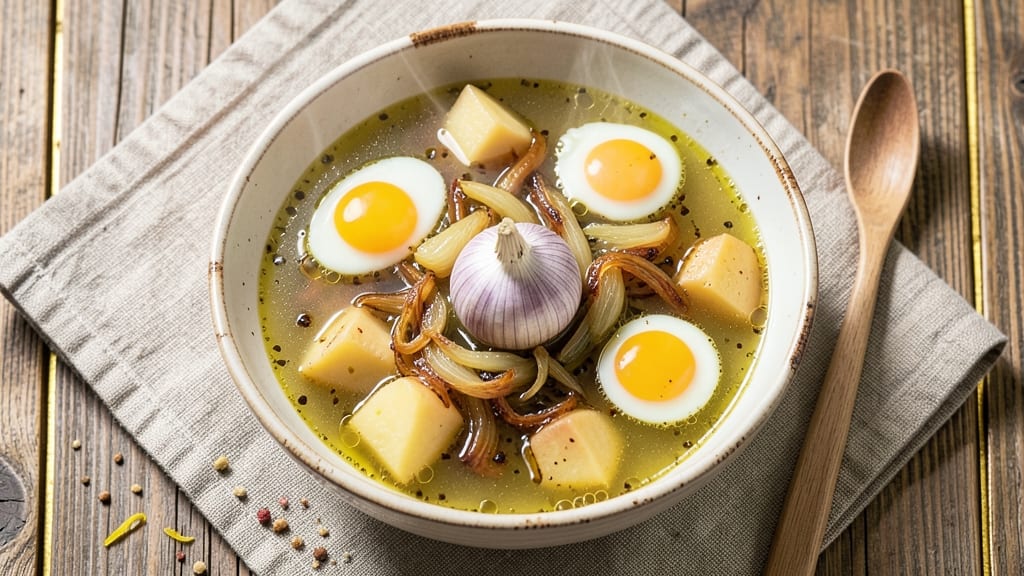
This Basque garlic soup recipe brings the hearty, comforting flavors of Spain's Basque Country to your kitchen table. 🌟 The secret lies in slow-roasting whole garlic cloves until they're sweet, caramelized, and smoky—a technique that transforms ordinary garlic into a rich, velvety base.
What makes this dish special is its simplicity: just a few ingredients, but each plays a crucial role in creating a soup that's both rustic and refined.
The traditional version includes eggs poached in the broth, adding a silky texture and creamy finish that balances the soup's earthy flavors. For a modern twist, you can easily adapt it to be vegetarian by omitting the eggs or using tofu for a plant-based alternative.
The key to achieving that signature Basque richness is patience—letting the garlic and potatoes roast until tender and the broth reduce into a deep, flavorful liquid.
What you'll end up with is a bowl of velvety soup that's creamy without being heavy, infused with the irresistible aroma of roasted garlic and potatoes. The result is a dish that's perfect for chilly evenings, family gatherings, or whenever you crave something comforting yet sophisticated.
Serve it with crusty bread to soak up every last drop of that flavorful broth.
This recipe is more than just a soup—it's a taste of Basque tradition with a touch of modern convenience.
Whether you're making it for a special occasion or a cozy weeknight dinner, the process is straightforward, and the reward is a dish that will leave everyone at the table asking for seconds. Let's get started on creating this timeless classic!
Ingredients for basque garlic soup
Just 11 ingredients transform into Basque Country's most comforting soup—smoky, creamy, and full of flavor.
| Ingredient | Amount | Notes |
|---|---|---|
| Whole Garlic Bulb 🧄 | 1 whole | Roasted until caramelized |
| Yellow Onions 🧅 | 2 whole | Medium size, peeled |
| Russet Potatoes 🥔 | 2 lb | Peeled, cut into chunks |
| Extra-Virgin Olive Oil 🫒 | ½ cup | For roasting and cooking |
| Vegetable Broth 💧 | 4 cups | Low-sodium preferred |
| Large Eggs 🥚 | 4 whole | Optional for traditional version |
| Fresh Thyme 🌿 | ¼ cup | Leaves only, chopped |
| Salt 🧂 | 1 ½ tsp | Adjust to taste |
| Black Pepper 🌶️ | ½ tsp | Freshly ground preferred |
| Fresh Parsley 🌿 | 0.2 cup | Chopped for garnish |
| Crusty Bread 🍞 | 8 slices | For serving |
The garlic is non-negotiable here. Whole bulbs roasted until caramelized create that signature sweet, smoky depth—don't skip this step. I grab my garlic from Whole Foods or the local farmers market for the freshest bulbs, but any good grocery store works. For the potatoes, Russets hold up best to roasting—they're starchy enough to get creamy but not so waxy they turn mushy. If you're short on time, baby potatoes work too, but they'll need a few extra minutes in the roaster. The onions? Yellow or red both work, but yellows caramelize slightly better for this dish.
No eggs? No problem—this soup shines without them. Swap in firm tofu cubes for a vegetarian version, or skip entirely for a vegan take. Fresh thyme is ideal, but dried works at one-third the amount. For the broth, low-sodium is key—you'll be adding plenty of salt later. The olive oil matters too—use extra-virgin for that fruity richness that carries through the dish. Short on time? The potatoes can be parboiled for 5 minutes before roasting to speed things up, but they won't be quite as tender.
This soup tastes even better the next day—honestly, the flavors meld overnight into something magical. Keeps 4-5 days in the fridge, but the broth reduces further each day, so plan to eat it within that window. For leftovers, I like to portion it into containers with a slice of crusty bread on the side—perfect for quick lunches. Freezing isn't ideal since the texture changes, but you can freeze the broth base (without eggs) for up to 3 months. Just reheat gently and add fresh roasted garlic and potatoes when serving.
Why You'll Love This Recipe
- You’re using basics: potatoes, onions, broth, olive oil. No fancy ingredients, no last-minute grocery runs. I’ve made this for under $10 for six servings, and it’s still the dish everyone reaches for when the fridge is bare.
- No Chopping Chaos: I swear by this recipe because you just roast the whole garlic bulb—no peeling, no mincing, no mess. The onions caramelize in the same pot, so I’m not stuck with a counter full of dirty knives or a sink full of garlic skins.
- Garlic Overload (In a Good Way): That roasted whole bulb? It’s the star—crispy edges, jammy center, and a flavor so rich it turns even the simplest broth into something ridiculously good. Honestly, I’ve tried minced garlic, but this? It’s next-level without extra effort.
- Weeknight to Weekend: This soup is my go-to for lazy Mondays and Sunday suppers. Double the batch, and it’s still perfect for lunch the next day—just reheat and add a splash of broth if it’s too thick. (Yes, even on a Tuesday night.)
Step-by-step instructions for Basque garlic soup
Here's how to make this velvety, smoky Basque classic that's all about roasted garlic and tender potatoes.
🔥 Step 1: Roast the Garlic and Onions Until Caramelized
Preheat your oven to 400°F. Cut the top off the whole garlic bulb and drizzle with 1 tablespoon of the extra-virgin olive oil. Wrap it tightly in aluminum foil and place it on a baking sheet with the 2 whole yellow onions (cut in half lengthwise). Drizzle the onions with another 1 tablespoon of olive oil, sprinkle with ½ teaspoon salt and ¼ teaspoon black pepper, and wrap them in separate foil packets.
Roast for 45-50 minutes until the garlic cloves are soft and golden brown and the onions are caramelized with deep brown edges. The garlic should smell intensely sweet and nutty—this is your flavor foundation. Let them cool slightly before handling, as they'll be very hot.
Once cooled enough to handle, squeeze the roasted garlic cloves out of their skins directly into your soup pot. Reserve the skins for garnish if you like. Chop the caramelized onions into small pieces—they'll add depth to your soup base.
🍳 Step 2: Build the Soup Base with Potatoes and Broth
In a large pot, heat the remaining 0.25 cup extra-virgin olive oil over medium heat. Add the chopped caramelized onions and cook for 2-3 minutes until fragrant. Stir in the 0.25 cup chopped fresh thyme and cook for another 30 seconds to release the aromatics.
Add the 2 lb peeled russet potatoes (cut into 1-inch chunks) and pour in the 4 cups vegetable broth. Bring to a boil, then reduce heat to medium-low and simmer for 15-20 minutes until the potatoes are fork-tender. The soup should be thick but still slightly loose—this will change as it cools.
Use an immersion blender to puree the soup directly in the pot until completely smooth. If you don't have an immersion blender, carefully transfer about half the soup to a blender, blend until smooth, then return to the pot. This creates that signature silky texture Basque garlic soup is known for.
⏰ Step 3: Finish with Roasted Garlic and Season to Perfection
Return the pot to medium heat and stir in the roasted garlic from Step 1. Add the remaining 1 teaspoon salt and ¼ teaspoon black pepper, and simmer for 5-7 minutes to let the flavors meld. Taste and adjust seasoning—you might need a bit more salt to balance the sweetness of the roasted garlic.
For the traditional version, gently stir in the 4 whole large eggs one at a time, letting each one poach slightly in the hot soup. Simmer for just 1-2 minutes—the eggs should be softly set but still runny in the center. If you prefer a vegan version, skip the eggs or top with crispy fried bread slices instead.
Remove from heat and let the soup sit for 5 minutes to thicken slightly. The texture should be velvety with just enough body to coat a spoon. If it's too thick, stir in 1-2 tablespoons of hot broth to reach your desired consistency.
🍽️ Step 4: Serve with Crusty Bread and Fresh Garnishes
Ladle the hot soup into bowls and serve immediately with 8 slices crusty bread on the side. The bread is essential—it soaks up the rich, garlicky broth beautifully. Garnish each serving with a sprinkle of the reserved roasted garlic skins (if using) and 2 tablespoons chopped fresh parsley for color and freshness.
For the full Basque experience, crack a fresh egg into each bowl and let it poach in the hot soup at the table. The runny yolk adds a luxurious finish that ties all the flavors together. If you're serving the vegan version, top with extra crispy bread pieces or a drizzle of olive oil instead.
Pro Tips For Making Basque Garlic Soup
- CHAR THE GARLIC LOW: The whole bulb should sizzle gently, not burn—aim for a golden caramel color, not blackened cloves. I learned this the hard way when my first batch tasted bitter; keep the heat at a medium simmer and stir occasionally.
- PEEL POTATOES IN BATCHES: Cutting and peeling all the potatoes at once leads to soggy edges. Work in two groups: peel and chop the first batch, then toss them into cold water while you finish the rest. (Yes, even if you're impatient like me.)
- STRAIN THE BROTH: Store-bought broth often has bits that turn the soup gritty. Strain it through a fine-mesh sieve or cheesecloth before adding—it’s a 30-second step that makes a real difference in texture.
- PUSH THE ONIONS TO THE SIDE: When frying the onions, resist the urge to stir constantly. Let them brown in patches by pushing them to one side of the pan—this gives them crispy edges and deeper flavor. (Your future self will thank you.)
Common mistakes when making perfect results
Over-Roasting Garlic
Don’t let that roasted garlic turn bitter! The sweet spot is 45-50 minutes at 400°F—any longer and it burns, leaving an acrid, unpleasant flavor. I’ve made this mistake twice, and trust me, your soup will taste like a chemistry experiment gone wrong. 🔥
Pro tip: Check the garlic at 40 minutes—it should be soft and golden brown. If it’s blackened, you’ve gone too far. For extra insurance, wrap the bulb in two layers of foil to prevent burning.
Skipping the Puree
The velvety texture comes from blending the potatoes until completely smooth. Skipping this step leaves you with a chunky soup that’s more like potato stew. I’ve tried the lazy route, and while it’s still delicious, it’s missing that signature Basque silkiness. 🥔
If you don’t have an immersion blender, transfer half the soup to a regular blender—just be careful with the hot liquid. Wear oven mitts and leave room at the top to prevent splattering. The extra effort is worth the creamy result!
Under-Salting the Broth
Low-sodium broth is great, but don’t assume it’s enough. The roasted garlic adds natural sweetness that needs balancing with salt. I’ve had to rescue soups by adding an extra ½ teaspoon salt at the end—taste as you go!
Start with the full 1.5 teaspoons of salt called for in the recipe, then adjust. Remember, the soup will thicken as it cools, so don’t overdo it. A pinch at the table is always better than trying to fix an oversalted pot.
Adding Eggs Too Early
Eggs should be the last touch—adding them too soon turns them rubbery. I’ve ruined perfectly good soup by letting them sit in the hot broth for too long. The key is to stir them in just before serving and let them poach for 1-2 minutes max.
For a foolproof method, crack the eggs directly into each bowl at the table. This ensures they’re perfectly set when you’re ready to eat, with that luxurious runny yolk. If you must add them earlier, keep the soup at 160°F or below to prevent overcooking.
Using the Wrong Potatoes
Russets are your best bet for that creamy texture, but waxy potatoes like Yukon Golds or red potatoes won’t break down the same way. I once used red potatoes and ended up with a soup that was more like mashed potatoes in broth—disappointing!
If you’re short on Russets, parboil waxy potatoes for 5 minutes before roasting to help them soften. But honestly, the extra effort with Russets is worth it for that authentic Basque creaminess. 🥔
Ignoring the Resting Time
Letting the soup sit for 5 minutes off the heat thickens it naturally—skipping this step leaves you with a watery mess. I’ve served it immediately, only to have it separate and lose that perfect consistency.
If your soup is too thick after resting, stir in 1-2 tablespoons of hot broth. But don’t rush it—patience here makes all the difference in the final texture. The flavors will meld even more during this time, too!
Nutrition facts
Frequently asked questions
Can I make this Basque garlic soup without eggs?
The traditional version includes eggs, but it's completely adaptable! For a vegetarian option, simply omit them or add firm tofu cubes instead. The soup will still be rich and flavorful—just skip the poaching step and serve with extra crispy bread for texture. The roasted garlic and potatoes carry all the depth on their own!
How can I make this soup ahead of time?
This soup actually tastes better the next day! Prepare it completely (without eggs) and store in an airtight container for 4-5 days in the fridge. Reheat gently, then stir in fresh roasted garlic and add eggs (or tofu) just before serving. The flavors meld beautifully overnight, creating even deeper richness. For freezing, store just the broth base (without eggs) for up to 3 months.
What's the secret to getting that perfect creamy texture?
The key lies in two steps: using Russet potatoes (they break down beautifully) and blending until completely smooth. After simmering, use an immersion blender to puree directly in the pot. If you don't have one, transfer half the soup to a regular blender—just be careful with the hot liquid! The resting time (5 minutes off heat) also helps thicken it naturally.
Can I substitute chicken broth for vegetable broth?
Chicken broth adds a wonderful depth that pairs beautifully with the roasted garlic. Just be sure to use a low-sodium version to control seasoning. For extra richness, you could even make your own broth by simmering chicken bones with the roasted garlic skins. The flavor profile will be even more robust and authentic.
What's the best way to serve this soup?
Serve it piping hot in deep bowls with crusty bread on the side for dipping. For the full Basque experience, crack fresh eggs into each bowl at the table and let them poach in the hot soup. Garnish with chopped parsley and any reserved roasted garlic skins. The contrast of warm bread and runny yolk makes it unforgettable!