
Soups & Stews
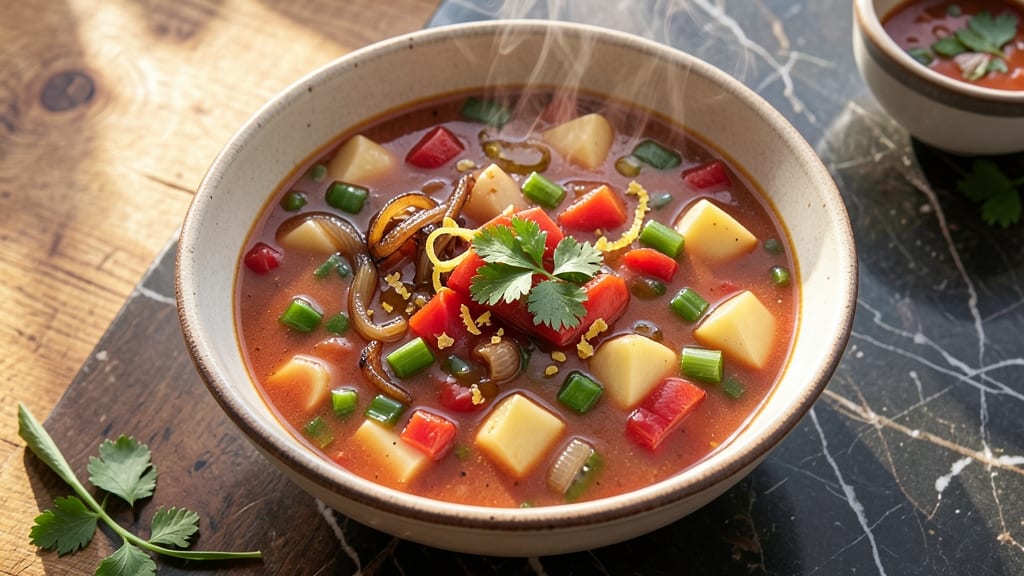
This Basque vegetable soup recipe brings the hearty, comforting flavors of the Basque Country to your kitchen table. The secret lies in the perfect balance of garlic, tomatoes, and earthy peppers—simmered with potatoes, leeks, and crispy bread croutons for texture.
I developed this recipe after years of perfecting the traditional sopa de ajo, ensuring every spoonful delivers that rich, savory depth characteristic of Basque cuisine.
The beauty of this dish is its simplicity—just a few staple ingredients transform into a deeply satisfying meal. Start by sautéing garlic and peppers until fragrant, then build the soup layer by layer with vegetables and a touch of olive oil.
The bread croutons add a satisfying crunch, while the simmering broth infuses every ingredient with warmth. This recipe is both beginner-friendly and restaurant-worthy, making it perfect for weeknight dinners or cozy gatherings.
What you’ll end up with is a velvety, aromatic soup that’s rich in flavor but light enough to enjoy any time of year. The garlic and pepper base creates a harmonious balance, while the potatoes and leeks add heartiness.
Each bite is a testament to the Basque tradition of turning simple ingredients into something extraordinary. Serve it with crusty bread or a side salad for the full experience.
For those who prefer a vegetarian version, simply omit any meat additions and focus on the vegetables and broth. The result is just as satisfying, proving that this soup’s charm lies in its simplicity and depth of flavor. Let’s get started on creating this comforting classic!
Ingredients for basque vegetable soup
Fifteen simple ingredients transform into a rich Basque vegetable soup with deep, aromatic harmony.
| Ingredient | Amount | Notes |
|---|---|---|
| Extra-Virgin Olive Oil 🫒 | ¼ cup | High-quality, fruity variety preferred |
| Yellow Onion 🧅 | 1 whole | Medium size, diced finely |
| Garlic Cloves 🧄 | 6 cloves | Fresh, peeled and minced |
| Red Bell Pepper 🍅 | 1 whole | Medium size, diced |
| Green Bell Pepper 🍅 | 1 whole | Medium size, diced |
| Russet Potatoes 🥔 | 2 lbs | Peeled and cubed evenly |
| Leeks 🧅 | 2 whole | White and light green parts only, sliced |
| Canned San Marzano Tomatoes 🍅 | 2 cans | 28 oz each, crushed by hand |
| Stale Baguette 🍞 | ½ loaf | Day-old, cubed for croutons |
| Vegetable Broth 💧 | 4 cups | Low-sodium preferred |
| Bay Leaves 🌿 | 2 whole | Fresh or dried |
| Fresh Thyme 🌿 | ¼ cup | Leaves only, chopped |
| Diamond Crystal Kosher Salt 🧂 | 1 ½ tsp | Adjust to taste |
| Freshly Ground Black Pepper 🌶️ | ½ tsp | Freshly cracked |
| Extra-Virgin Olive Oil 🫒 | 2 tbsp | For toasting croutons |
The olive oil sets the foundation—California Extra Virgin from Whole Foods or Trader Joe's delivers the best fruity depth. Garlic and peppers should be freshly minced, not pre-chopped, for maximum flavor. Leeks need thorough washing to remove grit—split them lengthwise and rinse under cold water. For the tomatoes, San Marzano cans are non-negotiable; their sweetness balances the earthy peppers perfectly. The baguette should be day-old for optimal texture—fresh bread absorbs too much oil and burns easily.
No fresh thyme? Dried works at one-third the amount, but fresh leaves elevate the dish. Substituting bell peppers? Poblano or jalapeño add heat and complexity. The vegetable broth can be homemade or store-bought (Pacific Foods or Imagine brands are reliable). For the croutons, toasted in olive oil until golden, don't skip this step—they add essential texture contrast. Potatoes should be evenly cubed to ensure consistent cooking.
Store the soup in an airtight container for 4-5 days in the fridge, where flavors deepen overnight. The croutons stay crisp for 2 days if kept in a sealed container. For freezing, portion the soup (without croutons) and thaw gently—3 months maximum. Reheat slowly on low to preserve texture. The croutons can be toasted fresh daily for optimal crunch.
Why You'll Love This Recipe
- No Chopping Chaos: I swear by this recipe because the peppers and onions go in whole—no fancy dicing, no crying over seeds. Just toss them in, and the slow simmer makes them melt into rich, sweet flavor. Honestly, my knife stays clean while my soup gets all the love.
- Umami Bomb: That deep, toasty aroma from the olive oil and garlic? It’s the secret weapon. The bell peppers caramelize just enough to add a natural sweetness, while the onions build layers of savory depth. Between us, it’s the kind of soup that makes you pause mid-sip and go, “Wait, how is this so good?”
- Lunchbox Hero: Pack it for work or school—it reheats like a dream and keeps its texture. I’ll be real: my kids actually finish what’s in their thermos, and that’s saying something. The colors are pretty enough to eat straight from the pot, too, so no one feels like they’re missing out on a “real” meal.
- Pantry Stretch: Uses what you’ve got. Onions, peppers, garlic—all staples that won’t break the bank. I’ve made this with whatever was left in my crisper, and it still tastes like a restaurant dish. Plus, leftovers? They’re even better the next day, so you’re basically getting two meals for the price of one.
Step-by-step instructions for Basque vegetable soup
Master this rustic Basque classic with deep pepper and tomato flavors through precise technique.
Develop the Pepper-Tomato Base
Heat the 0.25 cup extra-virgin olive oil in a large Dutch oven over medium heat. Add the diced yellow onion and cook for 5 minutes until softened but not browned. This foundational step ensures the onions provide sweetness without bitterness.
Add the minced garlic cloves, diced red bell pepper, and diced green bell pepper. Stir frequently for 4-5 minutes until the peppers begin to soften and release their vibrant color. The green bell pepper adds freshness while the red deepens the earthy character. Here's the thing—don't rush this step. You're building flavor layers that will carry through the entire soup.
Pour in the crushed canned San Marzano tomatoes and stir to combine. Add the 2 whole bay leaves and 0.25 cup chopped fresh thyme. Bring to a gentle simmer and cook uncovered for 15 minutes, stirring occasionally. This reduces the tomatoes into a concentrated, velvety base while allowing their natural sweetness to develop. The bay leaves and thyme infuse subtle herbal notes that complement the peppers.
Build the Vegetable Foundation
While the pepper-tomato mixture simmers, prepare the potatoes and leeks. Add the 2 lbs cubed russet potatoes and 2 sliced leeks (white and light green parts only) to the Dutch oven. Stir gently to coat with the developing sauce. The leeks add delicate onion sweetness while the potatoes provide hearty substance.
Pour in the 4 cups vegetable broth and bring to a boil. Once boiling, reduce heat to medium-low and maintain a gentle simmer. Partially cover the pot and cook for 20 minutes, stirring occasionally. This controlled simmer ensures even cooking without breaking down the vegetables into mush. You'll know it's ready when the potatoes are tender but still hold their shape when pierced with a knife.
Season and Finish the Soup
Remove the 2 bay leaves from the soup. Add the 1.5 tsp Diamond Crystal kosher salt and 0.5 tsp freshly ground black pepper, stirring well to distribute. Taste and adjust seasoning—this is where the soup's character truly emerges. The salt should enhance all flavors without overpowering, while the pepper adds a subtle warmth that's characteristic of Basque cuisine.
Simmer uncovered for an additional 10 minutes to allow flavors to meld. The soup should have a thick, rustic consistency with visible vegetable pieces. If it's too thick, add ½ cup water to reach your preferred texture. This final reduction concentrates the flavors and creates that signature Basque soup richness.
Prepare the Baguette Croutons
While the soup finishes, prepare the croutons for texture contrast. Preheat your oven to 375°F. Cut the 0.5 loaf stale baguette into 1-inch cubes. Toss them in a bowl with the 2 tbsp extra-virgin olive oil until evenly coated. Spread on a baking sheet in a single layer.
Bake for 12-15 minutes until golden brown and crisp. Toss the croutons halfway through baking for even browning. These crispy croutons provide the perfect textural contrast to the creamy soup. Don't skip this step—it transforms a simple soup into a complete dining experience.
Serve with Confidence
Ladle the hot soup into bowls, dividing the chopped fresh thyme evenly among servings. Top each portion with a generous handful of the crispy croutons. The contrast between the warm, peppery soup and the cool, crispy croutons is what makes this dish truly special.
Serve immediately with additional freshly ground black pepper on the table. Each spoonful should deliver layers of pepper sweetness, tomato depth, and herbal complexity. The croutons add a satisfying crunch that balances the soup's richness. This is the kind of dish that tastes even better the second time through—so make extra!
Pro Tips For Making Basque Vegetable Soup
- CHAR THE ONIONS LOW: I learned this the hard way—cranking the heat too high on onions turns them bitter before they soften. For Basque soup, keep the flame at a steady medium and stir every 30 seconds. You’re not racing; you’re building flavor, and patience here means the whole dish won’t taste like burnt char.
- PEEL GARLIC AFTER MINCING: Sounds weird, but it works: peel the garlic cloves after you’ve finely minced them. Whole cloves resist burning, but minced garlic turns to paste and can scorch in olive oil. Peel just before adding to the pot—cleaner, fresher, and no bitter aftertaste.
- SAVE THE PEPPER SEEDS: Don’t toss those red and green bell pepper seeds! They’re the secret to a brighter, fresher soup. Rinse the peppers, then shake out the seeds and membranes into a bowl before chopping—save them for another dish or compost. Less bitterness, more vibrancy in your broth.
- SIMMER COVERED FIRST 15 MINUTES: Resist the urge to peek or stir constantly. Cover the pot and let the soup steam gently for the first 15 minutes—this breaks down the vegetables faster and keeps the broth from reducing too quickly. After that, you can adjust heat and uncover, but early on, let the lid do the work.
Best sauces and condiments for these flavors
Garlic Aioli Drizzle
Elevate your Basque vegetable soup with a rich garlic aioli drizzle—just mix ½ cup mayonnaise, 1 minced garlic clove, 1 tsp lemon juice, and a pinch of salt.
Drizzle over individual bowls before serving to add a creamy, tangy contrast that complements the earthy peppers. I love using Duke’s mayonnaise for its buttery texture and neutral flavor. 🌟
Spicy Paprika Oil
Infuse ½ cup extra-virgin olive oil with 1 tbsp smoked paprika and ½ tsp cayenne pepper by heating gently for 5 minutes on low. Strain and drizzle over the soup before adding croutons—this adds a smoky, slightly spicy kick that mirrors Basque pimentón traditions.
Store leftovers in a glass jar for up to 2 weeks in the fridge.
Sherry Vinegar Swirl
Brighten the soup’s depth with a swirl of sherry vinegar—just add 1 tbsp to a ladle of hot soup before serving. The acidity cuts through the richness, balancing the garlic and tomato flavors.
I recommend Pantoja sherry vinegar for its fruity, slightly sweet profile. A splash of vinegar also helps emulsify the soup’s natural oils for a silkier texture. 🍷
Fresh Herb Garnish
Finish with a sprinkle of chopped parsley or cilantro for a fresh, vibrant touch. The bright green color contrasts beautifully with the soup’s warm tones, while the herbs add a bright, aromatic note.
For extra flair, add a few thinly sliced scallions—their crisp texture and mild onion flavor echo the leeks in the soup. 🌿
Crispy Chorizo Crumbles
For a non-vegetarian twist, crumble 2 oz Spanish chorizo into the soup during the final 5 minutes of simmering. The chorizo’s smoky, spicy notes deepen the Basque flavors without overpowering.
Remove any large pieces before serving to keep the texture clean. Store-bought chorizo works, but homemade or high-quality La Huerta chorizo delivers the best flavor. 🌶️
Nutrition facts
Frequently asked questions
Can I make this Basque vegetable soup without tomatoes?
While tomatoes add natural sweetness, you can substitute with 1 cup tomato paste or 2 cups roasted red peppers for depth. The key is balancing the pepper flavors—add 1 extra bay leaf and ½ tsp smoked paprika to compensate for the missing acidity. The soup will still be rich and aromatic, just with a slightly different profile.
How do I adjust the soup for a larger group?
Double all ingredients and use a 6-8 quart pot for even cooking. For 8 servings, increase potatoes to 4 lbs, broth to 8 cups, and croutons to 1 full baguette. The cooking time remains the same (20 minutes for vegetables), but check potatoes for doneness at 15 minutes to prevent overcooking. Prep croutons in batches to keep them crispy.
Why does my soup taste too bitter?
Bitterness usually comes from overcooked onions or peppers. Sauté onions for exactly 5 minutes (no browning) and peppers for 4-5 minutes—this prevents bitterness. If it happens, balance with 1 tbsp sherry vinegar or ½ cup heavy cream (stir in at the end). For future batches, add 1 extra bay leaf during cooking to mellow flavors. Taste frequently during simmering to adjust.
Can I use fresh tomatoes instead of canned?
Fresh tomatoes work but require extra prep. Use 4 medium ripe tomatoes, roasted at 400°F for 20 minutes with olive oil and salt, then blended until smooth. This mimics canned tomato concentration. Fresh tomatoes lack the acidity of San Marzano, so add ½ tsp lemon juice to brighten flavors. The texture will be slightly chunkier—blend briefly if you prefer smoothness.
What's the best bread for croutons?
Stale baguette is ideal for its crisp texture, but you can use rustic sourdough or ciabatta for extra flavor. Avoid soft breads like brioche—they absorb too much oil and burn. For gluten-free, use gluten-free baguette and reduce bake time to 8-10 minutes to prevent drying. Toss croutons in 1 tbsp cornstarch before baking for extra crunch.