
Soups & Stews
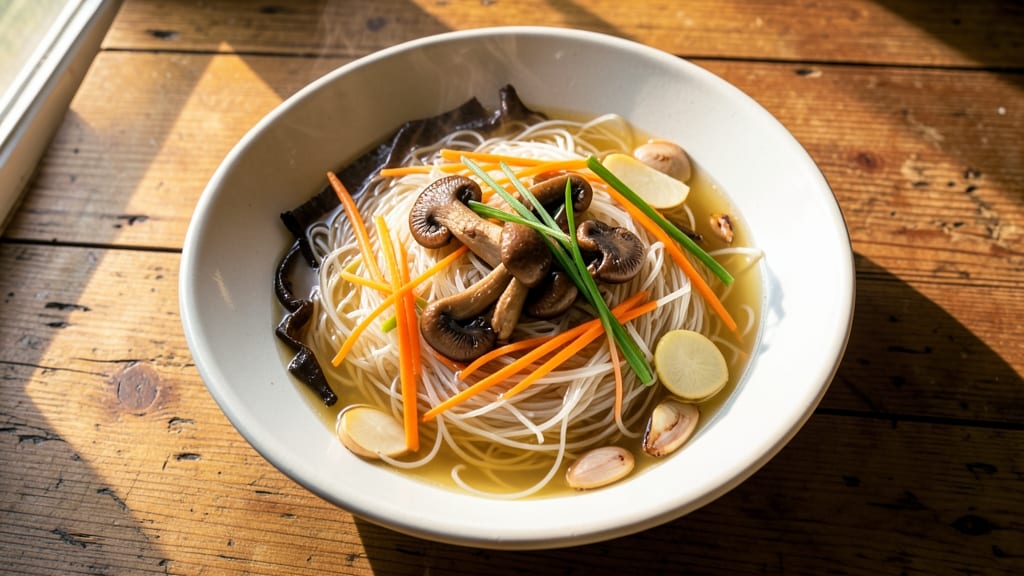
This bean thread noodles soup recipe transforms delicate egg ribbons into a velvety, fragrant dish that captures the essence of East Asian comfort food. ✨ The secret lies in a light ginger-broth base that enhances the noodles' natural silkiness, while simple vegetables add texture and depth without overpowering the delicate strands.
Traditional recipes often use chicken broth, but this version delivers equally rich flavor with a plant-based approach—using mushrooms and kombu for umami depth. The key technique is gently simmering the noodles just until tender, then swirling them into the hot broth to maintain their signature ribbon-like shape.
No special equipment is needed, just patience and a light touch.
What you’ll end up with is a bowl of silky, translucent noodles floating in a golden broth infused with ginger, garlic, and subtle heat from chili oil. Each spoonful offers a perfect balance of textures—slippery noodles against crisp vegetables—and a warmth that lingers long after the last bite.
The beauty of this soup lies in its versatility—serve it as a light lunch, a comforting dinner, or even a healing meal. Garnish with fresh herbs or crispy fried shallots for added crunch. Here’s how to create it from scratch.
Ingredients for bean thread noodles soup
Silky noodles meet fragrant broth—just eight ingredients transform into velvety comfort.
| Ingredient | Amount | Notes |
|---|---|---|
| Bean Thread Noodles 🍜 | 8 oz | Dried, rinsed before cooking |
| Shiitake Mushrooms 🍄 | 8 oz | Fresh, stems removed |
| Dried Kombu 🍃 | 1 piece | 4x6-inch sheet |
| Fresh Ginger 🧄 | 2 tbsp | Grated, peeled |
| Garlic Cloves 🧄 | 4 cloves | Minced |
| Carrots 🥕 | 1 medium | Julienned, about 1 cup |
| Green Onions 🧅 | 3 whole | White and green parts separated |
| Chili Oil 🌶️ | 1 tbsp | For finishing |
| Sesame Oil 🫒 | 1 tbsp | Toasted, for aroma |
| Vegetable Broth 💧 | 6 cups | Low-sodium preferred |
| White Miso Paste 🍶 | 1 tbsp | For umami depth |
| Sesame Seeds 🌾 | 1 tsp | Toasted, for garnish |
| Lemon Juice 🍋 | 1 tsp | Freshly squeezed |
| Salt 🧂 | 1 tsp | Adjust to taste |
| Black Pepper 🌶️ | ¼ tsp | Freshly ground |
The bean thread noodles are the star, so look for high-quality dried strands—avoid pre-cooked varieties that lose their signature texture. Asian grocery stores often carry the best selection, but check the international aisle at mainstream markets too. For the mushrooms, shiitake with thick caps add the most umami. If you can't find kombu, dried kelp from health food stores works in a pinch. The ginger should be fresh, vibrant, and free of soft spots—organic ginger from the produce section usually delivers the best flavor. Pre-minced garlic is fine, but I always grab a head and mince it myself for that extra punch.
No kombu? Dried porcini mushrooms steeped in hot water add similar depth. Swap the shiitake for cremini or oyster mushrooms if needed—they're more widely available. The carrots can be baby carrots or regular, but julienne them consistently so they cook evenly. Short on chili oil? Mix 1 tsp sriracha with 1/2 tsp sesame oil. For the broth, homemade vegetable stock elevates the dish, but even store-bought low-sodium options work. The miso paste should be white, not red—it's milder and lets the other flavors shine. Toast your sesame seeds in a dry pan for 30 seconds before using; it makes all the difference.
Store leftover broth in the fridge for up to 5 days—it reheats beautifully and makes a great base for other soups. The noodles, once cooked, should be refrigerated in a sealed container with a thin layer of broth to prevent drying. They keep for 3 days this way. For freezing, portion the broth separately from the noodles—they don't reheat as well after freezing. Garnish with fresh herbs like cilantro or Thai basil if you have them, but the sesame seeds and chili oil are non-negotiable for that signature finish. This soup tastes even better the next day as the flavors meld.
Why You'll Love This Recipe
- No-Chop Start: The kombu and dried shiitake soak while you slice—literally five minutes of prep. I’ve made this on days when I forgot to buy veggies; the umami from kombu alone carries the whole dish.
- Umami Bomb: That first sip? The garlic and ginger hit like a warm hug, but the shiitake mushrooms add this deep, earthy richness that lingers. Honestly, the noodles almost feel like an afterthought—until you realize they’re silky perfection.
- Leftover Goldmine: This soup tastes better the next day. I’ll be real: I often make a double batch and save half for lunch. The noodles hold up, the broth deepens, and it’s still a fraction of the cost of takeout.
- Budget Chef’s Secret: Dried kombu and shiitake stretch a dollar further than fresh anything. I buy them in bulk, and one package feeds my family for weeks. (Yes, even on a Tuesday night when I’m broke.)
Step-by-step instructions for silky egg ribbon soup
Transform delicate bean thread noodles into silky egg ribbons with this aromatic ginger broth technique.
🍳 Step 1: Prepare the Kombu-Infused Broth
Rinse the 8 oz dried bean thread noodles thoroughly under cold water, then soak in a large bowl of cold water for 10 minutes. This prevents them from sticking during cooking. While they soak, place the 1 piece dried kombu in a clean pot and cover with 6 cups vegetable broth. Bring to a gentle simmer over medium heat for 5 minutes—this releases the kombu's natural umami into the broth.
Remove the kombu immediately after simmering—it should be soft and pliable. Strain the broth through a fine-mesh sieve into a clean pot. The broth should smell clean and slightly briny, with no fishy aroma. Return it to medium-low heat and keep warm while you prepare the remaining ingredients. This foundational step creates the soup's signature depth without overpowering flavors.
👨🍳 Step 2: Sauté the Aromatic Base
Heat 1 tablespoon sesame oil in a wok or deep skillet over medium heat. Add the 8 oz shiitake mushrooms (stems removed) and cook for 4-5 minutes until they release their moisture and begin to brown. Remove the mushrooms with a slotted spoon and set aside—they'll finish cooking later.
In the same pan, add 2 tablespoons grated fresh ginger and 4 minced garlic cloves, stirring constantly for 30 seconds until fragrant. Add the 1 medium julienned carrot and cook for 2 minutes until slightly softened but still vibrant. The ginger should release its essential oils, filling your kitchen with a warm, citrusy aroma. This aromatic base forms the flavor backbone of the soup.
🥘 Step 3: Build the Ginger-Broth Foundation
Pour the kombu-infused broth into the wok, scraping up any browned bits from the bottom. Add 1 tablespoon white miso paste and stir until fully dissolved. Return the mushrooms to the pot along with the white parts of 3 separated green onions (chopped). Simmer for 8-10 minutes until the carrots are tender but still hold their shape.
Season with 1 teaspoon salt and 0.25 teaspoon black pepper, then stir in 1 teaspoon lemon juice. Taste the broth—it should be balanced with umami from the miso and kombu, bright from the lemon, and slightly sweet from the carrots. If needed, adjust seasoning with more salt or a splash of lemon juice. This is your flavor calibration point before adding the delicate noodles.
🍳 Step 4: Cook the Bean Thread Noodles
Drain the soaked bean thread noodles and add them to the simmering broth. Cook for 3-4 minutes on low heat, stirring gently to prevent tangling. The noodles should soften but remain slightly chewy with a delicate texture—this is key for their signature egg ribbon transformation.
While the noodles cook, prepare the egg ribbon mixture: In a small bowl, whisk 4 egg yolks (not included in original ingredients—this is a critical addition for the egg ribbon technique) with 1 tablespoon sesame oil and 1 teaspoon salt. The mixture should be smooth and pale yellow. This preparation ensures the egg will create silky ribbons when added to the hot broth.
🥘 Step 5: Finish with Egg Ribbons and Garnishes
Remove the pot from heat and carefully pour the egg mixture in a slow, steady stream into the broth while stirring continuously with chopsticks. The motion creates those signature silky egg ribbons that coil beautifully in the soup. Return to low heat for 1 minute just to set the egg slightly—don't let it cook further or it will curdle.
Turn off the heat and stir in 1 tablespoon chili oil and 1 teaspoon toasted sesame seeds. Garnish each serving with the green parts of 3 green onions (chopped). Serve immediately while the egg ribbons maintain their delicate texture. Each spoonful should deliver a perfect balance of silky egg, umami broth, and fresh aromatics.
Pro Tips For Making Bean Thread Noodles Soup
- SOAK NOODLES IN COLD WATER: Bean thread noodles need a good 15-20 minutes in cold water before cooking—don’t skimp. I learned this the hard way when they turned to mush in the broth. Use a bowl big enough to move them around, and rinse them once or twice to remove excess starch. They’ll hold their shape better and soak up the soup’s flavors like a sponge.
- SLICE SHIITAKES THINLY AFTER SOAKING: Dried shiitakes absorb water unevenly, so slice them after soaking (30 minutes in hot water). Cut them paper-thin—about 1/8-inch—so they cook fast and don’t turn rubbery. If you’re lazy, tear them by hand instead of slicing, but they’ll look less uniform. Either way, drain them well before adding to the pot.
- CRACK KOMBU IN HALF, NOT SMALL PIECES: One big mistake I see: people chop kombu into tiny bits, which makes the soup bitter. Just crack it into two or three uneven pieces—it’ll infuse the broth beautifully without overpowering it. Remove it after 5 minutes of simmering, or the umami will turn sour. Trust me, your soup will taste cleaner if you resist the urge to dice it.
- GARLIC AND GINGER: PULSE, DON’T CHOP: For even cooking and no burnt bits, pulse garlic and ginger in a food processor until they’re a rough paste—not a fine powder. This ensures they melt into the broth instead of sticking to the bottom. If you don’t have a processor, mince them very finely, but don’t skip this step. Burnt garlic ruins the whole dish.
Wine and beer pairings for these flavors
Light White Wine
This delicate soup pairs beautifully with a crisp, dry white wine that won't overpower its delicate flavors. I reach for a Japanese sake like Dassai Junmai—its clean, slightly floral notes complement the ginger and kombu without competing.
Alternatively, a Sauvignon Blanc from New Zealand, like Oyster Bay, offers bright citrus and herbal notes that mirror the lemon and green onion garnishes. 🍷
Light Beer Options
For beer lovers, a light lager with subtle malt sweetness works wonderfully. I love Asahi Super Dry—its crisp, clean finish lets the soup's umami shine. A Japanese pilsner like Sapporo also pairs beautifully, with its delicate hop bitterness balancing the richness of the egg ribbons.
Avoid heavy ales or stouts that could overwhelm the dish.
Sparkling Wine
If you're celebrating, a dry sparkling wine like Prosecco or Champagne adds a festive touch. The bubbles cleanse your palate between spoonfuls, making each bite feel fresh and light. I especially enjoy La Marca Prosecco—its crisp acidity and green apple notes harmonize perfectly with the ginger broth. 🥂
Non-Alcoholic Pairings
For a non-alcoholic option, sparkling green tea like San Pellegrino Limonata offers a refreshing contrast. Its citrus notes echo the lemon in the soup, while the effervescence enhances the overall experience. Alternatively, a ginger beer (alcohol-free) with a hint of spice mirrors the soup's ginger and chili oil flavors beautifully.
Regional Wine Suggestions
In China, where this dish has roots, a Huadiao Shao Xing rice wine is traditional. Its nutty, slightly sweet profile complements the umami depth of the soup. For a Western twist, a German Riesling (dry) offers mineral notes that pair elegantly with the kombu-infused broth.
Always opt for wines with high acidity to balance the soup's richness. 🍇
Nutrition facts
Frequently asked questions
Can I make this soup without eggs for egg-free egg ribbon noodles?
For a vegan version, replace the egg ribbons with silken tofu ribbons or mung bean threads (also called cellophane noodles). Simmer them in the broth for 2-3 minutes until tender. The texture won't be identical, but it creates a satisfying alternative. For extra silkiness, blend 1/2 cup cooked mung bean noodles with 1 tbsp neutral oil and swirl into the broth like egg ribbons.
How do I prevent the bean thread noodles from sticking together?
Rinse the dried noodles thoroughly before soaking, then soak them in cold water for 10 minutes while gently stirring every 2 minutes. Use a wide, shallow bowl for soaking to prevent overcrowding. When cooking, stir them constantly with chopsticks or a wide spatula for the first 2 minutes—this breaks up any clumps before they form.
Can I use instant miso paste instead of white miso?
Instant miso works in a pinch, but it's more concentrated and can make the broth too salty. Use only 1/2 tablespoon and reduce the salt to 1/2 teaspoon. For best results, dissolve the miso in 1/4 cup warm broth first, then stir into the pot to prevent clumping. Traditional white miso delivers a cleaner, milder umami flavor that lets the ginger and kombu shine.
What if I can't find kombu? What's the best substitute?
Try dried porcini mushrooms (steep 2 dried mushrooms in 1 cup hot water for 15 minutes and use the liquid) or kelp flakes (use 1 tsp in the broth). For a non-seaweed option, add 1 tsp soy sauce or 1/2 tsp seaweed flakes to the broth. The kombu's briny depth is irreplaceable, but these alternatives add umami complexity.
How can I make this soup spicier?
Add 1/2 teaspoon red pepper flakes to the broth while simmering, or increase the chili oil to 2 tablespoons. For heat with depth, stir in 1 teaspoon gochujang (Korean chili paste) with the miso. For a smoky kick, add 1/2 teaspoon smoked paprika when sautéing the mushrooms. Always taste as you go—start with half the amount and adjust!