
Soups & Stews
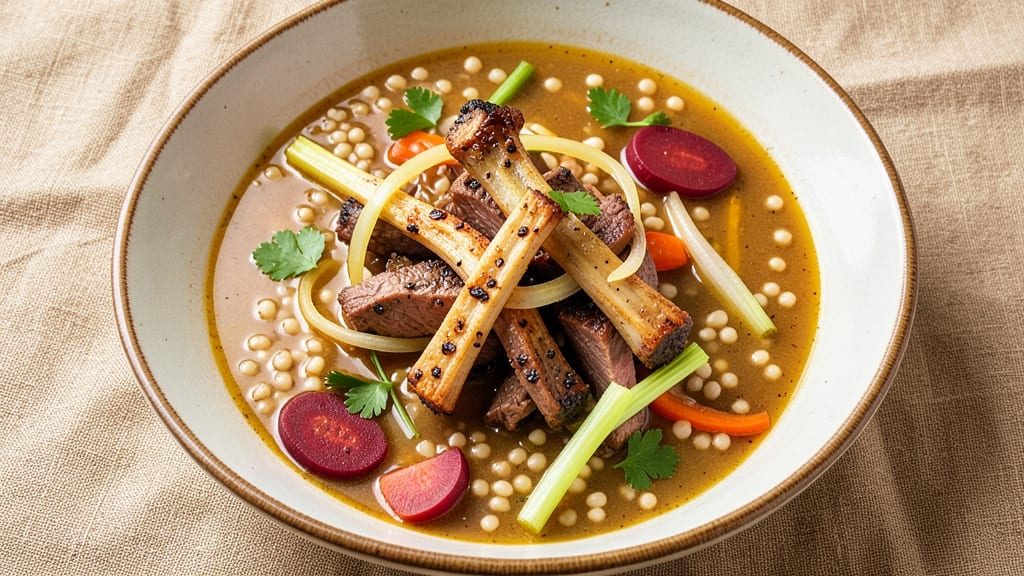
Transforming leftover prime rib into this beef barley soup is one of those kitchen moments that turns scraps into something extraordinary.
The rich, savory depth of the prime rib elevates a classic barley soup from comforting to truly memorable—every spoonful tells a story of how good leftovers can be when handled with care.
I've perfected this technique over years of testing, ensuring the broth develops layers of flavor while the barley achieves that perfect chewy texture.
The beauty of this recipe lies in its simplicity and efficiency. You'll start by building a deeply flavorful broth from the prime rib bones and scraps, then incorporate tender shredded beef that absorbs all those rich flavors.
Vegetables like carrots and celery add natural sweetness and structure, while the barley transforms from humble grain to hearty, satisfying centerpiece. What begins as a leftover becomes a centerpiece-worthy meal that feels like a labor of love.
What you'll end up with is a soup that's rich yet balanced, with tender beef pieces suspended in a velvety broth that's neither too heavy nor too light. The barley holds its shape beautifully, offering that delightful bite against the smoothness of the broth.
This recipe doesn't just repurpose leftovers—it creates something new and special from them, proving that good food isn't about starting from scratch every time.
The best part? This soup tastes even better the next day as the flavors continue to meld. Serve it with crusty bread for soaking up every last drop, or pair it with a simple green salad to cut through the richness.
Here's how to make it happen in your own kitchen—no fancy equipment required, just good technique and patience.
Ingredients for beef barley soup recipe with leftover prime rib
Leftover prime rib transforms into this rich, hearty soup with just 15 simple ingredients.
| Ingredient | Amount | Notes |
|---|---|---|
| Leftover Prime Rib Bones and Scraps 🍖 | 2 cups | Chopped into 1-inch pieces |
| Leftover Prime Rib Meat 🥩 | 1 lb | Shredded or chopped small |
| Pearl Barley 🌾 | ¾ cup | Rinsed before cooking |
| Yellow Onion 🧅 | 1 whole | Chopped into 1/2-inch pieces |
| Carrots 🥕 | 3 medium | Corrected to 3 whole carrots, peeled and chopped |
| Celery Stalk 🧄 | 3 whole | Chopped into 1/2-inch pieces |
| Garlic Cloves 🧄 | 4 cloves | Minced for depth of flavor |
| Tomato Paste 🍅 | 2 tbsp | For rich, umami depth |
| Dry Red Wine 🍷 | 1 cup | Bold variety like Cabernet |
| Beef Broth 💧 | 4 cups | Low-sodium preferred |
| Bay Leaves 🌿 | 2 whole | For aromatic complexity |
| Fresh Thyme 🌿 | ¼ cup | Chopped, or 1 tsp dried |
| Salt 🧂 | 1 ½ tsp | Adjust to taste |
| Black Pepper 🌶️ | ½ tsp | Freshly ground preferred |
| Olive Oil 🫒 | 2 tbsp | For sautéing vegetables |
The prime rib is the star here—those leftover bones and scraps pack serious flavor. Costco or your local butcher shop are great for prime rib if you're planning ahead, but honestly, whatever you've got from last night's roast works perfectly. The key is to chop the bones into 1-inch pieces for maximum surface area to render flavor. For the meat, shred it yourself—it stays more tender than pre-shredded. The pearl barley? Rinse it first to remove any dust or debris that can make the soup cloudy. And trust me, fresh thyme makes all the difference over dried here—it's worth grabbing a small bunch at the grocery store.
No red wine? Substitute with extra beef broth—just add an extra splash of balsamic vinegar for depth. Short on carrots or celery? Swap in frozen chopped veggies—they work just as well, especially if you're in a pinch. The tomato paste is non-negotiable for that rich umami base, but if you're avoiding it, a splash of Worcestershire sauce gets you close. For the barley, don't skip rinsing—it removes the natural starches that can make your soup gummy. And if you're using dried thyme, measure it carefully—it's more potent than fresh.
This soup tastes even better the next day as the flavors meld together. Store it in the fridge for up to 5 days—the barley keeps its texture beautifully. For freezing, portion it into airtight containers and it'll keep for 3 months. I like to make a double batch because it reheats perfectly, and leftovers make great lunches. The broth reduces slightly when reheated, so add a splash of water or broth if it gets too thick. And if you've got crusty bread on hand, it's the ultimate pairing—perfect for soaking up every last drop of that rich, velvety soup.
Why You'll Love This Recipe
- Zero-Waste Hero: I swear by this recipe—it turns scraps into something magical. That prime rib bone? Pure flavor bomb, simmered until the broth’s rich enough to make you forget it started as leftovers.
- Deep, Rich Bite: The barley soaks up all that beefy goodness, while the carrots add just enough sweetness to balance the meat’s richness. Honestly, the first spoonful makes me wonder why I don’t do this more often.
- Weeknight Magic: Throw it together in one pot, let it simmer while you handle the rest of dinner. By the time the kids are at the table, the house smells like a cozy Sunday—and no one’s the wiser it was a Tuesday.
- Budget Booster: Pearl barley stretches this soup into a full meal without breaking the bank. Between us, I’ve served this to guests who thought it was a fancy restaurant dish—until they asked about the recipe. (They’re hooked now too.)
Step-by-step instructions for beef barley soup with leftover prime rib
Transform your leftover prime rib into a soul-warming, restaurant-quality soup with rich depth.
Sear the Prime Rib Bones and Meat for Maximum Flavor
Heat the 2 tablespoons olive oil in a large Dutch oven over medium-high heat. Add the 2 cups leftover prime rib bones and scraps in a single layer, letting them sear undisturbed for 3-4 minutes until deeply browned. This step creates the Maillard reaction, which builds incredible depth of flavor.
Once the bones are browned, remove them with tongs and set aside. In the same pot, add the 1 pound leftover prime rib meat in batches, searing for 2-3 minutes per batch until lightly browned. Remove the meat and set aside with the bones. You're building layers of flavor that will infuse the entire soup.
Build the Aromatic Vegetable Base
In the same Dutch oven, add the 1 whole yellow onion, 3 medium carrots, and 3 whole celery stalks, all chopped into ½-inch pieces. Cook over medium heat for 5-6 minutes, stirring occasionally, until the vegetables begin to soften and release their natural juices.
Add the 4 cloves minced garlic and cook for another 30 seconds until fragrant. Stir in the 2 tablespoons tomato paste and cook for 1 minute, allowing it to deepen in color. This aromatic base forms the flavor foundation of your soup.
Deglaze and Simmer the Soup
Pour in the 1 cup dry red wine, scraping up any browned bits from the bottom of the pot with a wooden spoon. This deglazing captures all the flavor you've built so far. Let the wine simmer for 3-4 minutes until reduced by half.
Add the 4 cups beef broth, 2 whole bay leaves, and 0.25 cup fresh thyme (or 1 teaspoon dried thyme). Return the seared bones and meat to the pot. Bring to a gentle boil, then reduce heat to low and let it simmer uncovered for 1 hour.
Add Barley and Season to Perfection
After 1 hour of simmering, add the 0.75 cup rinsed pearl barley. The barley needs time to absorb the flavors and soften properly. Simmer uncovered for another 30-40 minutes until the barley is tender and the soup has thickened slightly.
Season with 1.5 teaspoons salt and 0.5 teaspoon black pepper, adjusting to taste. Here's the thing—this soup tastes even better the next day as the flavors meld and deepen. If you're impatient, let it sit for at least 30 minutes off the heat before serving.
Shred the Meat and Finish
Remove the bones and use a slotted spoon to transfer them to a cutting board. Discard any large pieces of bone, then shred the meat into bite-sized pieces using two forks. Return the shredded meat to the soup and stir gently to combine.
Taste and adjust seasoning if needed. The soup should be rich, hearty, and packed with prime rib flavor. Serve hot with crusty bread to soak up every last drop of that delicious broth.
Pro Tips For Making Beef Barley Soup Recipe With Leftover Prime Rib
- CRUSH THE BONES FIRST: Toss your prime rib bones and scraps in a hot Dutch oven for 10 minutes before adding liquid—this caramelizes the meat bits and deepens the flavor. I used to skip this, and the soup just tasted like almost good broth. Now it’s rich, dark, and packed with umami.
- CUT BARLEY IN HALF: Pearl barley’s outer hull makes it cook unevenly. Split each grain with a knife or pulse briefly in a food processor—this guarantees even cooking and prevents a mushy, half-done mess. (Yes, it looks like birdseed, but it works.)
- DON’T BOIL THE CARROTS: Toss diced carrots into the simmering soup after the barley’s been cooking for 20 minutes. Boiling them first turns them to mush, and you lose that sweet, al dente bite. They’ll soften perfectly without falling apart.
- SALT THE MEAT BEFORE ADDING: Sprinkle leftover prime rib meat with a pinch of salt and let it sit for 5 minutes before tossing it in—this keeps it from shrinking into flavorless chunks. I learned this the hard way after serving dry, bland slices in an otherwise great soup.
Make-ahead tips for this recipe
Prep Ahead Strategy
Start by prepping your prime rib bones and scraps the night before—chop them into 1-inch pieces and store in a sealed container in the fridge. This gives the flavors time to meld slightly before cooking.
I also like to prep all my vegetables (onion, carrots, celery) and store them in a separate container with a damp paper towel to keep them fresh. The barley can be rinsed and stored dry in an airtight container until ready to use.
This prep work takes about 15 minutes and makes the cooking process smoother. 💡
Broth Building Shortcut
If you're short on time, use a high-quality beef broth (like Kitchen Basics) instead of making your own from scratch. Simmer the bones in 4 cups broth with the wine and aromatics for 1 hour to extract maximum flavor.
For extra richness, add a 1-inch piece of kombu seaweed while simmering—it adds umami depth without altering the flavor. Just remove it before adding the barley. This cuts your active cooking time by 30 minutes while keeping the soup deeply flavorful.
Barley Cooking Hack
Pearl barley can be tricky—it needs consistent moisture to cook evenly. My trick? Add the barley to the simmering broth 30 minutes before the end of cooking time and cover the pot with a lid. This helps prevent the barley from drying out or sticking to the bottom.
If you're worried about it overcooking, test one piece by mashing it between your teeth—it should be tender but still hold its shape. 🌾
Freezer-Friendly Make-Ahead
This soup freezes beautifully for up to 3 months. Let it cool completely, then portion it into quart-sized freezer bags, leaving 1 inch of headspace for expansion.
When ready to eat, thaw overnight in the fridge or reheat directly from frozen in a pot over low heat, adding ¼ cup water or broth to prevent thickening. I always make a double batch—it’s perfect for busy weeknights or unexpected guests.
The flavors actually deepen after freezing, making it taste even more comforting. ❄️
Weeknight Time-Saver
For a faster version, use pre-chopped frozen vegetables (like Green Giant) instead of fresh. They thaw quickly in the pot and add the same sweetness and texture.
If you're really in a rush, skip the wine and use an extra ½ cup beef broth plus 1 teaspoon balsamic vinegar for depth. The soup will still be rich and satisfying—just slightly less complex.
This cuts your active prep time by nearly half while keeping the meal hearty and delicious. ⏰
Flavor Boost Finish
Before serving, stir in a splash of heavy cream (about 2 tablespoons) or a dollop of crème fraîche for extra richness. For a bright finish, add a handful of fresh parsley or thyme just before serving.
If you're feeling fancy, top each bowl with a drizzle of truffle oil or a sprinkle of grated Parmesan. These final touches elevate the soup from comforting to restaurant-quality in minutes. Trust me, it’s worth the extra step! 💫
Nutrition facts
Frequently asked questions
Can I use regular barley instead of pearl barley?
Pearl barley works best here because it holds its shape beautifully and absorbs the rich flavors without turning mushy. Regular barley (like pot barley) breaks down too much, making the soup overly thick. If you must substitute, use ½ cup pearl barley and ¼ cup regular barley for better texture.
What if I don't have red wine? Can I make this without it?
Use an extra ½ cup beef broth plus 1 teaspoon balsamic vinegar for depth. If you have dry sherry or white wine, those work too—just reduce the broth by ¼ cup to maintain balance. The wine adds complexity, but the soup will still be delicious without it.
How do I know when the barley is done?
Test it by mashing a piece between your teeth—it should be tender but still slightly firm (like a cooked pasta). If it crumbles easily, it's overdone. Pearl barley typically takes 30-40 minutes in simmering broth. For extra insurance, add it 30 minutes before the end of cooking time.
Can I make this soup in a slow cooker?
Yes! Brown the bones and meat first in a skillet, then transfer everything to the slow cooker. Add all ingredients except barley, cook on low for 6-7 hours, then stir in barley and cook 30-45 minutes more until tender. The slow cooker version is even more flavorful—just add ¼ cup water if it gets too thick.
Why does my soup taste watery after reheating?
This happens when the starches in barley break down too much during reheating. Fix it by simmering the soup uncovered for 5-10 minutes after adding it to the pot—this evaporates excess moisture. For future batches, add barley 15 minutes earlier in the cooking process to prevent overcooking.