
Soups & Stews
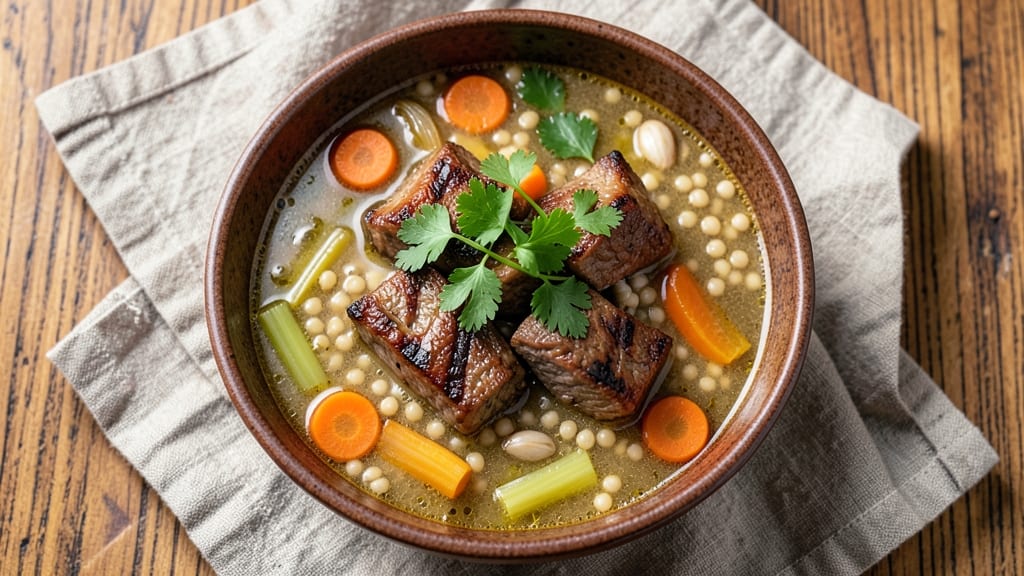
This beef barley soup recipe with stew meat delivers the kind of slow-simmered comfort that transforms a chilly evening into a cozy ritual. The secret lies in properly searing the beef to develop deep, caramelized flavors before letting it break down into tender, fork-friendly pieces over hours of gentle simmering.
Barley absorbs the rich broth while maintaining its satisfying chew—no mushy texture here.
What sets this recipe apart is the layered approach to flavor: first building a robust browned base from the beef, then enhancing it with aromatic vegetables and herbs that infuse the broth as it works its magic.
The slow simmer isn't just about tenderizing the meat—it's about creating that complex, umami-rich foundation that makes every spoonful satisfying. Professional results come from patience and attention to technique, not shortcuts.
The final result is a soup that's hearty enough to stand alone but elegant enough for company—golden broth speckled with tender beef, plump barley grains, and vegetables that melt into perfect tenderness.
Each bite delivers that perfect balance of meaty richness and barley's satisfying bite, with herbs adding fresh brightness. This is the kind of soup that improves with leftovers, as flavors deepen overnight.
Ready to master this classic? The process is straightforward once you understand the key techniques—proper searing, careful layering of ingredients, and precise simmering times. Let's create soup that tastes like home, with restaurant-quality depth and texture.
The slow cooker method makes it even more approachable for busy weeknights while delivering the same exceptional results.
Ingredients for beef barley soup recipe with stew meat
The perfect balance of hearty beef, chewy barley, and aromatic vegetables for a soup that tastes like home.
| Ingredient | Amount | Notes |
|---|---|---|
| Beef Stew Meat 🥩 | 2 ½ lb | Chuck roast preferred for tenderness |
| Yellow Onion 🧅 | 1 whole | Chopped into 1/2-inch dice |
| Carrots 🥕 | 1 ½ lb | Peeled, cut into 1-inch chunks |
| Celery Stalks 🌿 | 4 whole | Trimmed, cut into 1-inch pieces |
| Garlic Cloves 🧄 | 4 cloves | Peeled, smashed with side of knife |
| Pearl Barley 🌾 | 1 cup | Rinsed before cooking |
| Beef Broth 💧 | 6 cups | Low-sodium preferred |
| Red Wine 🍷 | 1 cup | Dry red like Cabernet Sauvignon |
| Tomato Paste 🍅 | 2 tbsp | Smooth texture preferred |
| Fresh Thyme 🌿 | 1 tbsp | Leaves only, stems removed |
| Fresh Parsley 🌿 | ¼ cup | Chopped for garnish |
| Bay Leaves 🌿 | 2 whole | Crushed lightly |
| Salt 🧂 | 1 ½ tsp | Kosher or sea salt |
| Black Peppercorns 🌶️ | ½ tsp | Freshly cracked |
| Olive Oil 🫒 | 2 tbsp | Extra-virgin preferred |
The beef selection is critical—chuck roast delivers that melt-in-your-mouth texture after hours of simmering. Most grocery stores carry pre-cut stew meat, but if buying whole, look for well-marbled chuck from the butcher section. Costco and Whole Foods consistently have quality cuts. The barley should be pearled (not instant) for that satisfying bite—Bob's Red Mill is a reliable brand. Fresh thyme and parsley elevate the broth, but dried thyme at one-third the amount works if you're short on time.
No red wine? Beef broth with 1 tbsp balsamic vinegar mimics the depth perfectly. The tomato paste can be swapped for 1/2 cup crushed tomatoes if you prefer. For the vegetables, frozen carrots and celery work in a pinch—just don't overcook them. The bay leaves are non-negotiable for that classic flavor, but if you're out, a pinch of cinnamon or allspice adds warmth. For the broth, low-sodium is key—you'll be adding plenty of salt later. The olive oil should be extra-virgin for searing, but any neutral oil works for browning.
This soup tastes even better the next day as flavors meld. Store in an airtight container in the fridge for up to 5 days, or freeze portions for 3 months. I double the recipe and freeze half—perfect for lazy weeknights. The barley keeps its texture when reheated gently, so avoid boiling. For serving, a sprinkle of fresh parsley and a dollop of sour cream or crusty bread completes the dish. Leftovers reheat beautifully with a splash of broth to restore moisture.
Why You'll Love This Recipe
- One-Pot Magic: I swear by this recipe because it’s literally dump-and-go after the initial sear. Brown the beef in one pot, toss in the onions, carrots, celery, and garlic—no chopping like a fine chef required—and let it simmer. That’s it. The barley handles the rest.
- Deep Umami Bomb: The beef stew meat turns ridiculously tender, almost melting in your mouth, while the garlic and onions caramelize into this rich, savory base. Honestly, the first spoonful makes me pause—like, this is why I cook.
- Leftovers I Actually Love: This soup tastes better the next day, and I’m not lying. The flavors meld into something heartier, and it’s perfect for packed lunches or reheating when you’re too tired to cook. My freezer’s always stocked with portions—no sad, soggy leftovers here.
- Budget-Friendly Powerhouse: You’re getting so much for the price: hearty chunks of beef, the classic veggie trio (onion, carrot, celery), and barley that stretches into a full meal. Between us, this is the kind of recipe that makes grocery day feel like a win. Plus, it feeds four for under $15.
Step-by-step instructions for beef barley soup with stew meat
Here's how to build rich, slow-simmered beef barley soup with deep flavor and perfect barley texture.
Sear the Beef Stew Meat for Maximum Flavor
Heat a large Dutch oven over medium-high heat and add the 2 tablespoons olive oil. Once shimmering, add the 2.5 lb beef stew meat in batches, working in 30-second intervals to avoid overcrowding. This ensures a proper sear rather than steaming.
Sear each piece for 2-3 minutes per side until developing a deep golden brown crust. The crust contains concentrated flavors that will infuse your soup. Transfer the browned meat to a plate and set aside temporarily. Don't wipe out the Dutch oven—those browned bits are pure flavor.
Build the Aromatic Vegetable Base
In the same Dutch oven, add the 1 whole yellow onion (chopped), 1.5 lb carrots (cut), and 4 whole celery stalks (chopped). Cook for 5-6 minutes, stirring occasionally, until the vegetables begin to soften and release their natural juices.
Add the 4 cloves garlic cloves (smashed) and 2 tablespoons tomato paste, stirring to coat everything evenly. Cook for another 1 minute until fragrant. This step develops the foundational flavors that will carry through the entire soup. Here's where it gets good—pour in the 1 cup red wine and scrape up all those browned bits from the bottom of the pot.
Simmer the Soup for Deep Flavor Development
Return the seared beef to the Dutch oven and pour in the 6 cups beef broth. Add the 1 cup pearl barley (rinsed), 1 tablespoon fresh thyme, 2 whole bay leaves (crushed), 1.5 teaspoons salt, and 0.5 teaspoon black peppercorns. Bring to a gentle boil, then reduce heat to low and cover partially.
Simmer for 1.5 hours, stirring occasionally to prevent sticking. The soup should reduce slightly and develop a rich, caramelized color. You'll know it's ready when the barley is tender but still holds its shape slightly—it should have a firm bite, not mushy. The beef should be fork-tender, easily pulling apart with minimal resistance.
Finish and Garnish for Perfect Presentation
Remove the bay leaves and adjust seasoning if needed. Stir in the 0.25 cup fresh parsley (chopped) just before serving. The parsley adds bright, fresh contrast to the rich soup. For an extra layer of flavor, you can also stir in 1 tablespoon butter (optional) to create a silky finish.
Serve immediately in warm bowls, garnished with additional parsley. Each spoonful should deliver tender beef, hearty barley, and a complex interplay of caramelized vegetables and aromatic herbs. The wine adds depth, while the barley provides satisfying chew—this is comfort food at its finest.
Pro Tips For Making Beef Barley Soup Recipe With Stew Meat
- Sear the Meat First: I learned this the hard way—skipping the sear means flavorless broth. Pat the beef stew meat dry, then hit a hot pan with oil until the pieces develop a deep brown crust. That’s where the depth comes from, not just the spices.
- Cut Celery and Carrots Uniformly: Uneven chunks mean some veggies turn to mush while others stay crunchy. Slice the celery into ½-inch pieces and cut the carrots into similar rounds—consistency guarantees even cooking. (Yes, it takes 2 minutes extra, but the texture stays perfect.)
- Don’t Rush the Simmer: Low and slow is the only way. After adding broth and barley, keep the heat at a gentle simmer—tiny bubbles, not rolling. I used to crank it up, and the barley would turn to paste. Patience here makes the difference between good and great soup.
- Bloom the Garlic Properly: Tossing minced garlic into the pot at the end? You’re missing out. Sauté it with the onions and celery for 3–4 minutes until fragrant—this releases its sweetness and prevents that harsh, raw bite. (Pro move: Smash a few cloves with the flat of your knife first for extra flavor.)
Essential equipment for beef barley soup recipe with stew meat
Dutch Oven
A 6-8 quart Dutch oven is your secret weapon for this soup—its heavy construction distributes heat evenly and prevents scorching during the long simmer. I swear by the Le Creuset Stoneware Dutch Oven for its durability and even heating, but All-Clad Stainless Steel is a great budget-friendly alternative.
The deep sides prevent spills when stirring, and the tight-fitting lid helps retain moisture during the 1.5-hour simmer. Avoid thin, lightweight pots that can't maintain consistent temperatures. 🔥
Heavy-Bottomed Pot
If you don’t own a Dutch oven, a 5-6 quart heavy-bottomed stockpot works perfectly. Look for Calphalon or Farberware Classic Stainless Steel—both distribute heat evenly to prevent hot spots that can burn your vegetables.
The pot should have a wide base to maximize surface area for even cooking. Avoid non-stick pots for this recipe—they can't handle the high heat needed for proper searing.
Meat Thermometer
A meat thermometer ensures your beef reaches the perfect 195-200°F internal temperature for tender, fork-tender results. I recommend the Thermoworks ThermoPop for its accuracy and ease of use. Insert the probe into the thickest piece of beef—when it hits 195°F, the meat will pull apart easily.
This is especially helpful if you're short on time or using a slow cooker instead of stovetop simmering.
Wooden Spoon
A heat-resistant wooden spoon (like OXO Good Grips) is essential for stirring without scratching your pot. Wood distributes heat better than metal and won’t react with acidic ingredients like the red wine or tomato paste.
Use it to scrape up those flavor-packed browned bits from the bottom of the pot during the deglazing step—this is where the magic happens! Avoid plastic spoons, which can melt under high heat.
Slow Cooker
For hands-off cooking, a 6-quart slow cooker (like Hamilton Beach Programmable) is a game-changer. Set it to Low for 8 hours or High for 5 hours—the long cook time breaks down the beef beautifully.
Just sear the meat separately in a skillet first, then transfer everything to the slow cooker. The slow cooker’s gentle heat ensures the barley stays al dente and the beef becomes melt-in-your-mouth tender. 💫
Knife & Cutting Board
Invest in a sharp 8-inch chef’s knife (like Wüsthof) and a sturdy cutting board for efficient prep. The beef stew meat should be cut into 1.5-inch chunks for even cooking, while the onions, carrots, and celery should be uniformly diced to cook at the same rate.
A magnetic knife strip keeps your knives handy while you cook, and a wet cutting board prevents slipping—just sprinkle water occasionally. Never use dull knives; they crush ingredients instead of cleanly slicing them.
Nutrition facts
Frequently asked questions
Why does this recipe use chuck roast instead of other beef cuts?
The chuck roast is perfect for this soup because its high fat and connective tissue content breaks down beautifully during the long simmer, creating melt-in-your-mouth tenderness. Unlike leaner cuts, it stays juicy and flavorful even after hours of cooking. The fat also helps create a richer broth as it renders.
Can I substitute instant barley for pearl barley?
While instant barley cooks faster (10-15 minutes vs 1.5 hours), it loses the satisfying chewy texture that makes this soup special. For best results, stick with pearl barley—but if you must use instant, reduce the simmer time to 45-60 minutes and add it in the last 10 minutes of cooking.
How do I know when the beef is fully tender?
The beef is ready when it reaches an internal temperature of 195-200°F and easily pulls apart with a fork. You can also test by pressing a piece with tongs—if it crumbles without resistance, it's perfect. The soup should have reduced slightly, showing concentrated flavors and a rich color.
What if I don't have red wine for deglazing?
No problem! Use 1 cup beef broth plus 1 tablespoon balsamic vinegar for similar depth, or substitute with 1 cup apple cider for a slightly sweeter note. The key is to scrape up all those flavorful browned bits from the bottom of the pot during this step—those are the soul of your soup.
Can I make this soup in an Instant Pot?
Sear the beef in the pot first, then add all ingredients except the barley. Cook on High Pressure for 35 minutes, then quick-release. Add the barley and cook on Sauté mode for 10 minutes to finish. The pressure cooker cuts time dramatically while keeping all the rich flavors intact.