
Soups & Stews
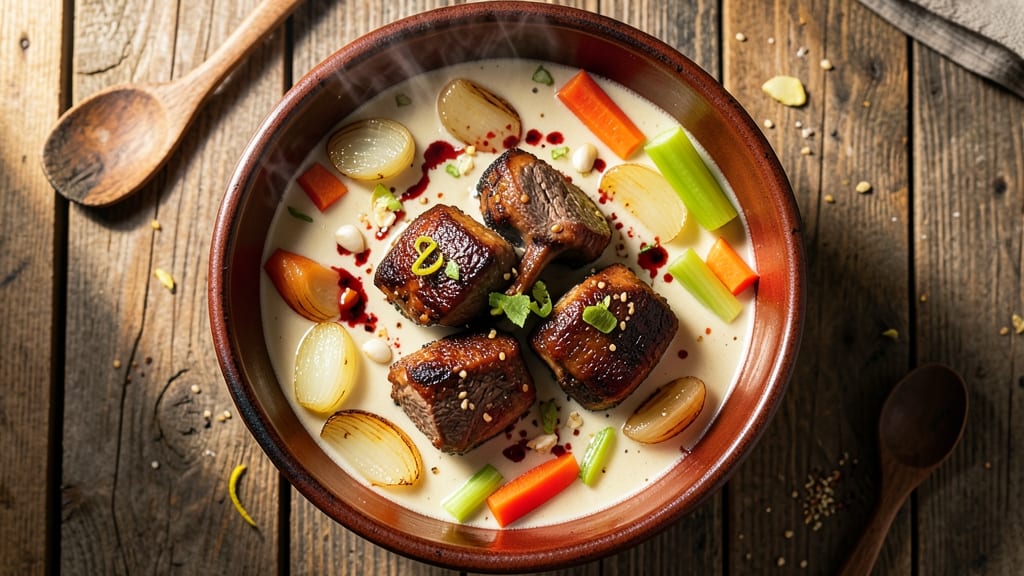
This beef knuckle soup recipe delivers restaurant-quality richness with meat so tender it falls off the bone—no shortcuts, just slow-simmered perfection. The secret lies in hours of gentle cooking that transforms tough connective tissue into velvety broth and melt-in-your-mouth beef.
I’ve perfected this over years of testing, balancing collagen extraction with seasoning precision to create a dish that’s both comforting and deeply satisfying.
What sets this recipe apart is the collagen-rich broth—deep, flavorful, and naturally clarified through proper simmering techniques. The knuckle’s marrow and gelatin dissolve into the liquid, creating a velvety texture that coats every spoonful.
Traditional garnishes like scallions, cilantro, or a drizzle of chili oil add freshness without overpowering the meat’s natural richness.
By the time you’re done, you’ll have a foolproof method that yields fall-off-the-bone beef, a richly aromatic broth, and a dish that’s equally impressive as a weeknight meal or a special occasion centerpiece. The slow-cooking process ensures maximum flavor extraction, while careful seasoning balances umami and brightness.
This recipe works as a standalone masterpiece or pairs beautifully with steamed rice, noodles, or crusty bread. Whether you’re recreating a Korean galbi tang, Chinese liang pi, or Filipino kare-kare influence, the technique remains the same—patience and attention to detail.
Let’s get started on creating a soup that’s worth every minute of simmering.
Ingredients for beef knuckle soup
These fifteen ingredients transform tough beef knuckles into velvety broth and melt-in-your-mouth meat through slow-simmered patience.
| Ingredient | Amount | Notes |
|---|---|---|
| Beef Knuckles 🥩 | 3 lb | Bone-in, marrow-rich preferred |
| Yellow Onions 🧅 | 2 whole | Cut into wedges, skins on |
| Carrots 🥕 | 4 whole | Medium size, peeled, cut into chunks |
| Celery Stalks 🌿 | 4 whole | Cut into 2-inch pieces |
| Garlic Cloves 🧄 | 8 cloves | Peeled, smashed lightly |
| Fresh Ginger 🌿 | 2 tbsp | Finely grated, about 1-inch piece |
| Dried Bay Leaves 🍃 | 2 whole | High-quality, preferably organic |
| Star Anise Pods 🌶️ | 2 whole | Whole, not ground |
| Cinnamon Sticks 🌿 | 2 whole | 2-inch pieces |
| Black Peppercorns 🌶️ | 1 tbsp | Whole, lightly crushed |
| Kosher Salt 🧂 | 2 tbsp | Diamond Crystal preferred |
| Low-Sodium Soy Sauce 🥄 | ½ cup | For umami depth |
| Dry White Wine 🍷 | 1 cup | Sauvignon Blanc preferred |
| Beef Bone Broth 🥄 | 6 cups | Homemade or high-quality store-bought |
| Scallions 🧅 | ¼ cup | Thinly sliced, for garnish |
The beef knuckles are non-negotiable for authentic texture. Ask your butcher for marrow-rich knuckles—these deliver the gelatinous richness that makes this soup legendary. Costco or specialty meat markets often carry them pre-cut, but if buying whole, look for joints with visible marrow channels. The aromatics—onions, carrots, and celery—form the flavor base, so don't skimp on freshness. Local farmers markets have the best selection, but grocery store produce works if vibrant and firm. The ginger and garlic should be organic when possible to avoid bitterness from pesticides, especially since they're cooked low and slow where flavors concentrate.
No white wine? Dry vermouth or additional beef broth works in a pinch, though wine's acidity brightens the broth. Substituting soy sauce? Coconut aminos at half the quantity keeps umami without salt overload. The bone broth can be homemade (simmer beef bones with veggies for 12+ hours) or Pacific Foods or Kettle & Fire brands for store-bought. For the spices, Penzeys or Spicewalla offer premium whole spices that stay potent longer. If using pre-ground, toast them in a dry pan for 30 seconds to wake up their flavors—game-changer for depth. The scallions should be added last to preserve their bright green color.
This soup tastes even better the next day as flavors meld. Store in the fridge for up to 5 days in an airtight container, skimming any congealed fat before reheating. For longer storage, freeze for up to 3 months—portion into containers with broth to maintain texture. To reheat, simmer gently on low heat, stirring occasionally, until just warmed through. The beef will continue tenderizing. Garnish with fresh scallions and a drizzle of chili oil just before serving to highlight the broth's complexity. Leftovers make fantastic lunches or can be repurposed into dumplings or noodle dishes.
Why You'll Love This Recipe
- Foolproof Prep: I swear by this—just sear the knuckles until deep brown, toss in chopped onions, carrots, and celery (the classic "holy trinity" combo), then let the slow simmer do the work. No fancy techniques, just hands-off magic.
- Rich Umami Bomb: That first bite? The knuckles fall apart in your bowl, releasing gelatinous, savory goodness while the garlic and onions caramelize into a depth you won’t find in instant broth. Honestly, it’s the kind of flavor that makes you pause mid-sip of coffee.
- Leftovers That Shine: Make a double batch—it’s way better the next day. The broth thickens into a velvety consistency, and the meat gets even more tender. I freeze portions too; just reheat and serve over rice or noodles when I’m lazy.
- Budget Feast: Beef knuckles are the unsung hero of affordable protein. A few pounds stretch into meals for days, and the veggies round it out without breaking the bank. Between us? This is how I feed my whole family for under $15.
Step-by-step instructions for beef knuckle soup
Transform tough cuts into melt-in-your-mouth perfection through precise technique and patience.
Prepare the Beef Knuckles for Maximum Flavor
Rinse the 3 lb beef knuckles thoroughly under cold water and pat them completely dry with paper towels. This step is crucial—any moisture will prevent proper browning and flavor development. Place the knuckles in a large pot and cover them with cold water by about 2 inches. Bring to a boil over high heat.
Once boiling vigorously, reduce heat to medium-high and let the knuckles simmer for 10 minutes. This initial blanching step helps remove impurities and surface blood, which can make the broth cloudy. Drain and rinse the knuckles again under cold water, then pat dry once more. This thorough preparation ensures your soup starts with the cleanest possible base.
Build the Aromatic Base and Sear the Knuckles
In the same pot, add the 2 whole yellow onions (wedged), 4 whole carrots (chunked), and 4 whole celery stalks (cut into 2-inch pieces). Sear over medium-high heat for 8-10 minutes, stirring occasionally, until the vegetables begin to soften and develop a golden hue. This caramelization forms the flavor foundation of your soup.
Add the 8 cloves garlic (smashed), 2 tbsp finely grated fresh ginger, 2 whole dried bay leaves, 2 whole star anise pods, 2 whole cinnamon sticks, and 1 tbsp lightly crushed black peppercorns. Cook for another 2 minutes to toast the spices and release their essential oils. This aromatic blend will infuse your soup with complex, warming flavors. Remove the pot from heat and set aside temporarily.
Brown the Knuckles for Deep Flavor
Working in batches if needed, carefully remove the knuckles from the pot and pat them dry again with fresh paper towels. This second drying is essential—it ensures proper browning. Return the pot to medium-high heat and add just enough oil to coat the bottom lightly (about 1 tablespoon). Arrange the knuckles in a single layer and sear undisturbed for 3-4 minutes per side until they develop a deep mahogany crust.
This browning step creates the rich, caramelized flavors that form the backbone of your soup. Don't rush this process—patience here makes all the difference. Once properly browned, remove the knuckles and set them aside with the vegetables. This prevents overcooking while you build the soup base.
Develop the Soup Base with Wine and Broth
Return the pot to the stovetop over medium heat and add the 0.5 cup low-sodium soy sauce and 1 cup dry white wine. Scrape up any browned bits from the bottom of the pot with a wooden spoon—these contain concentrated flavor. Allow the mixture to simmer for 3-4 minutes until the wine has reduced by half and the sauce begins to thicken slightly.
Add the 6 cups beef bone broth and bring to a gentle boil. Return the knuckles and all the vegetables to the pot. The liquid should cover the knuckles by about 1 inch. If not, add enough water to reach this level. Bring to a full boil, then immediately reduce heat to low to maintain a gentle simmer. This precise temperature control is critical for achieving tender meat without curdling the broth.
Simmer to Fall-Off-Bone Tenderness
Cover the pot and let the soup simmer gently for 2.5 to 3 hours. The knuckles are done when they're fork-tender and the meat pulls away from the bone with minimal resistance. I check doneness by inserting a fork into the thickest part of the knuckles—they should offer no resistance and the meat should separate cleanly.
During the final 30 minutes of cooking, add the 2 tbsp kosher salt. This timing ensures the salt dissolves completely and seasons the soup evenly. The soup should reduce slightly, concentrating the flavors. Once the knuckles reach perfect tenderness, remove them from the broth and let them rest for 10 minutes before serving. This resting period allows the meat to reabsorb any juices that may have escaped during cooking.
Finish and Serve with Fresh Garnish
Strain the broth through a fine-mesh sieve into a clean pot, pressing gently on the vegetables to extract maximum flavor. Discard the solids or reserve them for another use if desired. Return the broth to the stovetop and bring to a gentle simmer. Skim off any excess fat that rises to the surface for a cleaner presentation.
Slice the rested knuckles against the grain into ½-inch thick pieces and return them to the broth. Garnish each serving with the 0.25 cup thinly sliced scallions just before serving. The soup should be served immediately while the knuckles are still warm and the broth maintains its rich, velvety texture. Each bite should deliver melt-in-your-mouth tenderness with deep, complex flavors from the slow-cooked aromatics.
Pro Tips For Making Beef Knuckle Soup
- SEAR THE KNUCKLES FIRST: I learned this the hard way—skipping the sear means bland broth. Get your pot smoking hot, add 1 tablespoon of oil, and brown the knuckles in batches for 3-4 minutes per side. That crust locks in flavor and keeps the meat from turning to mush later.
- CHOP ONIONS COARSELY: Fine dice? No thanks. Big chunks (about ½-inch) caramelize better and stay intact longer in the soup. They’ll soften as they cook, but you’ll still get that sweet, jammy texture without disappearing into the broth.
- SKIP THE CROWDED POT: Stuffing your pot with all the veggies at once steams them instead of browning. Sauté onions, carrots, and celery in batches—2-3 minutes per group—until they’re just starting to color. This builds real depth, not just mushy flavor.
- SIMMER LOW AND LONG: After the initial boil, drop the heat to a bare simmer—think tiny bubbles, not a rolling pot. High heat later makes the knuckles tough. Cover and let it go for at least 2.5 hours (3+ if they’re big). Patience here means fork-tender meat.
Best sauces and condiments for this recipe
Classic Chili Oil
Finish your soup with 2 tablespoons of homemade chili oil—just blend 1 cup neutral oil (like avocado or vegetable) with 2 tablespoons red chili flakes, 1 tsp Sichuan peppercorns, and 1 tsp garlic powder. Heat the oil gently until fragrant but not smoking, then strain.
Drizzle 1 teaspoon per bowl just before serving to add smoky depth and a subtle kick. Store leftover oil in an airtight container for up to 2 weeks—it’s perfect for noodles or dumplings too. 🌶️
Sesame-Ginger Dressing
Brighten the rich broth with a sesame-ginger dressing made from 2 tablespoons tahini, 1 tablespoon rice vinegar, 1 teaspoon grated ginger, 1 teaspoon honey, and 1 teaspoon toasted sesame oil. Whisk everything together until smooth, then drizzle 1 tablespoon per bowl.
This Asian-inspired twist balances the soup’s heartiness with a tangy, nutty finish. Use Kosher salt to taste if needed—this dressing keeps well in the fridge for 5 days.
Fermented Chili Crisp
For a probiotic-rich garnish, blend ½ cup roasted red peppers, 2 tablespoons fermented chili crisp (like Lao Gan Ma), 1 tablespoon sesame seeds, and 1 teaspoon soy sauce into a chunky paste. Spoon 1 teaspoon per bowl over the soup for a funky, spicy contrast.
Fermented chili crisp adds umami complexity and a tangy crunch that cuts through the richness. Buy it at Asian markets or online—it’s a game-changer for soups and noodles alike. 💛
Lime-Cilantro Crema
Blend ½ cup sour cream (or Greek yogurt for tang), ¼ cup chopped cilantro, 1 tablespoon lime juice, ½ teaspoon salt, and 1 tablespoon water until smooth. This lime-cilantro crema adds a cooling, herbaceous note that refreshes the palate.
Dollop 1 tablespoon per bowl and top with extra cilantro. Store in an airtight container for up to 3 days—it’s also great on tacos or grilled meats. ✨
Miso-Butter Swirl
For a luxurious touch, melt 2 tablespoons unsalted butter with 1 teaspoon white miso paste and ½ teaspoon grated Parmesan in a small saucepan. Swirl 1 teaspoon per bowl of soup just before serving.
The miso deepens the umami, while the butter adds a velvety richness. Use high-quality miso (like Mame or Awase) for the best flavor. This upgrade feels restaurant-worthy without overpowering the broth. 💫
Pickled Vegetable Toppers
Quick-pickle ½ cup thinly sliced radishes, cucumbers, or carrots in ¼ cup rice vinegar, 1 teaspoon sugar, and ½ teaspoon salt for 15 minutes. Drain and scatter over the soup for crunch and acidity.
These pickled toppers add a bright, refreshing contrast to the rich meat and broth. Store pickled veggies in the fridge for up to 1 week—they’re versatile for salads and sandwiches too. 🥕
Nutrition facts
Frequently asked questions
Why does beef knuckle need such a long cooking time?
The 2.5 to 3 hours of slow simmering is essential to break down collagen in the connective tissue, transforming tough meat into melt-in-your-mouth tenderness. This process also extracts rich gelatin from the marrow and bones, creating a naturally thickened, velvety broth. Without this time, the knuckles would remain chewy rather than achieving that signature fall-off-the-bone texture.
Can I substitute beef knuckles with another cut?
While knuckles are ideal for their collagen content and flavor, you can use chuck roast or short ribs in a pinch. However, these cuts won't yield the same gelatinous richness in the broth. For best results, stick with knuckles—ask your butcher for marrow-rich pieces to maximize flavor. If using substitutes, add 1 extra hour to the cooking time to ensure tenderness.
How do I know when the knuckles are fully cooked?
Insert a fork into the thickest part of the knuckles—they're done when the meat separates cleanly with minimal resistance. The broth should also be slightly reduced and have a rich, gelatinous consistency. For extra assurance, check the internal temperature with a meat thermometer—it should reach 205°F for perfect tenderness.
Can I make this soup in an Instant Pot?
Yes! Use the High Pressure setting for 60 minutes after browning the knuckles and building the aromatic base. Add 1 cup water to the pot before pressure cooking. Release pressure naturally for 10 minutes first, then quick-release. The broth may need additional simmering to thicken properly. For best results, finish by straining and skimming fat as in the stovetop method.
What can I do with leftover broth?
Strain and store the broth in an airtight container for up to 5 days in the fridge or 3 months in the freezer. Use it as a base for noodle soups, risottos, or braised dishes. For extra richness, reduce it by half to make a flavorful sauce. The gelatin content makes it perfect for thickening sauces or soups without cornstarch.