
Soups & Stews
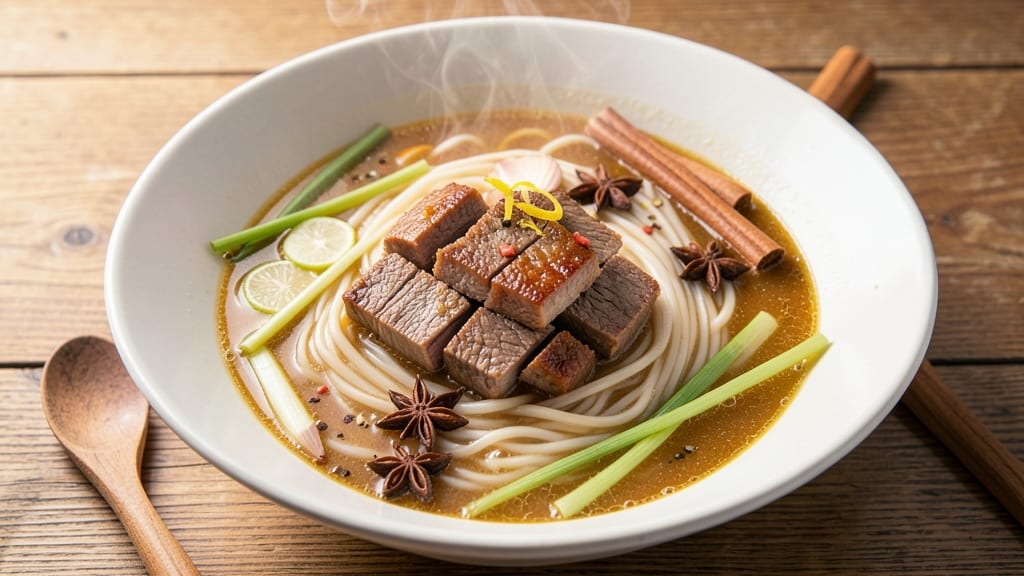
This beef kway teow soup recipe delivers the smoky, aromatic essence of Singapore street food right to your kitchen. The secret lies in wok-seared beef strips and silky egg noodles simmered in a fragrant broth infused with star anise, cinnamon, and lemongrass—creating depth that transforms ordinary ingredients into something extraordinary.
I developed this recipe after years of perfecting the balance between tender beef, chewy noodles, and a broth that's rich yet light enough to let each component shine.
The foundation of great kway teow soup is the broth, where star anise and cinnamon build complex aromatics while ginger and garlic provide the necessary warmth.
What sets this recipe apart is the two-stage beef preparation: first slow-cooked for tenderness, then quickly seared in a hot wok to achieve that signature wok hei (breath of the wok) smokiness.
This technique ensures your beef remains juicy while developing a caramelized crust that adds layers of flavor with every bite.
By the time you're ready to serve, you'll have a steaming bowl of perfectly balanced soup—silky noodles cradling tender beef strips, all floating in a fragrant broth that's neither too heavy nor too light.
The garnishes of fresh cilantro, fried shallots, and lime wedges add bright accents that cut through the richness, making each spoonful a harmonious blend of textures and flavors. This is comfort food at its finest, where every element works together in perfect harmony.
Whether you're serving this as a weeknight dinner or preparing for a gathering, the recipe scales beautifully while maintaining its authenticity. The key is patience—letting the broth develop its depth and the beef achieve just the right tenderness.
Once mastered, this will become your go-to recipe for those nights when you crave the bold, comforting flavors of Singaporean street food.
Ingredients for beef kway teow soup
The aromatic foundation of this Singapore street food classic begins with star anise and lemongrass, building complexity that transforms simple ingredients into extraordinary flavor.
| Ingredient | Amount | Notes |
|---|---|---|
| Beef Chuck Roast 🥩 | 1 ½ lb | Cut into 1-inch strips, trimmed of fat |
| Kway Teow Noodles 🍜 | 8 oz | Egg noodles, fresh or dried |
| Star Anise 🌿 | 2 whole | For aromatic depth in broth |
| Cinnamon Sticks 🌿 | 2 whole | For warm spice notes |
| Fresh Lemongrass 🌿 | 1 whole | Bruised, cut into 3-inch pieces |
| Fresh Ginger 🧄 | 2 tbsp | Grated, peeled (about 1-inch piece) |
| Garlic Cloves 🧄 | 6 cloves | Peeled, smashed |
| Dried Shiitake Mushrooms 🍄 | 4 whole | Rehydrated in hot water |
| Vegetable Oil 🫒 | ½ cup | High smoke point for wok searing |
| Light Soy Sauce 🥄 | ¼ cup | For umami balance |
| Dark Soy Sauce 🥄 | 1 tbsp | For color and depth |
| Sesame Oil 🫒 | 1 tbsp | For finishing aroma |
| Chinese White Pepper 🌶️ | ½ tsp | Freshly ground for authentic flavor |
| Fresh Cilantro 🌿 | ¼ cup | Chopped, for garnish |
| Fried Shallots 🧅 | ¼ cup | For crunchy garnish |
The beef selection is critical—chuck roast delivers the perfect balance of tenderness and flavor when prepared in two stages. Most Asian markets carry pre-cut beef strips, but if sourcing from a butcher, request 1-inch strips with minimal fat. For the aromatic spices, Whole Foods or specialty Asian grocers offer high-quality star anise and cinnamon sticks—look for vibrant color and strong fragrance as indicators of freshness. Lemongrass should be plump and pale green, with no brown spots or wilted ends. Fresh ginger and garlic are non-negotiable here; pre-minced varieties lack the aromatic intensity needed for this dish's depth.
Substitutions should preserve the dish's aromatic profile. Dried shiitake mushrooms can be replaced with cremini mushrooms, but rehydrate them first to maintain the broth's silkiness. Short on lemongrass? Double the ginger and garlic while adding 1 tsp lime zest for citrus brightness. The soy sauces are essential—light soy provides umami, while dark soy adds color and depth. If unavailable, substitute with equal parts tamari and molasses, though the color will differ. For the noodles, rice noodles can replace kway teow, though the texture will be slightly different. Pre-cooked chow mein noodles work in a pinch but require less cooking time.
Store fresh lemongrass and ginger in the fridge wrapped in damp paper towels for up to 5 days, though they're best used within 2 days for peak flavor. The beef can be prepped ahead—par-cook and refrigerate for up to 2 days before finishing the sear. The broth freezes beautifully for 3 months, though the star anise and cinnamon should be removed before freezing. When reheating, add a splash of water to maintain the silky texture. Garnishes like fried shallots and cilantro should be added fresh at serving to preserve their vibrant colors and crisp textures.
Why You'll Love This Recipe
- One-Pot Wonder: I swear by this recipe when I’m too tired to wash a million bowls—just toss everything into a pot, let the beef chuck roast slow-simmer until it’s fork-tender, and those star anise and cinnamon sticks work their magic without any extra fuss.
- Warm Spice Bomb: That first sip? Pure satisfaction. The lemongrass and star anise perfume the broth like a cozy hug, while the beef practically melts into rich, savory strands—no heavy cream or complicated sauces needed.
- Leftovers That Don’t Suck: Between us, most soups turn into sad, watery meals the next day. Not this one. The noodles stay chewy, the beef stays tender, and I’ve reheated this for lunch three times without a single complaint.
- Budget-Friendly Feast: A single chuck roast stretches to feed four (or five if you’re generous), and the spices cost pennies. Honestly, I make this when I’m pinching pennies—it’s hearty, filling, and still feels like a treat.
Step-by-step instructions for wok-seared beef kway teow soup
Transform humble ingredients into a restaurant-worthy bowl with this precise, aromatic technique.
Prepare the Aromatic Broth Base
In a large pot, combine 8 cups water with the 2 whole star anise, 2 whole cinnamon sticks, 1 whole lemongrass (bruised), 2 tbsp fresh ginger, and 6 cloves garlic. Bring to a rolling boil over high heat, then reduce to a simmer for 15 minutes to infuse the flavors. Strain out the aromatics and return the broth to the pot.
Add the 4 whole dried shiitake mushrooms (previously rehydrated in hot water for 20 minutes) and simmer for another 5 minutes. The broth should now carry deep umami notes with subtle sweetness from the mushrooms. Keep this simmering at medium-low heat—it will be our flavor foundation throughout.
Wok-Sear the Beef for Maximum Flavor
Heat 0.5 cup vegetable oil in a wok or large skillet over high heat until shimmering. Working in batches to avoid crowding, add the 1.5 lb beef chuck roast (cut into 1-inch strips) and sear for 2-3 minutes per side until deeply browned with a caramelized crust. Remove beef and set aside.
This high-heat searing develops the beef's rich, meaty flavor through the Maillard reaction. If your oil isn't hot enough, the beef will steam instead of brown. Watch for that telltale wisp of smoke—this is your signal the oil is ready. Reserve any rendered fat in the wok for later use.
Build the Umami-Packed Sauce
Return the wok to medium heat and add 0.25 cup light soy sauce, 1 tbsp dark soy sauce, and 0.5 tsp Chinese white pepper. Stir constantly for 1 minute to deglaze the pan, scraping up all those flavorful browned bits. Pour in the reserved beef broth and bring to a gentle simmer.
Return the seared beef to the wok along with any accumulated juices. Simmer for 30-40 minutes until the beef is fork-tender but still holds its shape. The broth should now be rich and deeply flavored, with the beef absorbing all those aromatic notes. Taste and adjust seasoning—you may need a touch more soy sauce for balance.
Cook the Noodles and Finish
While the beef simmers, prepare the 8 oz kway teow noodles according to package instructions—typically 3-4 minutes in boiling water until al dente. Drain and rinse briefly with cold water to stop cooking, then divide among bowls.
Ladle the hot beef and broth over the noodles, ensuring each serving gets an even distribution of beef and flavorful liquid. Drizzle with 1 tbsp sesame oil and garnish with 0.25 cup chopped fresh cilantro and 0.25 cup fried shallots. The fried shallots add a delightful crunch contrast to the silky noodles and tender beef.
Serve Immediately with Proper Technique
Serve the soup piping hot, with each bowl containing both noodles and beef in generous portions. The presentation should show the rich, caramelized beef peeking through the fragrant broth. For maximum enjoyment, serve with a side of steamed greens or a simple cucumber salad to balance the richness.
This dish relies on timing—every component must be hot when served. The noodles should be al dente, the beef fork-tender but not falling apart, and the broth carrying all those complex aromatics. The combination of wok-seared beef, silky noodles, and fragrant broth creates a harmonious balance that's both comforting and deeply satisfying.
Pro Tips For Making Beef Kway Teow Soup
- Sear the Chuck First: Throw that beef chuck into a screaming-hot wok or pot before adding anything else—no excuses. The deep brown crust locks in flavor and keeps the meat from turning to mush later. I used to skip this, and my soup always tasted like it needed more seasoning.
- Slash the Lemongrass: Split the lemongrass stalks lengthwise and bruise them with the flat side of your knife before adding to the broth. This releases the oils and aroma without bitterness—trust me, your soup will smell like a Singapore hawker stall in seconds.
- Don’t Boil the Noodles: Kway teow noodles cook in the broth, not in boiling water. Toss them in when the broth is simmering and the beef is nearly tender—they’ll soften in 2-3 minutes without turning to glue. I learned this after serving a bowl of sad, mushy noodles once.
- Toast the Spices: Bloom your star anise and cinnamon sticks in the hot oil or broth for 30 seconds before adding liquids. This wakes up their flavors and cuts through the beef’s richness—skip it, and your soup tastes flat, even if everything else is perfect.
Common mistakes when making this recipe
Overcooking the Beef
One of the biggest mistakes is letting the beef become tough instead of tender. When simmering the beef after searing, it should reach fork-tenderness in 30-40 minutes—any longer and it risks turning stringy.
I've learned the hard way that beef chuck roast needs gentle heat; if your broth boils vigorously, reduce to low heat to maintain tenderness. Always check doneness by piercing with a fork—it should feel soft but still hold its shape. 🥩
Skipping the Wok Sear
Many home cooks skip the crucial wok-searing step, which develops that signature wok hei smokiness. Without this high-heat sear, your beef will lack depth and caramelized crust. I recommend using a carbon steel wok for best results—it retains heat better than stainless steel.
If you don't have one, a cast iron skillet works well. Heat the oil until it shimmers (around 400°F) before adding the beef. 🔥
Using Low-Quality Noodles
Not all noodles are created equal for kway teow soup. Cheap, thin noodles will turn mushy when simmered in broth. Opt for fresh egg noodles (like those from Asian markets) or high-quality dried kway teow. I've had great success with Hainan noodles from H Mart—they hold up beautifully.
Cook them just until al dente (about 3-4 minutes) and rinse briefly in cold water to stop cooking before adding to bowls. 🍜
Ignoring the Aromatics
The star anise, cinnamon, and lemongrass are what give this soup its signature depth. Skipping these or not bruising them properly means missing out on complex flavors. I always bruise lemongrass by gently pounding it with the side of my knife before adding to the broth.
For star anise, lightly crush the pods with a mortar and pestle to release their oils. Don't strain these out until after simmering—they infuse the broth with incredible aroma. 🌿
Overcrowding the Wok
When searing the beef, overcrowding causes steaming instead of browning. Work in batches with 1-inch beef strips to ensure each piece gets proper contact with the hot oil. I typically divide 1.5 lbs of beef into 3 batches for my wok.
If your beef isn't browning properly, reduce the batch size further. Proper searing creates those flavorful fond bits that form the base of your sauce. 💡
Neglecting the Broth Balance
The broth should be rich but not overpowering. If it tastes too salty, dilute with a splash of water. If it lacks depth, add a pinch more Chinese white pepper or a dash of light soy sauce.
I always taste the broth before adding noodles—this is your chance to adjust seasoning while you still have time to fix it. The final broth should be fragrant with subtle sweetness from the mushrooms and warmth from the spices. ✨
Nutrition facts
Frequently asked questions
Can I make this beef kway teow soup with regular beef instead of chuck roast?
While you can use other cuts like flank or sirloin, chuck roast is ideal because it stays tender during the long simmer. If using leaner cuts, reduce simmering time to 20-25 minutes to prevent toughness. For best results, marinate the beef in 1 tbsp soy sauce + 1 tsp cornstarch for 30 minutes before cooking to help retain moisture.
How can I make this soup vegetarian?
Replace the beef with 1.5 lbs firm tofu (pressed and cubed) or 1 lb king oyster mushrooms (sliced). Use 1 tbsp soy sauce + 1 tsp mushroom powder in the broth for umami depth. For texture, add 1 tbsp sesame oil to the tofu/mushrooms when searing. The star anise and lemongrass will still provide that signature aromatic base.
Can I prepare this soup ahead of time?
Yes! The broth can be made 1 day ahead and stored in the fridge. Reheat gently on low heat (don't boil) and add fresh aromatics (star anise, cinnamon) to restore flavor. For the beef, sear it fresh before serving. Cook noodles separately and assemble bowls just before eating to maintain perfect texture. The fried shallots should be added fresh for maximum crunch.
What's the best way to achieve wok hei at home?
Wok hei (breath of the wok) comes from high heat and proper technique. Use a carbon steel or cast iron wok and heat it until smoking hot before adding oil. Work in small batches to avoid crowding, and keep the beef moving constantly. The key is high initial heat followed by quick cooking—this creates that signature smoky aroma. If you don't have a wok, a cast iron skillet works well.
How do I adjust the spice level?
The recipe uses Chinese white pepper for mild heat. For more spice, add ½ tsp chili flakes or 1 tbsp chili garlic sauce when finishing. For heat lovers, serve with sriracha or chili oil on the side. The star anise and cinnamon provide warmth without sharp heat, while the lemongrass adds citrus brightness that balances any spice.