
Soups & Stews
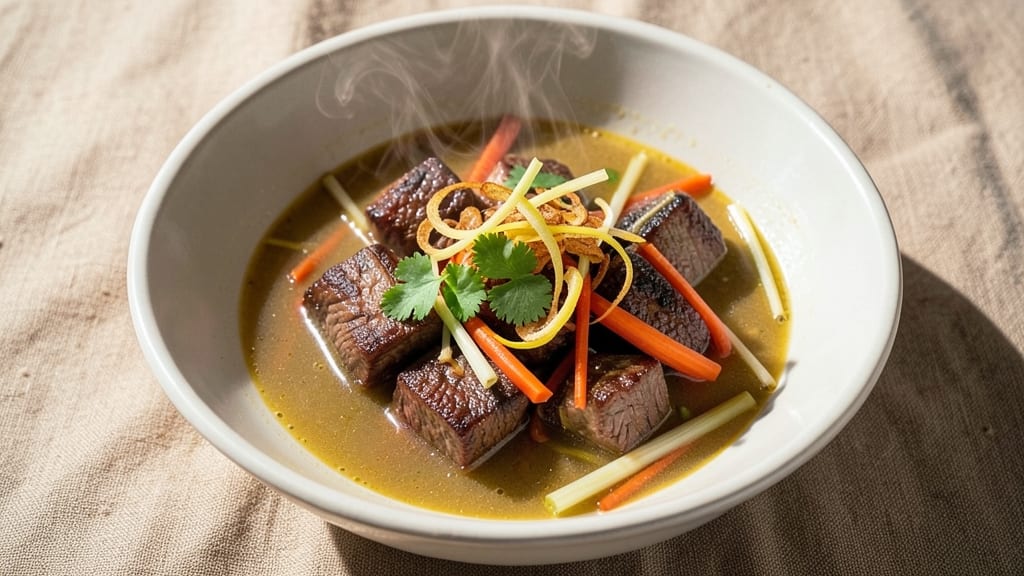
This beef lemongrass soup recipe delivers restaurant-quality depth with tender beef, fragrant broth, and the signature warmth of galangal. The secret lies in slow simmering—transforming tough cuts into melt-in-your-mouth pieces while extracting every aromatic note from the lemongrass and spices.
I've perfected this over years of testing, balancing traditional techniques with modern shortcuts for home cooks.
The process begins with searing beef to develop rich, caramelized flavors before building layers of aromatic vegetables and herbs.
Galangal root adds that signature heat and citrusy kick, while lemongrass infuses the broth with bright, citrusy complexity. Thirty minutes of prep sets you up for 2+ hours of hands-off simmering, resulting in a soup that's both comforting and impressively nuanced.
What you'll end up with is a steaming bowl of velvety broth swimming with tender beef chunks, fragrant lemongrass stalks, and delicate herbs. The aroma alone transports you to Southeast Asian kitchens, while the first sip delivers that perfect balance of savory, spicy, and umami.
This is the kind of soup that disappears quickly—perfect for cozy weeknights or special gatherings.
Serve it over steamed jasmine rice to soak up every last drop of that aromatic broth, or pair with crusty bread for dipping. The optional garnishes of fresh cilantro and lime wedges add bright, fresh contrast to the rich, spiced flavors. Let's get cooking!
Ingredients for beef lemongrass soup
Restaurant-quality depth starts with these aromatic ingredients—tender beef, fragrant galangal, and bright lemongrass.
| Ingredient | Amount | Notes |
|---|---|---|
| Chuck Roast 🥩 | 1 ½ lb | Cut into 1.5-inch cubes for even cooking |
| Lemongrass Stalks 🌿 | 4 whole | Bruised to release oils, cut into 2-inch pieces |
| Galangal Root 🧅 | 3 oz | Peeled, sliced thinly (substitute ginger if unavailable) |
| Fresh Ginger 🧅 | 2 oz | Peeled, sliced into thin coins |
| Yellow Onion 🧅 | 1 whole | Chopped into even 0.5-inch pieces |
| Carrots 🥕 | 4 medium | Peeled, cut into 1-inch chunks (or 1 cup baby carrots) |
| Garlic Cloves 🧄 | 6 cloves | Minced for aromatic depth |
| Coconut Milk 🥥 | 1 can (13.5 oz) | Full-fat for creaminess (canned preferred) |
| Vegetable Broth 💧 | 4 cups | Low-sodium for flavor control |
| Fish Sauce 🍶 | 1 tbsp | Red Boat brand preferred |
| Brown Sugar 🍚 | 1 tbsp | Lightly packed for balance |
| Fresh Cilantro 🌿 | ¼ cup | Chopped for garnish (stems included) |
| Lime Wedges 🍋 | 2 whole | For serving, freshly squeezed |
| Jasmine Rice 🍚 | 1 cup | Uncooked, for serving |
| Olive Oil 🫒 | 2 tbsp | Extra-virgin for searing |
The beef is non-negotiable—chuck roast gives you that melt-in-your-mouth texture after slow cooking. Costco or Whole Foods carry it pre-cut, but if you're buying a whole roast, ask the butcher to cube it for you. Galangal root is the star here—it's like ginger's spicier cousin. Asian markets usually stock it fresh, but if you can't find it, ginger works in a pinch (though the flavor will be subtly different). For the lemongrass, look for stalks that are vibrant green and firm to the touch—Trader Joe's often carries it frozen if fresh isn't available. The coconut milk should be full-fat; Thai Kitchen brand is my go-to for that authentic creaminess.
No fish sauce? Soy sauce works at half the amount, though it won't have that same umami punch. Fresh out of galangal? Double the ginger and add a pinch of cayenne for heat. The carrots can be baby carrots if that's what's in your fridge—no need to peel them unless they're particularly dirty. For the broth, low-sodium is key so you can control the seasoning. And if you're feeling fancy, toast your jasmine rice in the pot with a bit of butter before adding water—game-changer for flavor. The brown sugar might seem odd, but trust me, it balances the heat beautifully.
This soup tastes even better the next day as flavors meld. Store it in the fridge for up to 5 days, or freeze portions for 3 months. I always make a double batch—one for dinner, one for lunches. The galangal and ginger can be prepped ahead and frozen in a sealed bag for up to 2 months. Just thaw and toss them straight into the pot. For serving, keep those lime wedges and cilantro separate until the very end—they'll wilt fast in hot soup, but their bright flavors are essential for that fresh contrast.
Why You'll Love This Recipe
- One-Pot Wonder: I swear by this recipe because it’s actually one-pot—no chopping boards, no extra bowls. Just brown the chuck roast, toss in the lemongrass and galangal (pounded, not sliced—trust me, it’s easier), and let the slow simmer do the work. The onion and ginger caramelize right in the broth, so you’re left with one pot to wash.
- Citrusy Umami Bomb: That first sip? Chef’s kiss. The galangal and lemongrass give it a bright, piney kick, while the chuck roast melts into tender, rich chunks. It’s not just "good"—it’s the kind of soup that makes you pause mid-bite, like, "Wait, how is this so good?" (Yes, even on a Tuesday night.)
- Leftovers That Beg for More: This soup tastes better the next day—honestly, the flavors deepen as the beef gets even more fall-apart tender. I make a double batch on Sundays, freeze half, and still eat the rest by Wednesday. My kids fight over the last bowl, and I don’t even have to reheat it fully—just a quick microwave zap.
- Budget Meal That Feeds: Chuck roast is cheap, but it feels like a splurge because it’s so satisfying. A single cut serves four, and the galangal/lemongrass (which you can freeze) stretch the flavor without breaking the bank. I’ll be real: this is my go-to when I need a hearty, filling meal that doesn’t require fancy ingredients.
Step-by-step instructions for beef lemongrass soup
Here's how to create a deeply aromatic broth with melt-in-your-mouth beef and perfect galangal heat.
Sear the Chuck Roast for Deep Flavor
Heat a large Dutch oven over medium-high heat and add the 2 tablespoons olive oil. Once shimmering, add the 1.5 lb chuck roast cut into 1.5-inch cubes in a single layer. Let them sear undisturbed for 3-4 minutes until developing a rich brown crust on all sides.
This initial searing creates the Maillard reaction that forms the flavor foundation of your soup. I press down gently on the beef cubes during the first minute—this prevents them from curling and ensures even contact with the pan. Once all sides are golden brown, transfer the beef to a plate and set aside temporarily.
Build the Aromatic Base
In the same Dutch oven, add the 1 whole yellow onion chopped into 0.5-inch pieces, 4 medium carrots cut into 1-inch chunks, 6 cloves garlic minced, and the 4 whole lemongrass stalks bruised and cut into 2-inch pieces. Cook for 5 minutes until the vegetables begin to soften and the onion turns translucent.
Next, add the 3 oz galangal root sliced thinly and the 2 oz fresh ginger sliced into thin coins. Stir everything together and cook for another 3 minutes until the galangal and ginger release their essential oils and the mixture becomes fragrant. This aromatic trio forms the signature heat and complexity of the soup.
Simmer the Beef and Vegetables
Pour in the 4 cups vegetable broth and bring the mixture to a gentle boil. Return the beef to the pot, reduce heat to low, and add the 1 tablespoon fish sauce and 1 tablespoon brown sugar. Cover and let it simmer for 1 hour and 15 minutes until the beef becomes fork-tender.
I check for doneness by piercing a beef cube with a fork—it should slide in easily with no resistance. If the broth reduces too much before the beef is tender, add ½ cup water to maintain the proper consistency. The galangal and ginger will continue to infuse their flavors into the broth during this long simmer.
Finish with Creamy Coconut Milk
Once the beef is tender, stir in the 1 can (13.5 oz) coconut milk and simmer uncovered for an additional 10 minutes to allow the flavors to meld. Taste and adjust seasoning if needed—you might want to add a bit more fish sauce for saltiness or brown sugar for sweetness.
Remove from heat and let the soup rest for 5 minutes. This resting period allows the flavors to fully develop and the beef to absorb the coconut milk. Skim off any excess fat that rises to the surface before serving. The soup should have a velvety texture with a balance of galangal heat, lemongrass brightness, and coconut creaminess.
Serve with Jasmine Rice and Garnish
Ladle the hot soup over individual servings of 1 cup jasmine rice per person. Garnish each bowl with 0.25 cup chopped fresh cilantro and serve with the 2 whole lime wedges on the side. The acidity from the lime will cut through the richness of the coconut milk and beef, creating a perfect balance of flavors.
This soup is best enjoyed immediately while the beef is still warm and tender. The aroma alone will draw everyone to the table—it's that irresistible. The combination of galangal's peppery kick, lemongrass's citrusy notes, and the creamy coconut milk creates a truly memorable dining experience.
Pro Tips For Making Beef Lemongrass Soup
- Sear the Chuck Roast First: Chuck roast loves a good crust, and skipping the sear means flavor hiding in the broth. Heat your pot until it’s smoking hot—yes, even if you’re using oil—and brown the meat in batches for 2-3 minutes per side. The caramelized bits dissolve into the soup, turning it from good to deeply aromatic.
- Slice the Lemongrass Lengthwise: I used to smash the stalks with the flat side of my knife, but slicing them open lengthwise releases more oils and citrusy punch without turning the broth into a pulp. Just cut each stalk down the middle—no need to be precise—and drop them in whole. They’ll infuse the broth beautifully before you fish them out.
- Don’t Overcrowd the Pot: After searing the meat, resist the urge to toss everything in at once. Let the onions caramelize first, then add ginger and galangal in stages—this keeps the broth from steaming instead of building flavor. Crowding turns your soup into a sad, watery mess, and nobody wants that.
- Use a Blender for Galangal: Galangal root is tough to grate, and pre-sliced versions often taste like sawdust. Toss a small piece into a blender with a splash of broth, then strain it through a fine-mesh sieve. The result? A smooth, peppery kick without the texture issues. (Pro move: Keep the pulp—it’s packed with flavor.)
Best sauces and condiments for this recipe
Coconut Milk Finish
The coconut milk is what transforms this soup from ordinary to extraordinary. I use full-fat canned coconut milk (like Thai Kitchen brand) because its richness balances the galangal's heat and beef's savoriness. For an extra-luxurious version, add 1 tablespoon toasted coconut cream at the end—it creates a velvety sheen.
If you prefer lighter texture, stir in ½ cup coconut milk instead of the full can and add ¼ cup water to maintain consistency. 🥥
Fish Sauce Depth
Fish sauce is non-negotiable for authentic umami—Red Boat brand delivers the best quality. Start with 1 tablespoon but taste as you go; some beef cuts need ½ teaspoon more for saltiness. For a vegetarian version, substitute 1 tablespoon soy sauce plus ½ teaspoon miso paste (though the flavor won't be identical). The key is to balance it with brown sugar—this duo creates the signature Southeast Asian flavor profile. 🍶
Spicy Galangal Boost
Galangal is the secret weapon—its peppery, citrusy heat elevates everything. If you can't find it, double the ginger and add ¼ teaspoon cayenne pepper for heat. For extra depth, lightly toast the galangal slices in a dry pan for 1 minute before adding to the soup.
This caramelization intensifies its flavor. I also like adding 1 teaspoon shrimp paste (like Thai shrimp paste) for an authentic Thai touch—just be warned, it's potent! 🌶️
Herb Garnishes
Fresh cilantro and lime wedges are essential for brightness. I chop ¼ cup cilantro (stems included) and sprinkle it over each bowl just before serving—this keeps the herbs vibrant. For a Thai-inspired twist, add thinly sliced Thai basil (if available) or mint leaves.
The lime wedges should be freshly squeezed—their acidity cuts through the richness beautifully. A drizzle of chili oil or sriracha adds heat for those who love it spicy. 🍋
Sweet-Savory Balance
The brown sugar might seem unusual, but it's crucial for balancing the galangal's heat. Use lightly packed brown sugar—1 tablespoon is perfect, but adjust to taste. For a deeper caramel note, add ½ teaspoon vanilla extract when stirring in the coconut milk.
If your soup tastes too sweet, add a splash of fish sauce or rice vinegar to rebalance. The goal is harmony—each spoonful should sing with layered flavors. 💫
Nutrition facts
Frequently asked questions
Can I substitute regular ginger for galangal?
Yes, but the flavor will be different. Use double the amount of ginger (about 6 oz) and add ¼ teaspoon cayenne pepper for heat to mimic galangal's peppery kick. Galangal has a citrusy, piney quality that ginger lacks, so the soup will taste more like traditional ginger soup. For authentic results, track down fresh galangal at Asian markets—it's worth the effort!
How do I make this soup in a slow cooker?
Transfer the seared beef, all vegetables, broth, fish sauce, and brown sugar to your slow cooker. Cook on low for 7-8 hours or high for 4-5 hours until beef is tender. Stir in coconut milk during the last 30 minutes of cooking. The slow cooker's gentle heat will make the beef extra tender, but you may need to add ½ cup water if the broth gets too thick.
Why does my soup taste too salty?
Fish sauce is potent—start with 1 tablespoon and taste as you go. If it's too salty, dilute with ¼ cup water or add 1 teaspoon brown sugar to balance. For future batches, reduce fish sauce to ½ tablespoon and taste before adding more. The coconut milk and broth can also concentrate flavors, so adjust gradually. A squeeze of lime can also help cut through excess saltiness.
Can I use chicken or shrimp instead of beef?
For chicken, use 1.5 lbs boneless thighs and reduce simmering time to 45-60 minutes. For shrimp, add 1 lb large shrimp during the last 5 minutes of cooking to prevent overcooking. The broth will still be rich, but the texture will be lighter. Adjust fish sauce to taste—chicken needs more umami than shrimp. The lemongrass and galangal flavors will shine either way!
How can I make this soup spicier?
Add 1-2 teaspoons of chili paste (like sambal oelek) when simmering the broth, or stir in ½ teaspoon cayenne pepper with the fish sauce. For extra heat, serve with chili oil drizzle or sliced Thai chilies. Toast 1 teaspoon coriander seeds in a dry pan and add to the broth for a smoky kick. Remember, galangal itself is spicy—don't overdo it unless you love intense heat!