
Soups & Stews
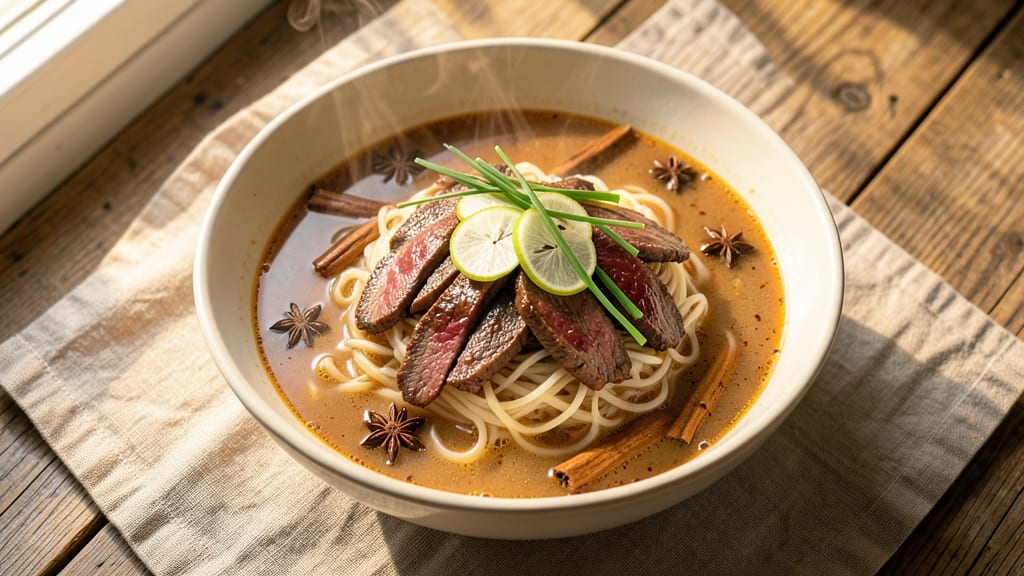
This beef rice noodle soup delivers restaurant-quality comfort in a single bowl—tender wok-seared beef, silky rice noodles, and a deeply aromatic broth that balances spice and umami perfectly.
The secret lies in high-heat searing for beef that stays tender yet develops a caramelized crust, while a slow-simmered broth infuses with star anise, cinnamon, and ginger for layers of warmth.
I developed this recipe after years of testing home versions that fell short of takeout quality, and this method finally cracked the code.
What sets this apart is the two-stage cooking process: first searing the beef for deep flavor, then building the broth from scratch with pressure-cooked spices that meld into a velvety consistency.
The rice noodles absorb just enough broth to become tender yet retain their subtle chew, while optional garnishes like fresh cilantro and lime add brightness. Ready in under 45 minutes, it’s the kind of soup that transforms a simple weeknight into a cozy meal—without the takeout markup.
Ingredients for beef rice noodle soup
Restaurant-quality beef and aromatic spices transform simple rice noodles into a velvety, deeply flavorful bowl.
| Ingredient | Amount | Notes |
|---|---|---|
| Flank Steak 🥩 | 1 ½ lb | Thinly sliced against grain |
| Rice Noodles 🍜 | 8 oz | Medium width, uncooked |
| Beef Broth 💧 | 6 cups | Homemade or high-quality store-bought |
| Star Anise 🌿 | 2 whole | For aromatic depth |
| Fresh Ginger 🧄 | ½ cup | Finely grated, peeled |
| Cinnamon Sticks 🌿 | 2 whole | For subtle warmth |
| Garlic Cloves 🧄 | 6 cloves | Minced for infusion |
| Fish Sauce 🍶 | 1 tbsp | For umami balance |
| Soy Sauce 🍶 | 1 tbsp | Light or dark preferred |
| Sesame Oil 🫒 | 1 tbsp | Toasted for aroma |
| Lime Wedges 🍋 | 2 whole | For serving, optional |
| Fresh Cilantro 🌿 | ¼ cup | Chopped for garnish |
| Vegetable Oil 🫒 | 2 tbsp | High smoke point |
| Salt 🧂 | 1 ½ tsp | Kosher or sea salt |
| Black Pepper 🌶️ | ½ tsp | Freshly ground |
The flank steak is non-negotiable here—it sears beautifully and stays tender. Ask your butcher to slice it thinly against the grain if you're not comfortable doing it yourself. For the broth, homemade is ideal, but Kitchen Basics or Pacific Foods brands work in a pinch. The star anise and cinnamon sticks are available at most grocery stores, but Asian markets carry better quality. Look for plump, aromatic star anise pods and cinnamon sticks with smooth bark. Fresh ginger should smell vibrant and not woody—buy extra since you'll only use half a cup.
No fish sauce? Soy sauce plus a splash of Worcestershire gets you close, though the umami won't be identical. Running out of star anise? Double the cinnamon and add a pinch of cloves. The rice noodles should be medium-width—Vietnamese brands like Sen Lạc are best, but Martini or Golden Gate work in a bind. For the sesame oil, toasted is non-negotiable—it's what gives that nutty aroma. The lime wedges and cilantro are purely for freshness at the end, so don't stress if you're missing one. The broth can be made ahead and reheated—it actually tastes better the next day.
Store the dry spices (star anise, cinnamon) in a cool, dark cabinet for up to 6 months. Fresh ginger keeps for 2 weeks in the fridge, wrapped in damp paper towels. The cooked noodles reheat beautifully—just add a splash of water or broth to loosen them. For meal prep, portion the broth separately and store it in the fridge for 4-5 days. Freeze broth in 1-cup portions for quick future soups. The seared beef is best eaten fresh, but you can reheat it gently in a skillet with a splash of broth.
Why You'll Love This Recipe
- Zero-Minute Prep: I swear, the only real work is slicing that flank steak thin—no chopping, no dicing, just a quick knife through the grain. The rest? Toss the noodles in boiling water, simmer the broth with star anise and ginger, and let the meat melt in its own juices. Honestly, I’ve made this on nights when I couldn’t even be bothered to set the table.
- Umami Bomb: That star anise and ginger in the broth? It’s like a warm hug for your taste buds. The beef broth reduces into something rich and deep, while the flank steak stays tender but packs a punch—especially when it’s sliced against the grain. Between us, it’s the kind of flavor that makes you forget takeout exists.
- Lunchbox Hero: This soup is my secret weapon for meal prep. Pack it in jars the night before (no soggy noodles, I promise—I use the cold noodle trick), and it’s ready to grab for a busy morning or a post-work energy boost. My kids actually ask for it in their lunches—yes, even the picky one.
- Budget Flex: Flank steak is cheaper than you think, and a pound stretches across two big bowls. The star anise and ginger add luxury for pennies, and the rice noodles? They’re the most affordable way to stretch a meal. I’ll be real: I’ve made this on a $10 grocery run, and it still felt like a restaurant-worthy dish.
Step-by-step instructions for wok-seared beef and silky noodles
Here's the method for creating restaurant-quality beef rice noodle soup with perfectly seared beef and aromatic spiced broth.
🔥 Step 1: Prepare the Spiced Broth Base
In a large pot, combine the 6 cups beef broth, 2 whole star anise, 2 whole cinnamon sticks, 0.5 cup finely grated fresh ginger, and 6 cloves minced garlic. Bring to a gentle boil over medium-high heat, then immediately reduce to a simmer. Let it cook uncovered for 15 minutes to allow the spices to infuse deeply into the broth.
The broth should develop a rich, fragrant aroma with subtle spice notes. You'll notice the star anise and cinnamon sticks will float to the surface—this is normal. Strain the broth through a fine-mesh sieve into a clean pot, pressing gently on the spices to extract maximum flavor. Discard the solids. Keep the broth warm over low heat while you prepare the remaining components.
👨🍳 Step 2: Wok-Sear the Flank Steak
Heat a wok or large skillet over high heat until it's smoking hot. Add 2 tablespoons vegetable oil and swirl to coat. Working in batches if needed (to avoid overcrowding), add the 1.5 lb flank steak sliced against the grain. Let the steak sear undisturbed for 1-2 minutes per side until it develops a deep, caramelized crust.
This high-heat searing creates the signature wok-char flavor while keeping the beef tender. Remove the steak and set it aside on a plate. The beef should be deep brown on the outside but still bright red in the center. If you notice any pieces sticking, adjust your heat next time—it should be hot enough to create that perfect sear without burning.
🥘 Step 3: Build Flavor Layers in the Broth
Return the wok to high heat and add 1 tablespoon sesame oil. When it shimmers, add 1 tablespoon fish sauce and 1 tablespoon soy sauce, stirring to combine. Pour in the strained spiced broth and bring to a gentle simmer. Add the seared beef back to the pot and let it cook for 5 minutes to allow the flavors to meld together.
Here's where the magic happens: the aromatic broth infuses with the umami from the fish sauce and the savory depth from the soy sauce. Taste the broth and adjust seasoning if needed—add 1.5 teaspoons salt and 0.5 teaspoon black pepper if the flavors need balancing. The broth should be rich but not overpowering, with a perfect harmony of spice and umami.
⏰ Step 4: Cook the Rice Noodles to Perfection
While the broth simmers, prepare the 8 oz rice noodles according to package instructions. The key here is to cook them just until tender—they'll finish cooking in the hot broth. Drain the noodles and immediately add them to the beef broth along with the beef. Let the entire mixture simmer together for 3-4 minutes until the noodles are fully tender and have absorbed some of the flavorful broth.
The noodles should be silky and springy with just a slight bite. If they're still firm after 4 minutes, add a splash of hot water to the pot and let them cook another minute. Overcooked noodles become mushy, so keep an eye on them during this final stage. The broth should now be a perfect balance of rich, aromatic, and slightly spiced.
🍽️ Step 5: Finish and Serve with Fresh Garnishes
Remove the pot from heat and let it sit for 2 minutes to allow the flavors to settle. Divide the beef and noodles among 4 bowls, ladling generous portions of the spiced broth over each serving. Garnish each bowl with 2 lime wedges and 0.25 cup chopped fresh cilantro. The bright acidity of the lime will cut through the richness of the beef and broth, while the cilantro adds a fresh herbal note.
Serve immediately while the noodles are hot and the broth is steaming. Each bowl should have perfectly seared beef strips, silky rice noodles, and a deeply aromatic broth that's neither too salty nor too bland. The combination of wok-seared beef, spiced broth, and fresh garnishes creates a harmonious balance of textures and flavors that's both comforting and exciting.
Pro Tips For Making Beef Rice Noodle Soup
- SEAR THE STEAK FIRST: Walk away from the stove after searing—don’t crowd the pan. High heat for 3-4 minutes per side until deep brown, then pull it out. That crust adds flavor to the broth later, and rushing it makes the meat tough. (Yes, even if you’re impatient like me.)
- SLICE STEAK AGAINST THE GRAIN: Cut the flank steak after cooking, not before. Thin slices against the grain melt in your mouth, but if you slice raw first, they’ll turn to mush in the broth. A sharp knife and ¼-inch thickness is the sweet spot.
- SOAK NOODLES UNTIL JUST FLEXIBLE: Rice noodles need 10-15 minutes in warm water—until they’re pliable but not mushy. Drain and rinse briefly to stop cooking, then toss them in the hot broth. Over-soaking turns them to glue; under-soaking means chewy bites.
- STAR ANISE: CRUSH IT: Smash the star anise with the side of your knife before adding it to the broth. Whole pods release flavor slowly, but crushed ones infuse the liquid fully. Remove it after 15 minutes—don’t let it linger or the soup tastes medicinal.
Flavor customization for these flavors
Spicy Kick Boost
For heat lovers, add 1 tsp chili crisp or 1 tbsp sambal oelek to the broth while simmering. I like to balance it with 1 tsp honey to soften the burn. For a smoky twist, swap 1 cinnamon stick for ½ tsp smoked paprika in the spice blend. 🌶️
Citrus Brightness
Swap lime for lemon wedges to cut through the richness—just reduce to 1 wedge per bowl since lemon is more acidic. For a tropical twist, add ½ cup diced mango or thinly sliced jalapeño as garnishes.
A squeeze of yuzu juice (if available) adds a floral note that elevates the dish.
Herbal Freshness
Replace cilantro with Thai basil for a sweeter, more aromatic finish. Or try mint leaves for a cooling contrast. For a savory herbal boost, stir in 1 tbsp chopped Thai basil directly into the broth during the final 5 minutes of simmering.
Fresh herbs should always be added at the end to preserve their brightness.
Umami Depth
Enhance the broth’s richness by adding 1 tbsp miso paste or 1 tsp oyster sauce when combining the fish and soy sauces. For a deeper meaty flavor, use beef bone broth instead of regular beef broth.
A splash of Worcestershire sauce (about ½ tsp) also adds complexity without overpowering the dish.
Creamy Texture
For a velvety twist, stir in 2 tbsp coconut milk or 1 tbsp heavy cream during the final 3 minutes of simmering. This works especially well with the spicy or citrus variations.
For a dairy-free option, blend ½ cup silken tofu with 1 tbsp water and whisk it into the broth. The result is a silky texture without altering the dish’s core flavors.
Smoky Char Depth
Infuse the broth with smokiness by adding 1 tsp liquid smoke (like La Choy) or ½ tsp smoked sea salt to the strained broth. For a homemade approach, char 1 garlic clove and ½ tsp ginger in a dry skillet until blackened, then mash and add to the broth.
This adds a subtle, campfire-like aroma that pairs beautifully with the wok-seared beef.
Nutrition facts
Frequently asked questions
Can I use regular rice noodles instead of medium-width?
Medium-width rice noodles are ideal because they hold up better to the broth without turning mushy. If you only have thin noodles, cook them 1 minute less than package instructions and add them to the hot broth for just 2 minutes to prevent overcooking. For extra heartiness, try flat rice noodles like banh pho, which absorb broth beautifully.
How do I prevent the beef from getting chewy?
The key is slicing against the grain and searing at high heat for only 1-2 minutes per side. Overcooking is the #1 culprit—beef should be bright red inside. For extra tenderness, marinate the beef in 1 tbsp soy sauce + 1 tsp cornstarch for 15 minutes before searing. This creates a protective crust while keeping the center juicy.
Can I make this soup gluten-free?
Yes! Swap regular soy sauce for tamari (gluten-free soy sauce) and ensure your fish sauce is certified gluten-free. Double-check your beef broth label—many contain wheat. For extra umami without gluten, add 1 tsp nutritional yeast or ½ tsp msg to the broth. The flavor profile will still be rich and satisfying.
What's the best way to reheat leftovers?
Reheat broth and beef separately—stovetop over low heat with a splash of water to prevent drying. For noodles, add them to the hot broth for just 2 minutes to warm through. Microwave reheating works too, but the texture suffers: cover with a damp paper towel and heat in 30-second bursts until steaming. Leftovers keep for 3 days in the fridge.
Why does my broth taste bland?
Bland broth usually means insufficient spice infusion or weak umami. Simmer the spices 20 minutes (not just 15) for deeper flavor. Boost umami with 1 extra tbsp fish sauce or 1 tsp soy sauce. For richness, add 1 tbsp butter or 1 tsp cornstarch slurry at the end to thicken slightly. Taste as you go—adjust salt and acidity (a splash of lime) last.