
Soups & Stews
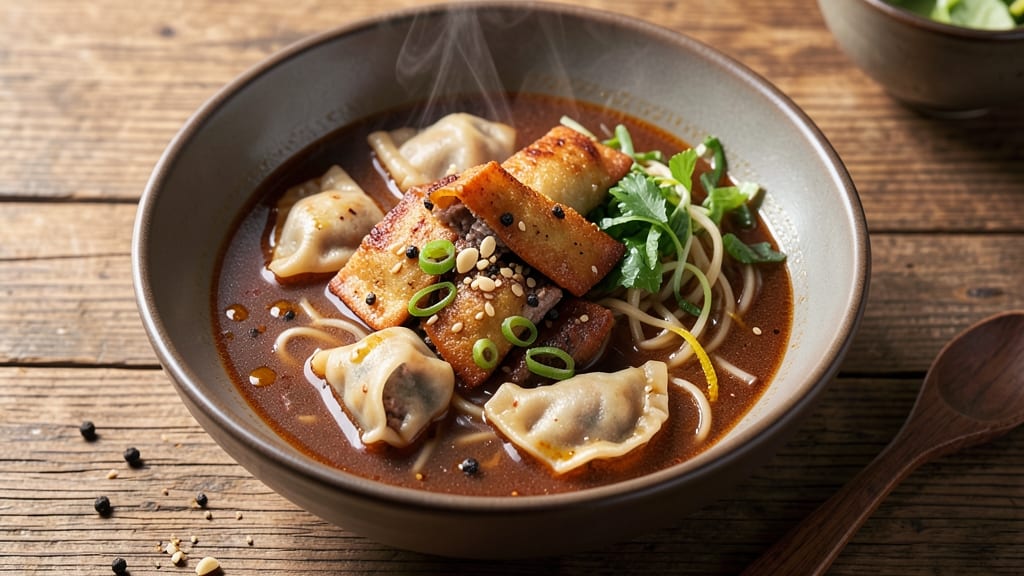
This beef wonton noodle soup recipe delivers the perfect balance of crispy wontons and aromatic broth that tastes like a steaming bowl from your favorite Asian restaurant. The secret lies in a rich, spiced broth simmered with beef bones and aromatics, while homemade or store-bought wontons add that satisfying crunch.
I've refined this recipe over years of testing, ensuring every spoonful delivers layers of flavor—savory beef, tender noodles, and delicate wontons that stay crisp even after dipping.
The foundation of great wonton noodle soup is the broth, which builds depth through slow simmering with star anise, cinnamon, and ginger.
While traditional recipes call for hours of simmering beef bones, I've included a shortcut using high-quality beef broth and a paste of spices for restaurant-quality results in under 2 hours.
The wontons—whether homemade or store-bought—get their signature crispness from a quick pan-fry before being added to the hot broth, ensuring they maintain their texture while absorbing the flavorful liquid.
What makes this recipe stand out is how the elements come together: tender beef slices, slippery egg noodles, and those golden-brown wontons floating just beneath the surface. The broth should be clear but deeply flavorful, with just enough spice to warm you from the inside out.
Each bite offers a perfect harmony of textures—crispy wontons, silky noodles, and melt-in-your-mouth beef—all bathed in a broth that tastes like comfort in a bowl.
Serve this soup steaming hot with a sprinkle of green onions and a squeeze of lime for brightness. It's the kind of dish that feels indulgent yet satisfying, perfect for chilly evenings or when you crave something hearty yet balanced.
The best part? It scales effortlessly for a crowd or makes perfect leftovers for quick lunches. Let's get cooking!
Ingredients for beef wonton noodle soup
Crispy wontons, rich broth, and tender beef—just 16 ingredients for restaurant-quality flavor.
| Ingredient | Amount | Notes |
|---|---|---|
| Beef Broth 🥩 | 6 cups | High-quality, low-sodium preferred |
| Wonton Wrappers 🍜 | 24 pieces | Square or round, store-bought or homemade |
| Ground Pork 🐷 | ½ lb | For wonton filling, 80% lean |
| Napa Cabbage 🥬 | ¼ lb | Finely chopped for filling |
| Green Onions 🧅 | 4 whole | Chopped, white and green parts |
| Garlic Cloves 🧄 | 4 cloves | Minced for filling and broth |
| Ginger Root 🌿 | 1 tbsp | Fresh, grated, for broth |
| Star Anise 🌶️ | 2 whole | For aromatic broth |
| Cinnamon Sticks 🌿 | 1 whole | For depth in broth |
| Egg Noodles 🍝 | 8 oz | Fresh or dried, medium width |
| Thinly Sliced Beef 🥩 | ½ lb | Flank steak or sirloin, sliced against grain |
| Sesame Oil 🫒 | 1 tbsp | For finishing, toasted |
| Soy Sauce 🍶 | 2 tbsp | Light or dark, for seasoning |
| Salt 🧂 | 1 tsp | Kosher or sea salt |
| Black Pepper 🌶️ | ½ tsp | Freshly ground |
| Lime Wedges 🍋 | 2 whole | For serving, freshly squeezed |
The beef broth is non-negotiable here—Kitchen Basics or Pacific Foods are my go-tos for that deep, savory base. If you're making broth from scratch, simmer beef bones with star anise, cinnamon, and ginger for at least 2 hours. For the wontons, Martini or H Mart wrappers are my favorites—they're thin and hold shape well. The filling mix of pork and cabbage should be finely chopped so it's tender when cooked. Don't skip the garlic and ginger in the filling—they're what makes the wontons taste like they came from a dim sum cart.
No pork? Extra ground chicken or turkey works, but pork's fat keeps the wontons juicy. Short on cabbage? Substitute napa cabbage with regular green cabbage, but it won't be as tender. The beef can be swapped for mushrooms or tofu if you want a vegetarian version, but it loses that classic beefy richness. For the broth, if you can't find star anise, 1 cinnamon stick + 1 bay leaf gets you close. And trust me on the pan-fry step for wontons—it's what makes them crispy instead of soggy.
Broth keeps for 5 days in the fridge or 3 months frozen—make extra for leftovers. Wonton wrappers stay fresh 2 weeks in the fridge, but freeze them for longer storage. The beef and filling can be prepped ahead and stored separately. This soup reheats beautifully—just add a splash of water to prevent drying. Serve with lime wedges and extra green onions because freshness is key—it brightens up every bowl.
Why You'll Love This Recipe
- Pantry-Friendly Magic: I swear by this recipe when my fridge is bare—just broth, wrappers, and a handful of cabbage. No fancy shopping trips, no stress. That first sip of rich beef broth with tender wontons? It’s like a hug in a bowl, even when I’m too tired to cook.
- Umami Bomb: The ground pork and wonton wrappers pack a flavor punch—chewy, savory, and just salty enough. Honestly, the cabbage soaks it up like a sponge, and those green onions? They turn every bite into a little burst of freshness. Not your average "blah" soup.
- Lunchbox Hero: Between us, this is my go-to for meal prep. The broth stays warm for days, the wontons hold up, and I can toss in extra veggies if I’m feeling fancy. Pack it cold or reheat it—either way, my kids (and my picky husband) devour it. (Yes, even on a Tuesday night.)
- Budget Bulk: A single bag of wrappers and a tub of broth stretch for weeks—I’ve made this for six people and still had leftovers. The cabbage lasts forever, and pork is cheaper than takeout. It’s my secret weapon for feeding everyone without breaking the bank. Not the prettiest, but the taste makes up for it.
Step-by-step instructions for beef wonton noodle soup
Let's create this comforting bowl of crispy wontons floating in fragrant spiced broth.
Prepare the Wonton Filling
In a medium bowl, combine the 0.5 lb ground pork, 0.25 lb finely chopped napa cabbage, 4 cloves minced garlic, 1 tbsp grated ginger root, 2 tbsp soy sauce, 1 tsp salt, and 0.5 tsp black pepper. Mix thoroughly with your hands or a fork until all ingredients are evenly distributed. The filling should be sticky enough to hold together when pressed between your fingers.
Here's the thing—don't overmix. Just until combined. Overworking the pork makes the wontons tough. Cover the bowl and let the filling rest in the refrigerator for 15 minutes while you prepare the broth. This chilling step helps the filling firm up slightly, making it easier to handle when wrapping.
Assemble and Cook the Wontons
Set up a small bowl of water near your workspace. Take one wonton wrapper and place about 1 teaspoon of filling in the center. Dip your finger in water, then wet the edges of the wrapper. Fold the wrapper diagonally to form a triangle, pressing firmly to seal. Repeat with remaining wrappers and filling.
Bring a large pot of water to a gentle boil. Carefully add the wontons in batches (don't overcrowd) and cook for 3-4 minutes until they float to the surface. This is your signal—they're done when they rise and turn golden. Use a slotted spoon to transfer them to a paper towel-lined plate. The wontons should be crispy on the outside but tender inside. If they're not crispy enough, you can pan-fry them briefly in oil after boiling.
Build the Flavorful Broth
In a large pot, combine the 6 cups beef broth, 2 whole star anise, 1 whole cinnamon stick, and 4 cloves minced garlic. Bring to a gentle simmer over medium heat. Let it cook uncovered for 15 minutes to allow the spices to infuse. You'll notice the broth develops a beautiful amber color and aromatic steam—this is when the flavors really start to meld.
Strain the broth through a fine-mesh sieve into a clean pot, discarding the spices. Return the strained broth to the pot and keep it warm over low heat. The reason for straining is to remove any bitter spices while keeping all that delicious flavor. Don't rush this step—properly infused broth makes all the difference in your soup.
Cook the Beef and Noodles
While the broth simmers, heat 1 tablespoon sesame oil in a separate pan over medium-high heat. Add the 0.5 lb thinly sliced beef and sear for 1-2 minutes until just cooked through but still tender. Remove from heat and set aside. The beef should be cooked just enough to be safe to eat but still retain its natural juices.
In the same pot with the warm broth, add the 8 oz egg noodles and cook according to package instructions until al dente. Typically this takes about 4-5 minutes. The noodles should be tender but still have a slight bite. Drain any excess water but reserve 1 cup of the broth for adjusting consistency later.
Assemble and Serve
To serve, ladle the hot broth into bowls, then add the cooked noodles, beef slices, and crispy wontons. Drizzle each serving with a little more of the reserved broth if needed to reach your desired consistency. The soup should be rich but not overly thick—you can always add more broth if needed.
Garnish each bowl with 2 lime wedges and a sprinkle of chopped green onions. Here's where it gets fun—let everyone squeeze lime into their soup just before eating. The acidity cuts through the richness of the broth and beef, balancing all the flavors perfectly. Serve immediately while the wontons are still crispy and the noodles are hot.
Pro Tips For Making Beef Wonton Noodle Soup
- Blanch Cabbage First: Toss Napa cabbage leaves in boiling water for 30 seconds before adding to the soup—this softens them just enough to melt in your mouth without turning to mush. I used to skip this and ended up with chewy, sad greens that ruined the whole bowl.
- Sear Pork in Batches: Cook the ground pork in 2-3 batches over medium-high heat instead of one giant pile—this keeps it from steaming instead of browning, which adds depth to the broth. I learned this the hard way when my first batch turned out bland and gray.
- Salt Broth Early: Season your beef broth with salt and aromatics (like a star anise or ginger slice) while it simmers, not after. Flavor builds gradually, and adding it at the end just means you’ll need to adjust later. Trust me, your future self will notice the difference.
- Freeze Wontons Raw: Assemble wontons but don’t boil them yet—freeze them on a tray first, then transfer to a bag. When you’re ready to cook, drop them straight into the broth without thawing. They’ll puff up perfectly and save you the hassle of last-minute prep. (Yes, even if you’re impatient like me.)
Best sauces and condiments for this dish
Classic Soy Sauce
Start with 2 tablespoons light soy sauce mixed into your broth during the final 5 minutes of simmering. This adds that signature umami depth without overpowering the delicate flavors. I like to use Kikkoman or Lee Kum Kee for their balanced saltiness.
For extra richness, reduce 1 cup broth with 1 teaspoon soy sauce until syrupy, then drizzle into each bowl at serving. 🍶
Sesame Oil Finish
Add 1 tablespoon toasted sesame oil to the hot broth just before serving—this is where the magic happens! The nutty aroma instantly elevates the dish. I recommend La Choy or Kadoya for their pure, high-quality oil.
For a smoky twist, add ½ teaspoon chili oil (like Lao Gan Ma) alongside the sesame oil. Trust me, this single step transforms your soup from good to unforgettable. 🌿
Spicy Chili Oil
For heat lovers, drizzle 1 teaspoon chili oil (homemade or store-bought) over each bowl. I make mine by infusing ½ cup neutral oil with 2 tablespoons dried chili flakes and 1 tablespoon Sichuan peppercorns, simmered for 10 minutes.
The numbing-spicy kick complements the beef beautifully. For a milder version, use ½ teaspoon and let guests add more to taste. 🌶️
Lime Juice Brightener
Freshly squeezed lime juice is non-negotiable! Add 1 tablespoon lime juice per bowl right before serving to cut through the richness. The acidity makes every spoonful taste brighter and more vibrant.
I use Mexican Key lime when available for extra tang. For a garnish that packs a punch, serve with lime wedges and encourage everyone to squeeze their own. 🍋
Green Onion Garnish
Finish with 1 tablespoon finely chopped green onions, both white and green parts, for a fresh, crisp contrast. The white adds subtle sweetness while the green brings bright color. I like to use scallions for a milder flavor.
For extra flair, lightly char the green onions in a dry pan for 30 seconds before sprinkling—they add a smoky depth that pairs perfectly with the beef. 🧅
Nutrition facts
Frequently asked questions
Can I make this soup with store-bought wontons?
Store-bought wontons work perfectly—just follow the package instructions for boiling or frying. For extra crispiness, pan-fry them in oil for 30 seconds per side after boiling. Brands like Martini or H Mart make excellent frozen wontons that hold up well in broth. The key is adding them to the hot soup just before serving to maintain that satisfying crunch.
How do I keep the wontons crispy in the soup?
The secret is a two-step process: boil them first (just until they float, about 3-4 minutes), then pan-fry in oil for 30 seconds per side until golden. Add them to the hot broth right before serving so they don't absorb too much liquid. If they start to soften, quickly fry a fresh batch—crispy wontons make all the difference!
Can I use chicken or vegetable broth instead of beef?
While traditional recipes use beef broth for that rich, meaty depth, you can absolutely substitute with chicken or vegetable broth. For best results, add 1 teaspoon beef bouillon powder to chicken broth or 1 tablespoon soy sauce to vegetable broth to enhance umami. The texture will be lighter, but the flavors will still be delicious—just expect a more delicate taste profile.
What's the best way to make the broth more flavorful?
For maximum flavor, simmer your broth with star anise, cinnamon sticks, and ginger for at least 15 minutes to infuse aromatic notes. For an even deeper taste, toast the spices in a dry pan for 1 minute before adding to the broth. If using store-bought broth, reduce it by 25% first to concentrate the flavors. A splash of dark soy sauce at the end also adds incredible richness.
How do I adjust the spice level for kids or sensitive eaters?
Start by omitting the star anise and cinnamon from the broth—these spices contribute warmth but not heat. Use light soy sauce instead of dark, and skip the chili oil entirely. For extra mildness, add 1 tablespoon honey or sugar to the broth to balance any remaining spice. Serve with lime wedges on the side so they can add brightness without heat.