
Soups & Stews
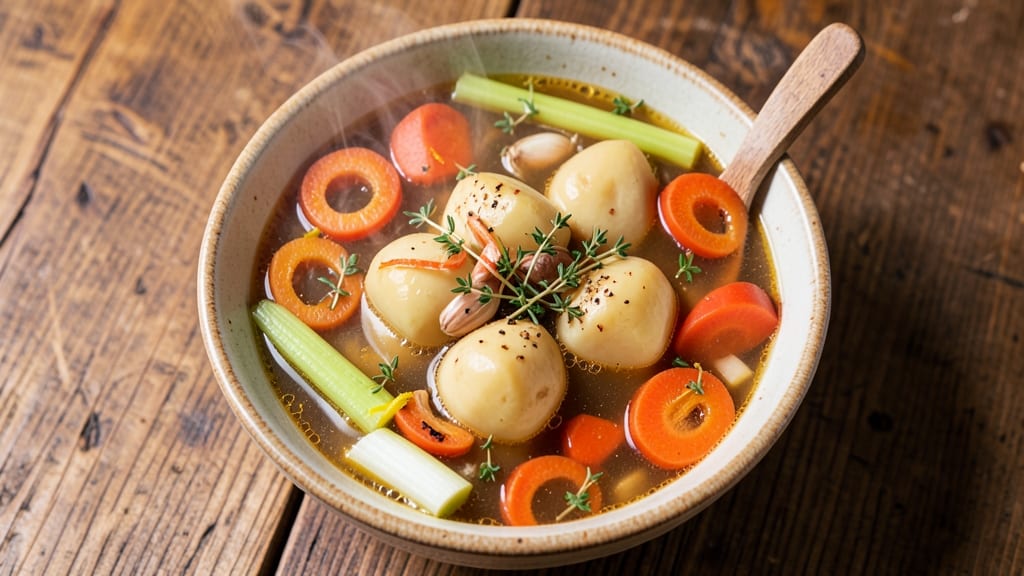
This homemade vegetable soup recipe delivers the best homemade vegetable soup recipe ever in just 45 minutes, proving that homemade always tastes better. 💛 The secret lies in developing a rich, herb-infused broth from scratch rather than relying on store-bought versions—this transforms ordinary vegetables into a flavor-packed masterpiece that's both comforting and nutritious.
The process begins with properly sautéing aromatic vegetables like onions, carrots, and celery until deeply caramelized, which forms the flavor foundation. Fresh herbs (thyme, bay leaves, and parsley) are added early to infuse the broth with complex, earthy notes that elevate every spoonful.
Unlike many quick soups, this recipe builds flavor through proper technique rather than shortcuts.
By the time you're done, you'll have a velvety soup with tender vegetables, a rich golden broth, and a balance of textures—creamy from the immersion-blended carrots and potatoes, yet still bright from the fresh herbs.
The best part? This recipe is completely customizable—swap any vegetables you have on hand while maintaining that restaurant-quality depth.
Serve with crusty bread for dipping or a sprinkle of fresh parsley for color. The result is a soup that feels like a warm hug in a bowl, perfect for chilly days or when you crave something wholesome yet satisfying. Let's get cooking!
Ingredients for best homemade vegetable soup recipe ever
Herb-infused vegetables and aromatic base—this is where magic happens in a bowl.
| Ingredient | Amount | Notes |
|---|---|---|
| Yellow Onions 🧅 | 1 ½ lb | Diced, for deep caramelization |
| Carrots 🥕 | 1 ½ lb | Medium, peeled and chopped |
| Celery Stalks 🧅 | 4 whole | Diced, for aromatic base |
| Russet Potatoes 🥔 | 2 lb | Peeled and cubed for creaminess |
| Garlic Cloves 🧄 | 6 cloves | Minced, for depth of flavor |
| Fresh Thyme Sprigs 🌿 | 2 tbsp | Leaves only, for herbal notes |
| Fresh Parsley 🌿 | ½ cup | Chopped, for brightness |
| Bay Leaves 🍃 | 2 whole | For subtle earthy flavor |
| Vegetable Broth 💧 | 6 cups | Homemade or low-sodium |
| Extra-Virgin Olive Oil 🫒 | ½ cup | For sautéing vegetables |
| Salt 🧂 | 1 ½ tsp | Kosher or sea salt |
| Black Peppercorns 🌶️ | ½ tsp | Freshly cracked for heat |
| Crusty Bread 🍞 | 1 loaf | For serving, optional |
The vegetables are the heart of this soup, so pick fresh, vibrant produce—carrots should be bright orange, celery crisp, and potatoes firm. Local farmers markets often have the best quality, but the grocery store works too. For the broth, I always make my own with vegetable scraps, but low-sodium store-bought saves time. The key is to caramelize those onions, celery, and carrots until they're deep golden—this builds flavor that can't be rushed. If you're short on time, Trader Joe's pre-chopped veggie mix is a lifesaver, but fresh is always better.
No fresh thyme? Dried works at one-third the amount, but the flavor won't be as bright. Out of parsley? Fresh cilantro or basil adds a different but delicious twist. The potatoes can be swapped for sweet potatoes or butternut squash if you're feeling adventurous. For extra richness, stir in a splash of coconut milk or cashew cream at the end. And if you're using pre-chopped veggies, pat them dry first to avoid a watery soup. The garlic? Don't skip it—it's the secret to that restaurant-quality depth.
This soup tastes even better the next day as flavors meld, so make a double batch and freeze portions. Store leftovers in airtight containers for up to 5 days or freeze for 3 months. The crusty bread? Toast it first—garlic butter or olive oil makes it irresistible. For meal prep, freeze the soup without the bread, then reheat and serve with fresh herbs on top. Trust me, the first bowl will have you coming back for seconds.
Why You'll Love This Recipe
- The secret’s in the layers: caramelized onions and celery base, then those Russet potatoes breaking down into creamy perfection. Add a few cloves of roasted garlic at the end? Instantly rich, like someone sprinkled gold flakes in there.
- No-Chop Shortcuts: I swear by the "mirepoix hack"—just roughly chop the onions, carrots, and celery into big chunks (no fancy dicing). The potatoes stay whole, and the garlic gets minced in 30 seconds. That’s it. My lazy nights thank me every time.
- Garlic-Potato Magic: The secret’s in the layers: caramelized onions and celery base, then those Russet potatoes breaking down into creamy perfection. Add a few cloves of roasted garlic at the end? Instantly rich, like someone sprinkled gold flakes in there.
- Lunchbox Hero: Between us, this soup is my go-to for meal prep. Tastes even better the next day—thick, hearty, and packed with veggies. I portion it into jars with crusty bread on the side, and my kids (even the picky ones) actually eat it.
Step-by-step instructions for herb-infused vegetable soup
Here's how to transform simple vegetables into restaurant-quality soup with layers of flavor.
🍳 Step 1: Develop Deep Caramelized Bases
Heat the 0.5 cup Extra-Virgin Olive Oil in a large Dutch oven over medium-low heat. Add the 1.5 lb Yellow Onions and cook for 15 minutes, stirring occasionally, until they develop a deep golden brown color and become tender. This slow caramelization builds sweet, complex flavors that elevate the entire soup.
Add the 1.5 lb Carrots and 4 whole Celery Stalks (all diced as specified), spreading them evenly in the pan. Cook for another 10 minutes until the vegetables soften and begin to release their natural juices. Here's the thing—don't rush this step. You'll know it's ready when the vegetables are tender and the mixture smells intensely aromatic, like a fragrant vegetable perfume.
🍳 Step 2: Build Flavor Layers with Aromatics
Add the 6 cloves Garlic Cloves (minced) and 2 tbsp Fresh Thyme Sprigs (leaves only), stirring for 1 minute until the garlic becomes fragrant but doesn't brown. This is where the magic happens—these aromatics infuse the vegetables with their signature flavors while the thyme adds an earthy herbal note that ties everything together.
Stir in the 2 whole Bay Leaves and 1.5 tsp Salt, then pour in the 6 cups Vegetable Broth. Bring to a gentle boil, then immediately reduce heat to low. The broth should just barely simmer—you want to maintain a gentle bubble without vigorous boiling that would make the soup cloudy.
🥘 Step 3: Cook Potatoes to Creamy Perfection
Add the 2 lb Russet Potatoes (peeled and cubed) to the simmering broth. Partially cover the pot and let it cook for 20 minutes, stirring occasionally. The potatoes should become fork-tender with a creamy texture inside—this is the moment that matters: you want them to hold their shape but be easily pierced with a fork.
Here's a pro tip: if the soup looks too thin after adding potatoes, it will thicken naturally as it cooks. If you prefer a thicker consistency, mash a few potato cubes against the side of the pot with a wooden spoon to release starch. This creates a velvety texture without needing thickeners.
⏰ Step 4: Finish with Fresh Herbs and Seasoning
Remove the 2 whole Bay Leaves and discard them. Stir in the 0.5 cup Fresh Parsley (chopped) and 0.5 tsp Black Peppercorns (freshly cracked). Let the soup simmer uncovered for 5 more minutes to allow the flavors to meld together. The parsley adds a bright, fresh finish that cuts through the richness of the caramelized vegetables.
Taste and adjust seasoning—this is your final quality check. You might need a pinch more salt or a crack of pepper to balance the flavors. The soup should be deeply flavorful with each ingredient contributing its own character: sweet onions, earthy carrots, crisp celery, and creamy potatoes all harmonizing in every spoonful.
🍽️ Step 5: Serve with Crusty Bread
Ladle the hot soup into bowls and serve immediately with slices of the 1 loaf Crusty Bread. The bread soaks up the flavorful broth beautifully, creating the perfect vehicle for every last drop of that herb-infused goodness. For extra presentation, garnish each bowl with a sprinkle of fresh parsley and a drizzle of the caramelized vegetable oil from the pot.
This isn't just vegetable soup—it's a symphony of textures and flavors where each ingredient plays its part. The caramelized onions provide sweetness, the thyme adds herbal depth, the bay leaves contribute earthiness, and the fresh parsley finishes with brightness. Every spoonful delivers that perfect balance of comfort and sophistication that makes this the best homemade vegetable soup ever.
Pro Tips For Making Best Homemade Vegetable Soup Recipe Ever
- SWIM THE ONIONS: Cut your yellow onions into even ¼-inch slices instead of rough chunks—they’ll soften faster and release flavor without turning to mush. I used to rush this step, but taking the extra 30 seconds guarantees they’ll melt into the broth instead of sitting like rubber.
- PEEL POTATOES AFTER COOKING: Leave the Russet potatoes unpeeled until after simmering—it saves time and adds texture. The skins soften beautifully in broth, and you’ll avoid the mess of peeling wet potatoes. (Yes, even if you’re impatient like me.)
- SWEAT THE AROMATICS LOW: Cook onions, carrots, celery, and garlic at a gentle simmer (not a sizzle) for 10 minutes—this builds depth without burning. After burning three batches, I finally figured out: patience here means richer flavor later.
- STIR IN COLD POTATOES: Add your diced Russet potatoes to the simmering broth after the aromatics have cooked—this keeps them from breaking apart. I was skeptical until I tried it: they hold shape perfectly, and the soup stays creamy without needing a blender.
Common mistakes when making great best homemade vegetable soup recipe ever
Over-Salting Early
Adding all the salt at once is a rookie mistake that can ruin your soup. Instead, add half the salt when sautéing the vegetables and the rest when adding the broth. Taste as you go—this lets you adjust gradually.
I’ve learned the hard way that you can’t fix over-salting later, but you can always add more herbs or a splash of broth to balance flavors. 🧂
Skipping Caramelization
Rushing the caramelization step is the fastest way to end up with bland soup. Those onions, carrots, and celery need 15-20 minutes at low heat to develop deep, sweet flavors. If you’re in a hurry, don’t skip it—just lower the heat and let them cook slowly.
The difference between rushed and properly caramelized veggies is night and day in flavor. 🍳
Using Low-Quality Broth
Store-bought broth is convenient, but low-quality versions make your soup taste flat. Opt for homemade broth or a low-sodium brand like Pacific Foods or Imagine. If you’re using bouillon cubes, choose Knorr Vegetable—it’s the least salty and adds decent depth.
The broth is the soul of your soup, so don’t skimp here. 💧
Boiling Too Vigorous
A rolling boil will make your soup cloudy and dilute the flavors. Instead, maintain a gentle simmer—just small bubbles breaking the surface. If it’s boiling hard, reduce the heat immediately. This keeps the broth clear and lets the vegetables absorb flavors instead of losing them to evaporation. 🌡️
Ignoring the Resting Time
Letting the soup sit for 10-15 minutes off the heat after cooking is crucial. This lets flavors meld and the broth thicken slightly. Skipping this step means your soup will taste disjointed. I always cover the pot and let it rest—it’s worth the wait for that restaurant-quality depth. ⏰
Overcrowding the Pot
If your pot is too small, the vegetables will steam instead of caramelize. Use a large Dutch oven (like Le Creuset) to give everything room to cook properly. Overcrowding also makes it harder to stir and adjust seasoning. Trust me, a bigger pot saves you from flavor disasters. 🔥
Nutrition facts
Frequently asked questions
Can I make this soup without potatoes?
Swap the potatoes for 1 lb butternut squash (cubed and roasted first) or 2 cups fresh green beans (trimmed and blanched). For creaminess, add 1 cup cooked chickpeas or ½ cup coconut milk at the end. The key is maintaining that tender, hearty texture—just adjust cooking times accordingly.
How do I make this soup vegan?
Use vegan vegetable broth (like Pacific Foods) and skip the butter—extra-virgin olive oil works perfectly. For extra richness, stir in 1 tbsp nutritional yeast at the end for a cheesy flavor. All other ingredients are already plant-based! The caramelized veggies and herbs will shine even more without dairy.
Can I prep this soup ahead of time?
Yes! Make it 2 days ahead and store in airtight containers in the fridge. Reheat gently on the stove with a splash of water or broth to restore creaminess. For freezing, cool completely first, then freeze for up to 3 months. Thaw overnight in the fridge—never microwave directly from frozen. The flavors actually improve with time!
What's the best way to reheat leftovers?
Reheat on the stove over medium-low heat with the lid slightly ajar to prevent skin formation. Add 1-2 tbsp broth or water if the soup seems too thick. Never microwave without stirring first—it can create a hot spot. For extra flavor, add a pinch of fresh thyme or a crack of black pepper while reheating.
How can I make this soup more filling?
Add 1 cup cooked quinoa or lentils for protein, or stir in 1 cup diced firm tofu (pan-fried first). For heartiness, double the potato portion or add ½ cup cooked barley. The caramelized base will still shine while making each bowl more substantial. Perfect for meal prep!