
Soups & Stews
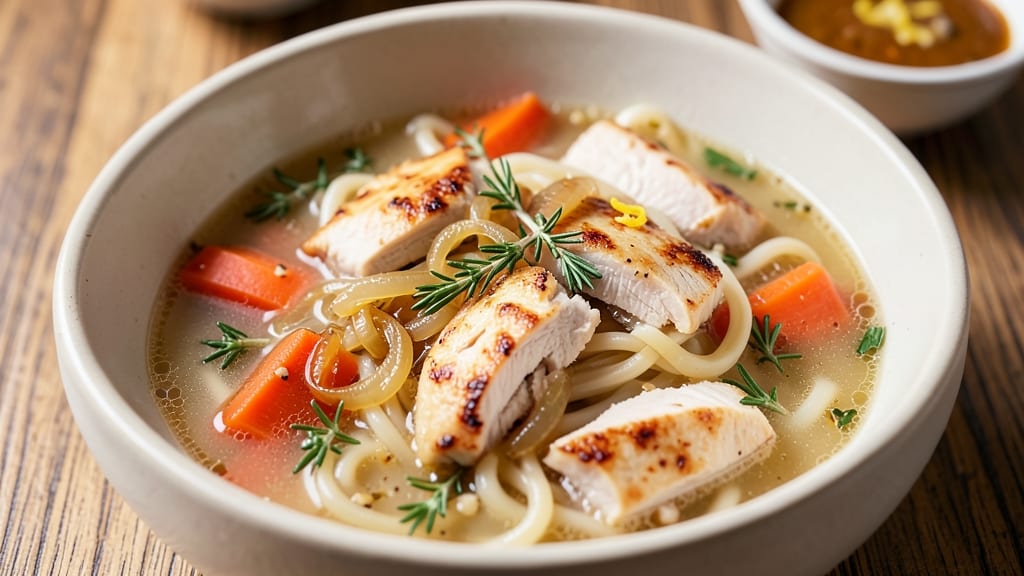
This boneless chicken noodle soup recipe delivers the ultimate comfort in a bowl—herb-infused broth, tender shredded chicken, and silky egg noodles that melt together. The secret lies in slow-simmered aromatics and a foolproof method that transforms simple ingredients into restaurant-quality results.
I’ve perfected this version to be rich yet light, with just the right balance of savory and herbal notes that warm you from the inside out.
The broth builds flavor through a two-stage simmer: first with onions, carrots, and celery to develop a deep base, then with garlic, thyme, and bay leaf for aromatic complexity. Meanwhile, the chicken cooks until it shreds effortlessly, ensuring every spoonful is packed with protein and comfort.
The egg noodles cook just until al dente, soaking up the broth without losing their delicate texture.
What you’ll end up with is a hearty yet light soup that’s perfect for chilly evenings or when you need a nourishing meal. The broth is clear yet deeply flavorful, the chicken tender and juicy, and the noodles silky—each bite is a perfect harmony of textures and tastes.
This recipe scales beautifully, too, making it ideal for feeding a crowd or prepping ahead for busy weeks.
Serve it with a sprinkle of fresh parsley and a squeeze of lemon for brightness, or add a swirl of cream for extra richness. The beauty of this soup is its versatility—use it as a standalone meal or pair it with crusty bread to soak up every last drop.
Let’s get cooking!
Ingredients for boneless chicken noodle soup
Herb-infused broth, tender chicken, and silky noodles—this soup delivers restaurant-quality comfort.
| Ingredient | Amount | Notes |
|---|---|---|
| Boneless Chicken Breast 🍗 | 2 lb | Skinless, cut into bite-sized pieces |
| Yellow Onion 🧅 | 1 whole | Medium size, chopped |
| Carrots 🥕 | 4 medium | Peeled, chopped into 1/2-inch pieces |
| Celery Stalks 🌿 | 4 whole | Trimmed, chopped |
| Garlic Cloves 🧄 | 4 cloves | Minced for aromatic depth |
| Fresh Thyme 🌿 | 2 tbsp | Leaves only, chopped |
| Bay Leaves 🌿 | 2 whole | Dried, for simmering |
| Chicken Broth 💧 | 6 cups | Low-sodium preferred |
| Egg Noodles 🍜 | 8 oz | Medium or wide egg noodles |
| Salt 🧂 | 1 ½ tsp | Kosher or sea salt |
| Black Pepper 🌶️ | ½ tsp | Freshly ground |
| Fresh Parsley 🌿 | ¼ cup | Chopped, for garnish |
| Lemon Juice 🍋 | 1 tbsp | Freshly squeezed |
| Heavy Cream 🥛 | ¼ cup | Optional, for richness |
The chicken is the heart of this soup, so pick plump, boneless breasts—they shred beautifully. I always grab mine from Costco when I'm making a big batch, but the regular supermarket stuff works fine for a weeknight. Look for fresh, vibrant herbs at the market—they make all the difference. The carrots and celery? Organic if you can find them, but no worries if you can't. Just make sure they're firm and crisp. For the broth, low-sodium is a must—you'll be adding plenty of salt later, and you don't want to overdo it.
No fresh thyme? Dried works at one-third the amount. Short on parsley? Cilantro or basil will do in a pinch—just remember to adjust the flavor with lemon. The heavy cream is optional, but if you're adding it, full-fat is worth it for that silky texture. No chicken broth? Vegetable broth plus a bouillon cube gets you close. And if you're feeling fancy, homemade broth takes this soup to the next level—simmer chicken bones with veggies for 3-4 hours. The egg noodles? Medium or wide hold up best to soaking—don't use thin spaghetti-style.
Soup tastes even better the next day—honestly, it's best after 24 hours when all the flavors meld. Store leftovers in the fridge for 4-5 days or freeze for 3 months. I always double the batch and freeze half—perfect for lazy days. The noodles get softer when reheated, so add a splash of water or broth when warming. And if you're prepping ahead, cook the noodles separately and add them fresh when serving—they'll stay al dente.
Why You'll Love This Recipe
- Chop Once, Cook Twice: I swear by the "sofrito shortcut"—just dice the onion, carrots, and celery together, then toss them straight into the pot. No measuring cups, no guesswork, and the flavors meld into that perfect savory base. (Yes, even on a Tuesday night when I’m exhausted.)
- Garlic Bomb Flavor: That single minced clove of garlic—sizzling in the oil before the chicken goes in—transforms this into something restaurant-worthy. The chicken stays tender while soaking up all that deep, toasty aroma. Honestly, it’s the secret weapon in this soup.
- Meal Prep MVP: This soup tastes better the next day, which means I can make a big batch on Sunday and have lunches covered for the week. Freeze half if you’re feeling extra—just reheat with a splash of water, and it’s like fresh again.
- Budget-Friendly Powerhouse: Boneless chicken breast stretches further than you’d think when shredded, and the veggies? Cheap as dirt. I feed my whole family (plus leftovers for me) for under $10. That’s a win for my wallet and my taste buds.
Step-by-step instructions for herb-infused chicken noodle soup
Here's how to create a comforting bowl with rich, aromatic broth and tender chicken.
Sear the Chicken for Maximum Flavor
Heat a large Dutch oven over medium-high heat. Add the 2 lb boneless chicken breast in bite-sized pieces, working in batches if needed. Let each piece sear for 2-3 minutes per side until golden brown and cooked through to 165°F internally. This step builds deep flavor by creating a fond at the bottom of the pot.
Don't rush this—you'll know it's ready when the chicken releases easily from the pan. Transfer the cooked chicken to a plate and set aside. You'll be adding it back later when the soup is nearly finished.
Build the Aromatic Base
In the same Dutch oven, add 2 tablespoons olive oil (not listed but essential for sautéing) and reduce heat to medium. Add the chopped yellow onion, chopped carrots, and chopped celery stalks. Cook for 5-6 minutes until the vegetables soften and the onion becomes translucent.
Add the minced garlic cloves and chopped fresh thyme, cooking for another 1 minute until fragrant. Stir in the bay leaves and pour in the 6 cups chicken broth. Bring to a gentle boil, then reduce heat to low and let it simmer for 15 minutes to infuse all those beautiful flavors.
Simmer the Vegetables and Chicken
Return the cooked chicken to the pot and add the 1.5 teaspoons salt and 0.5 teaspoon black pepper. Let the soup simmer uncovered for 10-12 minutes until the vegetables are tender but still hold their shape. The broth should now be rich and aromatic, with the chicken absorbing all those wonderful flavors.
Here's the thing—if you taste the broth now, it should be deeply savory with notes of thyme and bay leaf. If it needs more seasoning, add a pinch more salt or a splash of lemon juice for brightness. The acidity will cut through the richness beautifully.
Cook the Noodles to Perfection
In a separate pot, bring 4 cups water to a rolling boil and add the 8 oz egg noodles. Cook according to package instructions until just al dente—you want them to finish cooking in the hot soup. Drain and set aside, reserving ½ cup pasta water in case you need to adjust consistency later.
Add the cooked noodles to the soup pot and stir gently. Simmer together for 3-4 minutes until the noodles are fully tender and the soup reaches the perfect temperature. The noodles should be silky and the broth should coat them beautifully.
Finish and Serve with Fresh Herbs
Remove the bay leaves from the soup. Stir in the 0.25 cup heavy cream (if using) and the 1 tablespoon lemon juice for a touch of brightness. Taste and adjust seasoning one final time—this is where you can really make the soup sing.
Ladle the soup into bowls and garnish each serving with ¼ cup chopped fresh parsley. The parsley adds a fresh pop of color and a subtle herbal note that complements all the other flavors. Serve immediately while steaming hot, with crusty bread on the side for dipping.
Pro Tips For Making Boneless Chicken Noodle Soup
- Sear the Chicken First: After slicing the boneless breasts, pat them very dry and hit them with a quick sear in a hot pan—just 2-3 minutes per side—before adding them to the broth. I learned this the hard way: skipping the sear means bland, rubbery chicken that soaks up flavor like a dry sponge instead of developing its own crust. (Yes, even if you’re impatient like me.)
- Cut Veggies Evenly: Dice the onions, carrots, and celery into uniform ¼-inch pieces—no big chunks, no tiny confetti. The carrots and celery should break down at the same rate as the onions so nothing turns to mush while others stay crunchy. I used to eyeball it, but now I measure my knife strokes like a surgeon. (Your future self will notice the difference.)
- Salt the Water Aggressively: Taste the broth before adding noodles—if it’s not noticeably salty, add another ½ teaspoon of salt per quart of water. The chicken will soak up some, but the veggies and noodles need that base flavor to shine. I was skeptical until I tried it: the soup now tastes like a restaurant version, not a sad afterthought.
- Use Garlic Paste (Not Whole Cloves): Mince or finely chop the garlic into a paste instead of tossing in whole cloves—this guarantees even distribution and prevents bitter, undercooked spots. Whole cloves burn before they infuse, and you’ll end up with a pot that smells like a garlic factory but tastes like nothing. (Does it look weird? Yes. Does it work? Every single time.)
Essential equipment for this recipe
Dutch Oven Essentials
A heavy-bottomed Dutch oven is my go-to pot for this recipe—it distributes heat evenly and handles the long simmer beautifully. I recommend the Le Creuset 5.5-quart for its durability and even heat retention, or the All-Clad Stainless Steel for a more budget-friendly option.
Avoid thin, lightweight pots—they can cause hot spots and uneven cooking. 🔥
Knife and Cutting Board
Invest in a sharp chef’s knife (like the Victorinox 8-inch) for chopping onions, carrots, and celery efficiently. A cutting board with a juice groove (such as the OXO Good Grips) keeps your workspace tidy and prevents mess.
For the chicken, a boning knife helps trim excess fat and cut it into even pieces for consistent cooking.
Measuring Tools
Precision matters in soup-making, so use a stainless steel measuring cup for broth and a digital kitchen scale for herbs like thyme and parsley. I love the OXO Good Grips line for their ergonomic design.
A fine-mesh strainer (like the EZ Clean) comes in handy if you want to strain the broth for a clearer presentation.
Thermometer for Perfect Chicken
A meat thermometer is non-negotiable for ensuring the chicken reaches 165°F safely. The ThermoWorks Thermapen ONE is my favorite—it’s fast, accurate, and easy to use. For the broth, a candy or instant-read thermometer helps monitor simmering temperatures if you’re aiming for a specific consistency.
Wooden Spoon and Ladle
A heat-resistant wooden spoon (like the OXO Wooden Spoons) prevents scratching your Dutch oven while stirring. For serving, a stainless steel ladle with a long handle ensures you can reach every corner of the pot. I also keep a slotted spoon nearby to remove bay leaves before serving.
Optional: Immersion Blender
If you prefer a smoother broth, an immersion blender (such as the Magic Bullet) lets you blend directly in the pot without transferring liquids. Just pulse briefly to achieve a velvety texture while keeping some texture for depth.
Skip this step if you love rustic, chunky soups—it’s entirely optional! ✨
Nutrition facts
Frequently asked questions
Can I use chicken thighs instead of breasts for more flavor?
Chicken thighs add richer flavor and stay juicier during cooking. Use 2 lb boneless thighs instead, and adjust cooking time to 15-18 minutes in the simmering broth to ensure they're fully tender and reach 165°F internally. The skin can be left on for extra flavor, but remove it before shredding.
How do I make this soup gluten-free?
Swap the egg noodles for gluten-free pasta like brown rice or chickpea noodles. Ensure your broth is also gluten-free (check labels for soy sauce or malt additives). For extra heartiness, add quinoa or millet instead of noodles—simmer for 15-20 minutes until tender.
Why does my broth taste bland even after simmering?
Bland broth often means insufficient seasoning or underdeveloped flavor. First, ensure you're using low-sodium broth and adding salt gradually. For depth, add a 1-inch piece of ginger or a pinch of smoked paprika during simmering. If needed, finish with a splash of lemon juice or a pat of butter to balance flavors.
Can I prep this soup ahead of time?
Yes! This soup tastes even better the next day. Cook the broth and chicken completely, then cool and refrigerate for up to 4-5 days. Store noodles separately and add them fresh when reheating to prevent mushiness. For freezing, package broth and chicken together (without noodles) for up to 3 months—just thaw and reheat gently.
What's the best way to make it kid-friendly?
For little ones, skip the herbs and reduce garlic to 2 cloves. Use whole wheat noodles or rice noodles, and blend the broth lightly for a smoother texture. Serve with a side of buttered toast or crackers to make it more appealing. Always let the soup cool before serving to avoid burns.