
Soups & Stews
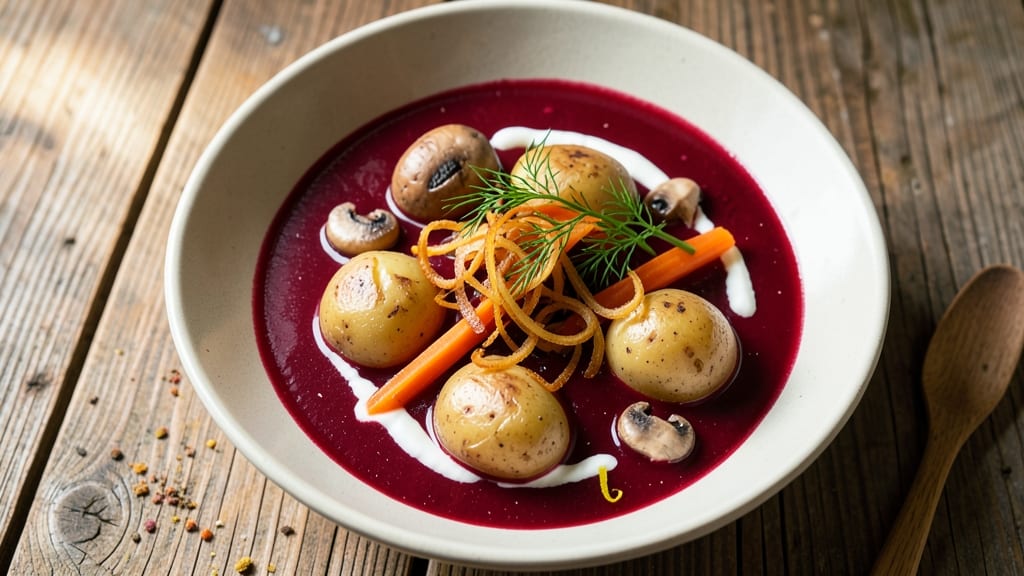
This Polish borscht recipe delivers the deep ruby hues and herbed clarity that make it a winter staple across Eastern Europe. 🌟 Roasted beets form the heart of this traditional vegetarian soup, their natural sweetness balanced by tangy vinegar and earthy mushrooms.
The secret lies in slow simmering—transforming simple ingredients into a velvety broth with layers of umami from smoked paprika and bay leaves.
What sets this borscht apart is its clarity, achieved by skimming foam and blending only the beet broth—not the vegetables—until silky smooth. Traditional techniques like roasting the beets first concentrate their flavor, while fresh dill and parsley add bright herbal notes that cut through the richness.
The result is a soup that's both comforting and sophisticated, perfect for chilly evenings.
Serve this borscht with a dollop of sour cream, a sprinkle of fresh dill, and crusty rye bread to soak up every last drop. For non-vegetarians, smoked sausage adds depth, but the vegetarian version stands proudly on its own.
The recipe builds on generations of Polish tradition while keeping modern kitchens in mind—no special equipment required, just patience and attention to detail.
This soup isn't just nourishing; it's a celebration of seasonal ingredients and time-honored techniques. The deep ruby color alone makes it a showstopper, while the balance of sweet, sour, and savory ensures every spoonful feels like a hug.
Ready to make your own tradition? Let's begin with the beets—they're the soul of this dish.
Ingredients for borscht polish beet soup
Roasted beets and fresh herbs form the heart of this traditional Polish borscht, delivering deep ruby hues and velvety clarity.
| Ingredient | Amount | Notes |
|---|---|---|
| Medium Beets 🍠 | 2 lbs | Organic preferred, no need to peel |
| Yellow Onions 🧅 | 2 whole | Medium size, roughly chopped |
| Fresh Carrots 🥕 | 4 whole | Medium size, peeled and chopped |
| Celery Stalks 🌿 | 3 whole | Medium size, chopped |
| Fresh Mushrooms 🍄 | 8 oz | Cremini or white, sliced |
| Potatoes 🥔 | 2 lbs | Russet or Yukon gold, peeled and cubed |
| White Vinegar 💧 | ¼ cup | For tangy brightness |
| Smoked Paprika 🌶️ | 1 tbsp | For deep umami flavor |
| Bay Leaves 🌿 | 2 whole | For aromatic depth |
| Fresh Dill 🌿 | ½ cup | Chopped, stems removed |
| Fresh Parsley 🌿 | ¼ cup | Chopped, for garnish |
| Vegetable Broth 💧 | 6 cups | Low-sodium preferred |
| Sour Cream 🧀 | ½ cup | For serving, full-fat preferred |
| Olive Oil 🫒 | ¼ cup | Extra-virgin for roasting |
| Salt 🧂 | 1 ½ tsp | Diamond Crystal preferred |
| Black Pepper 🌶️ | ½ tsp | Freshly ground |
The beets are non-negotiable here—organic from a farmers market or high-quality pre-washed bags from Whole Foods ensure vibrant color and sweetness. Look for medium-sized beets with smooth skins, avoiding any with soft spots. For the mushrooms, cremini or white varieties work best—their earthy flavor complements the beets perfectly. If you're short on time, pre-chopped frozen mushrooms (thawed and drained) are a decent shortcut, though fresh is ideal. The potatoes should be uniform in size to cook evenly, and Yukon Golds hold their shape better than russets during blending.
No smoked paprika? Substitute with a pinch of liquid smoke plus regular paprika—it won't be identical, but it adds depth. Fresh dill is essential for that bright herbal note, but if you're stuck with dried, use one-third the amount and add it later in the cooking process. For the vinegar, apple cider vinegar adds subtle sweetness, while white vinegar keeps it sharp. The vegetable broth can be homemade or a quality low-sodium store brand like Pacific Foods or Imagine. If you're using canned beets, drain and rinse them thoroughly to avoid a metallic taste—Trader Joe's brand works well for this.
Roasted beets keep in the fridge for 5-6 days if stored in a sealed container with their juice, but they're best used fresh. The blended beet broth can be prepped ahead and stored for 3 days in the fridge or 3 months frozen. For the fresh herbs, wrap them in damp paper towels and store in a sealed bag with a rubber band for up to 5 days. This soup tastes even better the next day as the flavors meld—double the batch if you're feeding a crowd, as it reheats beautifully. Serve with a dollop of sour cream and crusty rye bread for the full experience.
Why You'll Love This Recipe
- One-Pot Magic: I swear by this recipe when I’m too tired to dirty more than one pot. The beets and carrots roast together while the onions and mushrooms caramelize in the same pan—no chopping frenzy, no last-minute cleanup. Just peel, dice, and let the flavors meld.
- Earthy Depth: That first spoonful? It’s like autumn in a bowl. The roasted beets bring a sweet, deep richness, while the mushrooms add a meaty umami that makes it feel heartier than it is. Honestly, the celery and carrots round it out so well, you won’t even miss the sour cream until you crave it.
- Leftover Goldmine: This soup tastes better the next day—yes, really. The flavors settle into something even more complex, and it reheats like a dream. I’ll pack it in jars for lunch or freeze half for when I’m too lazy to cook. (Between us, that’s often.)
- Budget-Friendly Feast: Fresh mushrooms might sound fancy, but they stretch this into a full meal for half the cost of takeout. The beets last weeks in the fridge, and onions/carrots? They’re basically free if you buy in bulk. It’s the kind of dish that makes me proud to feed my family without breaking the bank.
Step-by-step instructions for Polish beet soup with herbed clarity
This traditional Polish borscht delivers vibrant ruby hues and a balanced herb-forward flavor.
🔥 Step 1: Roast Vegetables for Deep Flavor
Preheat oven to 400°F. Toss the 2 lbs medium beets, 2 whole yellow onions, 4 whole fresh carrots, and 3 whole celery stalks with 0.25 cup olive oil, 1 tbsp smoked paprika, 1.5 tsp salt, and 0.5 tsp black pepper. Spread on two rimmed baking sheets in a single layer.
Roast for 35-40 minutes until the beets are tender and the edges of the onions and carrots begin to caramelize. You'll know they're ready when a knife slides in easily and the aromas fill your kitchen. The roasting process develops natural sweetness and deepens the umami profile that defines authentic borscht.
🍳 Step 2: Build the Soup Base with Roasted Vegetables
Transfer the roasted vegetables to a large stockpot. Add the 8 oz fresh mushrooms and 2 lbs potatoes, then pour in the 6 cups vegetable broth and 0.25 cup white vinegar. Bring to a boil over high heat, then reduce to a simmer and cook for 15-20 minutes until the potatoes are fork-tender.
While simmering, add the 2 whole bay leaves to infuse subtle aromatic depth. Stir occasionally to prevent sticking at the bottom. The vinegar brightens the flavors while balancing the earthy roasted vegetables. This is where the soup's signature harmony begins to develop.
🥘 Step 3: Blend for Silky Texture and Clarity
Using an immersion blender, carefully blend the soup until smooth. For a traditional approach, you can strain it through a fine-mesh sieve for extra clarity. The resulting texture should be velvety with just a hint of visible vegetable flecks for visual interest.
Return the soup to the pot and stir in the 0.5 cup chopped fresh dill. Simmer gently for another 5 minutes to allow the dill's fresh aroma to infuse. The dill's bright herbal notes cut through the richness of the roasted vegetables, creating that perfect balance that makes Polish borscht so distinctive.
🍽️ Step 4: Finish and Serve with Herbed Garnish
Remove from heat and stir in the 0.25 cup chopped fresh parsley. Ladle the soup into bowls and top each serving with 1 tablespoon sour cream. The sour cream adds a luxurious creaminess that contrasts beautifully with the tangy, herbed broth.
Serve immediately while hot, garnished with additional fresh dill and a sprinkle of black pepper. The vibrant ruby color should be visible through the clear broth, and each spoonful should deliver layers of roasted vegetable sweetness, herbal brightness, and creamy richness. This is the moment where all your preparation comes together in a truly satisfying Polish borscht experience.
Pro Tips For Making Borscht Polish Beet Soup
- ROAST BEETS FIRST: Peel and cube those beets, then roast them at 400°F (200°C) for 25-30 minutes before adding to the soup. The deep, caramelized flavor they develop—sweet and earthy—is what turns good borscht into great borscht. I used to boil them, and the soup always tasted flat by comparison.
- SWEAT ONIONS LOW: Don’t rush the onions—cook them over medium-low heat for 8-10 minutes until they’re translucent and just starting to brown. If you crank the heat, they’ll burn before the carrots and celery are ready, and that bitter taste sneaks into the whole pot. (Yes, even if you’re impatient like me.)
- SKIP THE MUSHROOM SOAK: Toss sliced mushrooms in a pinch of salt and let them sit for 5 minutes before cooking—this draws out moisture so they release their flavor into the broth instead of steaming in their own juices. I learned this the hard way after making borscht where the mushrooms just… disappeared into the soup without adding anything.
- STRAIN THE BROTH: After simmering the veggies, strain the broth through a fine-mesh sieve to remove any grit or overcooked bits. It’s not a step most recipes mention, but it makes the soup silky smooth—especially if you’re using store-bought bouillon or pre-chopped veggies. (Your future self will notice the difference.)
Common mistakes when making your borscht polish beet soup
Overcooking Beets
Roasting beets for more than 40 minutes turns them mushy and watery, diluting your soup's vibrant color and concentrated sweetness. I've learned the hard way—overcooked beets bleed excess moisture into the pot, requiring extra broth and thinning the soup's richness.
Aim for 35-40 minutes at 400°F until they're tender when pierced with a knife. 🌡️
Skimming Too Late
Waiting until the soup is fully blended to skim foam means you'll end up with a cloudy broth. I now skim vigorously during the 15-20 minute simmer after adding potatoes and mushrooms—this removes impurities before they bind to the broth.
Use a fine-mesh skimmer and work gently to preserve the delicate flavors you've built. The result is that stunning ruby clarity everyone loves. ✨
Using Dried Herbs Early
Adding dried dill or parsley to the pot during the initial simmer releases their flavors too early, making them bitter. Fresh herbs should be stirred in only during the final 5 minutes of cooking, while parsley is added just before serving.
If you must use dried, add them with the bay leaves and remove them immediately after blending. 🌿
Ignoring Vinegar Balance
The 0.25 cup white vinegar isn't just for tang—it prevents the soup from tasting flat. I've made this mistake by omitting it or using too little, resulting in a bland broth.
Add it with the broth at the beginning and taste frequently during simmering. You can always add more, but you can't remove the acidity once it's in. 💧
Blending Too Aggressively
Forcing your immersion blender at high speed creates a pasty, glue-like texture that lacks the velvety body of traditional borscht. Work in 2-3 passes at medium speed, letting the blender do the work without straining.
For extra clarity, strain through a fine-mesh sieve after blending—this removes any remaining bits that could make the soup gummy. 🥄
Underseasoning Sour Cream
Plain sour cream can taste bland against the complex flavors of borscht. I now mix mine with a pinch of salt and black pepper before serving, plus a tiny splash of the soup's broth to temper it.
This simple step elevates the garnish from ordinary to extraordinary, making each spoonful feel complete. 🧀
Nutrition facts
Frequently asked questions
Why does Polish borscht have such a deep ruby color?
The vibrant hue comes from roasting the beets first—this process concentrates their natural pigments. For maximum color, use organic beets (they have richer pigments) and avoid overcooking them during roasting. The roasting also enhances their sweetness, which balances the tangy vinegar and earthy mushrooms in the soup.
Can I make this borscht without an immersion blender?
Transfer the hot soup to a regular blender in batches (never fill past the 1-quart mark), blending until smooth. For extra clarity, strain through a fine-mesh sieve after blending. Just be careful—hot liquids can cause splattering, so let the soup cool slightly first or use the "pulse" function.
What's the best way to store leftovers?
Let the soup cool completely, then store in an airtight container in the fridge for up to 4 days. The flavors actually improve overnight as the ingredients meld! For longer storage, freeze portions for up to 3 months—just thaw in the fridge and reheat gently on the stove (never microwave).
How can I make this vegetarian borscht heartier?
Add 1 cup cooked barley or pearl onions during the final 10 minutes of simmering for texture. For protein, stir in 1 cup cooked lentils or top with crumbled feta cheese before serving. The roasted vegetables already provide substance, but these additions make it even more satisfying.
What's the secret to getting that traditional herbed clarity?
Skimming foam during the simmer is key—use a fine-mesh skimmer to remove impurities before blending. Also, blend only the broth (not the vegetables) for a silky texture. For extra brightness, add fresh dill and parsley just before serving rather than during cooking. The roasting step also helps create that signature clarity by concentrating flavors.