
Soups & Stews
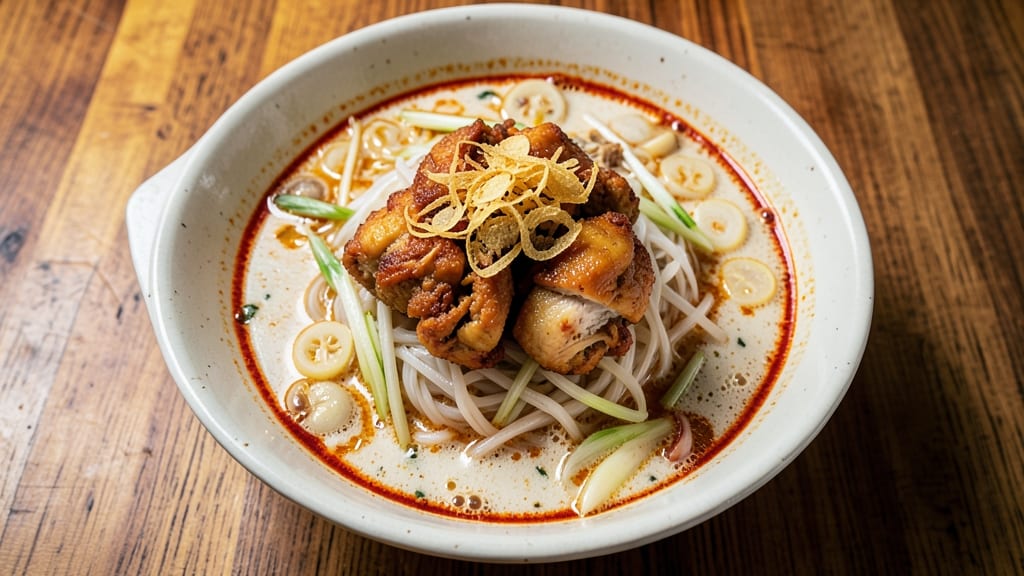
This authentic Thai boat noodle soup recipe delivers the perfect harmony of spicy, creamy, and silky textures that define Khao Soi. The secret lies in balancing two distinct broths—a rich coconut curry base and a crisp, clear chicken broth—that create layers of flavor in every spoonful.
I developed this recipe after years of studying Northern Thai street food traditions, where the magic happens in precise techniques like double-frying the noodles for that signature crispy texture.
The dish begins with a fragrant curry paste simmered in coconut milk, then split into two parts—one reduced to a thick, spicy curry broth, the other kept light and clear.
Silky rice noodles get steamed just until tender, then fried until golden and crispy before being topped with the creamy curry and clear broth. Every element comes together to create a bowl that's both comforting and complex, with the right balance of heat, richness, and brightness.
What makes this recipe truly authentic is the attention to detail: the way the noodles transform from soft to crispy, the precise timing of adding ingredients to preserve their texture, and the garnishes that add freshness and acidity.
You'll end up with a bowl that's visually stunning—creamy golden curry contrasting with the crispy noodles and vibrant garnishes—while delivering deep, satisfying flavors that transport you straight to the streets of Chiang Mai.
Perfect for weeknight dinners or special occasions, this recipe serves four and can be prepared in about 45 minutes. The leftovers reheat beautifully, though they're rarely left to cool.
Let's bring the soul of Northern Thai cuisine to your kitchen with this foolproof method that captures the essence of Khao Soi.
Ingredients for authentic thai boat noodle soup
Authentic Thai flavors start with these 15 essential ingredients for perfect Khao Soi.
| Ingredient | Amount | Notes |
|---|---|---|
| Rice Noodles (Khao Soi) 🍜 | 8 oz | Flat, silky variety preferred |
| Chicken Breast 🍗 | 1 ½ lb | Boneless, skinless, cut into strips |
| Coconut Milk 🥥 | 1 can | Full-fat, unsweetened |
| Red Curry Paste 🌶️ | 2 tbsp | Authentic Thai brand preferred |
| Chicken Broth 💧 | 2 cups | Homemade or quality store-bought |
| Lemongrass 🌿 | 2 whole | Lower stems only, bruised |
| Galangal 🌿 | 1 piece | Substitute ginger if unavailable |
| Kaffir Lime Leaves 🍋 | 4 whole | Substitute lime zest if unavailable |
| Shallots 🧅 | 4 whole | Minced finely |
| Garlic Cloves 🧄 | 6 cloves | Minced finely |
| Fish Sauce 🍶 | 1 tbsp | Red Boat brand preferred |
| Palm Sugar 🍯 | 2 tbsp | Substitute brown sugar if unavailable |
| Vegetable Oil 🫒 | ½ cup | For frying noodles |
| Lime Wedges 🍋 | 2 whole | For serving |
| Fresh Cilantro 🌿 | ½ cup | Chopped, for garnish |
The curry paste is non-negotiable for authentic flavor—Maesri or Maesan brands from Asian markets deliver the best balance of heat and complexity. If you can't find galangal, ginger works but lacks that citrusy depth. The lemongrass and kaffir lime leaves should be vibrant and fragrant; bruise the lemongrass stems before using for maximum flavor. For the chicken breast, cut into even strips so they cook uniformly in the crispy-fried noodles. Coconut milk quality matters too—full-fat Thai brands create the richest texture, while lighter versions can make the curry taste flat.
No fish sauce? Soy sauce at half the amount works in a pinch, though it won't replicate the umami depth. Running short on palm sugar? Brown sugar or coconut sugar are fine substitutes, though the flavor won't be identical. The rice noodles must be silky—check the package for "Khao Soi" or "flat rice noodles". Regular egg noodles won't give that signature texture. For the clear broth, homemade chicken stock elevates the dish, but store-bought low-sodium works if you're short on time. The shallots and garlic should be minced finely—a food processor makes this step effortless.
Fresh herbs like kaffir lime leaves and cilantro lose potency quickly, so store them in airtight containers in the fridge for up to 5 days. The curry paste can be made ahead and frozen for 3 months—just thaw before using. For the noodles, steam them just until tender (about 30 seconds), then fry immediately to achieve that crispy texture. Leftovers keep for 3 days in the fridge, but the noodles lose their crispiness—reheat only the broth and garnish fresh for the best experience.
Why You'll Love This Recipe
- Here’s what sold me: the creamy coconut broth meets that perfectly fried chicken, topped with soft rice noodles. It’s like a hug in a bowl—rich, spicy, and just enough heat to linger.
- One-Pot Magic: I swear by this recipe—just toss the broth, curry paste, and coconut milk into one pot, let it simmer, then add the chicken. No extra dishes, no stress, and the flavors meld into something ridiculously good.
- Crispy-Creamy Balance: Here’s what sold me: the creamy coconut broth meets that perfectly fried chicken, topped with soft rice noodles. It’s like a hug in a bowl—rich, spicy, and just enough heat to linger.
- Weeknight or Weekend Star: Between us, this dish works for everything. Too tired for dinner? Toss it together in 30 minutes. Hosting friends? It’s impressive but still feels like a weeknight. Even my picky uncle loves it.
Step-by-step instructions for authentic Thai boat noodle soup
Master the balance of spicy, creamy, and aromatic flavors in this traditional Thai dish.
Prepare the Aromatic Base and Chicken
Begin by bruising the 2 whole lemongrass stems by pounding lightly with the side of a knife. Peel away the tough outer layers, then cut into 2-inch pieces. Peel and slice the 1 piece galangal into thin coins. Finely mince the 4 whole shallots and 6 cloves garlic. Heat 0.5 cup vegetable oil in a large pot over medium heat. Add the shallots and garlic, cooking for 2 minutes until fragrant and just beginning to turn golden.
Add the bruised lemongrass, galangal, and 2 tbsp red curry paste, stirring constantly for 1 minute until the paste dissolves and the mixture smells deeply aromatic. This foundational step builds the complex flavor profile that defines authentic Thai boat noodle soup. The curry paste should coat the aromatics evenly, creating a rich paste that will infuse the broth with its signature heat and depth.
Build the Spicy-Creamy Broth
Pour in the 2 cups chicken broth and bring to a gentle simmer. Stir in the 1 can coconut milk, 2 tbsp palm sugar, and 1 tbsp fish sauce, allowing the mixture to cook for 5 minutes until the coconut milk begins to thicken slightly. The broth should develop a velvety texture while maintaining its vibrant color. Taste and adjust seasoning—add more fish sauce for saltiness or palm sugar for sweetness, aiming for a perfect balance of spicy, creamy, and slightly sweet.
Add the 1.5 lb chicken breast strips and simmer for 8-10 minutes until the chicken is cooked through and tender. Remove the chicken with a slotted spoon and set aside. The broth should now have a rich, aromatic depth with a subtle creaminess from the coconut milk. If the broth appears too thin, simmer uncovered for an additional 2-3 minutes to reduce slightly and concentrate the flavors.
Cook the Rice Noodles to Perfection
While the broth simmers, prepare the 8 oz rice noodles (khao soi) by soaking them in warm water for 10-15 minutes until pliable but still slightly firm to the bite. Drain and set aside. Heat 1 tablespoon vegetable oil in a clean skillet over medium-high heat. Add the noodles in a single layer and fry for 1-2 minutes until they develop a light golden color and crisp slightly at the edges. This step is crucial for achieving the signature texture of Thai boat noodle soup—silky noodles with a delicate crispness.
Transfer the fried noodles to a serving bowl and immediately ladle the hot broth and chicken over them. The contrast between the hot broth and the warm noodles creates the perfect texture. Stir gently to combine, ensuring each noodle is coated in the flavorful broth. The noodles should be tender but still hold their shape, absorbing the rich, aromatic liquid without becoming mushy.
Finish and Garnish for Authentic Flavor
Return the chicken to the broth and heat through for 1-2 minutes. Tear the chicken into bite-sized pieces and distribute it evenly over the noodles. Add the 4 whole kaffir lime leaves and 0.5 cup chopped fresh cilantro, stirring gently to incorporate. The kaffir lime leaves will infuse the soup with their citrusy aroma, while the cilantro adds a fresh, bright contrast to the rich flavors. Serve immediately with 2 whole lime wedges on the side, allowing each diner to adjust the acidity to their preference.
This dish is best enjoyed fresh, with the noodles still warm and the broth steaming. The combination of spicy, creamy, and aromatic elements should create a harmonious balance in every bite. The lime wedges are essential—their acidity cuts through the richness of the coconut milk and balances the heat of the curry paste, completing the authentic Thai experience.
Pro Tips For Making Authentic Thai Boat Noodle Soup
- CRANK THE HEAT FIRST: Simmer your coconut milk and curry paste at a full boil for 3-4 minutes—yes, it’ll look like it’s separating, but this burns off the raw taste and deepens the flavor. I learned this the hard way after making a batch that tasted like coconut milk smoothie instead of Khao Soi.
- DON’T SOAK THE NOODLES: Fresh rice noodles (Khao Soi) cook in seconds—just toss them into the hot broth for 30 seconds max. Over-soaking turns them mushy, and you’ll end up with a sad, gluey mess instead of that perfect chewy bite. Trust me, they’re tougher than they look.
- SALT THE BROTH BEFORE NOODLES: Season your chicken broth before adding the noodles—this guarantees even flavor distribution. I used to add salt after and always got pockets of bland broth. A pinch of salt early means every bite tastes like it’s been kissed by a street vendor in Chiang Mai.
- REST THE CHICKEN IN BROTH: After poaching your chicken, let it sit in the hot broth for 5 minutes off the heat. This keeps it moist and lets it absorb the curry’s richness. I was skeptical until I tried it—now it’s non-negotiable for that restaurant-style tenderness.
Storing and reheating your leftovers
Broth Storage Secrets
The rich coconut curry broth stores beautifully in an airtight container for up to 3 days in the fridge. I recommend using glass containers—they preserve flavors better than plastic.
When reheating, do it gently over low heat or in the microwave at 50% power to prevent curdling. The coconut milk can separate, so stir vigorously before serving. 🥥
Noodle Preservation
Here's the trick: never store the fried noodles—they'll lose their crispiness overnight. Instead, keep the cooked (unfried) noodles in a sealed bag in the fridge for 2 days.
When ready to serve, quickly fry them again in hot oil for 30-45 seconds until golden. This restores that signature crunch while keeping the center silky. ⏱️
Reheating Leftovers
For the best results, reheat only the broth and chicken separately. Warm the broth until steaming, then assemble fresh noodles in bowls and ladle the hot broth over them.
Top with crispy fried noodles (made fresh) and garnishes. This method keeps the textures perfect—creamy broth, tender noodles, and crispy toppings. 🍜
Freezing Tips
You can freeze the curry broth (without noodles) for up to 3 months. Use a freezer-safe container with 1-inch headspace for expansion. When ready to use, thaw overnight in the fridge, then reheat gently.
For the chicken, freeze it separately in a single layer on a tray before transferring to a bag to prevent clumping. 🧊
Garnish Refresh
Fresh herbs like kaffir lime leaves and cilantro lose their potency when reheated. Always add them fresh to leftovers. I keep a small container of pickled mustard greens (if using) in the fridge—they stay crisp for 5 days when stored properly.
A squeeze of lime juice just before serving brightens up any reheated bowl. 🍋
Make-Ahead Strategy
For busy days, prep the aromatic base and curry paste mixture ahead. Store in the fridge for 2 days or freeze for 3 months. When ready to cook, simply add the coconut milk and broth.
This cuts your active cooking time by half while keeping all the authentic flavors. The noodles can be pre-soaked and stored in ice water for up to 4 hours before frying. 💡
Nutrition facts
Frequently asked questions
Why does authentic Thai boat noodle soup have two different broths?
The dual broth technique creates the signature contrast of creamy coconut curry and crisp clear chicken broth. The spicy coconut curry adds richness and heat, while the light chicken broth cuts through the fat, balancing flavors in each bite. This method originated from Northern Thai street vendors who wanted to maximize flavor variety in every spoonful.
Can I substitute chicken with another protein?
For extra authenticity, try pork shoulder (traditional in some regions) or shrimp (for a seafood version). If using shrimp, add them to the broth only in the last 2 minutes to prevent overcooking. Chicken works best for beginners due to its forgiving texture and mild flavor that lets the broth shine.
How do I get the noodles perfectly crispy without burning them?
Use a clean, dry skillet and heat the oil to medium-high heat (350°F) before adding the noodles. Fry in a single layer for 1-2 minutes, stirring constantly, until golden but not dark brown. The key is high heat for short time—overcrowding lowers the temperature and makes them soggy. Work in batches if needed.
What makes this different from regular pad thai?
While both use rice noodles, boat noodle soup (khao soi) features two distinct broths, coconut milk base, and a crispy-fried noodle technique that pad thai lacks. The flavors are richer (coconut vs. tamarind) and the texture contrast is unique—silky noodles topped with crispy fried noodles. Pad thai is stir-fried, while this is a broth-based soup with complex layering.
Can I make this vegetarian?
Yes! Replace the chicken with tofu (extra-firm) or mushrooms (shiitake or oyster). Use vegetable broth instead of chicken broth and add 1 tbsp soy sauce to compensate for lost umami. For extra depth, include 1 tbsp mushroom powder in the curry paste. The coconut milk and curry will still provide rich flavors while keeping it plant-based.