
Soups & Stews
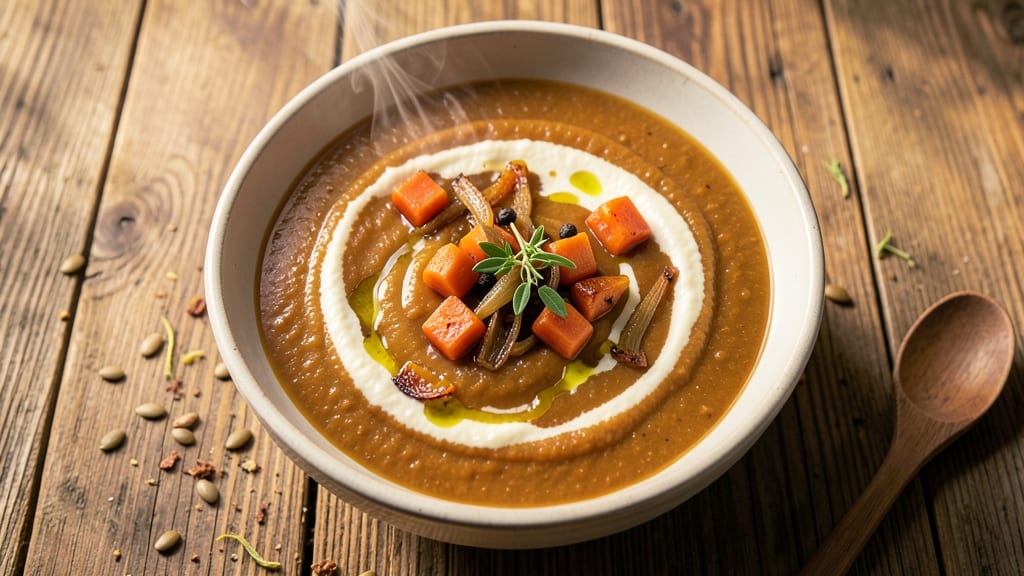
This baked acorn squash soup recipe transforms humble ingredients into a velvety masterpiece with roasted caramelized edges and creamy depth that lingers long after the last spoonful.
The secret lies in roasting the squash until the edges turn golden and sweet—this caramelization builds natural richness that no added sugar can replicate. I developed this version after years of testing, ensuring every bite delivers that perfect balance of earthy squash and velvety texture without overpowering creaminess.
The process begins with roasting whole squash halves until tender, then scooping out the flesh to create a purée with intense sweetness and complex flavor. Sautéing aromatic vegetables and spices in olive oil forms the flavor base, while vegetable broth deepens the soup's body.
For an extra layer of sophistication, I recommend finishing with a touch of coconut milk or a drizzle of cream—just enough to enhance without masking the squash's natural character.
What makes this recipe truly special is its adaptability. The base purée works beautifully as a standalone vegan dish, while optional additions like toasted pumpkin seeds, fresh herbs, or a swirl of cream allow you to customize it for any preference.
The roasting technique ensures maximum flavor extraction, while the blending process creates that signature silky smooth texture that's both comforting and elegant.
Perfect for chilly evenings or cozy gatherings, this soup scales effortlessly from single servings to crowd-pleasing batches. The aroma alone will fill your kitchen with warmth, and the first taste will confirm why this has become my go-to recipe for autumn.
Ready to create something extraordinary with simple ingredients? Let's begin with the roasting process that sets the foundation for everything that follows.
Ingredients for baked squash soup
Roasted squash meets aromatic vegetables and warming spices to create this velvety masterpiece.
| Ingredient | Amount | Notes |
|---|---|---|
| Acorn Squash 🎃 | 2 medium | Halved, seeds removed |
| Vegetable Broth 💧 | 4 cups | Low-sodium preferred |
| Yellow Onion 🧅 | 1 whole | Diced, medium size |
| Garlic Cloves 🧄 | 4 cloves | Peeled, minced |
| Carrots 🥕 | 2 medium | Peeled, chopped |
| Extra-Virgin Olive Oil 🫒 | ¼ cup | For roasting and sautéing |
| Fresh Thyme Leaves 🌿 | ¼ cup | Or 1 tbsp dried thyme |
| Ground Cinnamon 🌶️ | ½ tsp | Enhances natural sweetness |
| Ground Nutmeg 🌶️ | ¼ tsp | Freshly grated preferred |
| Salt 🧂 | 1 tsp | Diamond Crystal preferred |
| Black Pepper 🌶️ | ½ tsp | Freshly cracked |
| Coconut Milk 🥥 | ½ cup | Full-fat for creaminess |
| Pumpkin Seeds 🥜 | ¼ cup | Toasted for garnish |
Acorn squash is the heart of this recipe—choose firm, heavy squash with no soft spots. Whole Foods or local farmers markets often carry the best quality, but any grocery store's produce section will work. The roasting process transforms its natural sweetness into caramelized depth, so don't skip this step. For optimal flavor, roast the squash until edges are deeply golden and flesh easily yields to a fork. If using pre-cut squash, opt for organic varieties to minimize pesticide residue. The carrots should be medium-sized for even cooking, while the onion and garlic form the aromatic base that elevates the entire dish.
No acorn squash? Butternut squash works beautifully—adjust roasting time as needed since its texture differs slightly. Fresh thyme is ideal, but dried thyme at one-third the amount works in a pinch. For extra richness, coconut cream instead of milk adds luxurious texture. The pumpkin seeds can be swapped for pecans or walnuts if preferred. When sautéing the vegetables, low and slow prevents burning—this is where the foundation of flavor develops. If your broth tastes flat, add a pinch of miso paste for umami depth without overpowering the natural sweetness of the squash.
Roasted squash flesh keeps for 3 days refrigerated before puréeing, though fresh is always best. The finished soup maintains its velvety texture for 4-5 days refrigerated or 3 months frozen. For best results, store in airtight containers with a thin layer of water on top to preserve freshness. The pumpkin seeds toast best in a dry skillet over medium heat for 3-4 minutes—watch closely to prevent burning. This soup reheats beautifully; simply warm on the stove with a splash of broth to restore its creamy consistency.
Why You'll Love This Recipe
- Foolproof Roast: I swear, the oven does all the work here—just halve the squash, toss it with olive oil, and let it caramelize while you chop the onions. No blender drama, no waiting for water to boil over.
- Sweet-Savory Magic: That roasted acorn squash? It turns into this honeyed, velvety base that plays perfectly with the sharp garlic and earthy broth. Honestly, the first spoonful makes me question why I ever bought canned soup.
- Double-Duty Dish: Make a big batch on Sunday—it reheats like a dream for lunches, freezes beautifully for busy nights, or even turns into a cozy crockpot meal with a splash of coconut milk. (Yes, even on a Tuesday night.)
- Budget Warmth: A single acorn squash and a bag of carrots stretch into four servings, and the broth? You can use whatever’s in your pantry. It’s the kind of recipe that makes me feel like I’m feeding a crowd without breaking the bank.
Step-by-step instructions for baked acorn squash soup
Transform humble acorn squash into velvety, caramelized soup with this precise roasting and blending technique.
🔥 Step 1: Roast the Squash Until Caramelized
Preheat your oven to 400°F and position oven racks to maximize even roasting. Cut the acorn squash in half lengthwise, scoop out seeds, and brush the flesh generously with 0.25 cup extra-virgin olive oil. Sprinkle the cut sides with 0.5 tsp salt, 0.5 tsp black pepper, and 0.25 tsp ground nutmeg. Place cut-side down on a parchment-lined baking sheet.
Roast for 40-45 minutes until the flesh is fork-tender and the edges are deeply caramelized to a golden brown. You'll know it's ready when the squash releases easily from the skin and the aroma fills your kitchen with sweet, earthy notes. Let cool slightly before scraping the flesh into a large pot—this makes it easier to handle and prevents scorching when blending.
🍳 Step 2: Build the Flavor Base with Aromatics
In the same pot with the roasted squash, add the diced yellow onion, chopped carrots, and minced garlic cloves. Stir in 0.5 tsp ground cinnamon and 0.25 cup fresh thyme leaves. Cook over medium heat for 8-10 minutes, stirring occasionally, until the vegetables soften and the onions become translucent.
This step develops the soup's depth of flavor through the Maillard reaction. The cinnamon and thyme infuse the vegetables while the onions caramelize slightly, creating a complex foundation. If the mixture sticks to the pot, add 2 tablespoons of the vegetable broth to deglaze and prevent burning.
🥘 Step 3: Simmer the Soup to Perfect Consistency
Pour in the 4 cups vegetable broth and bring to a gentle boil. Reduce heat to medium-low and let simmer uncovered for 15-20 minutes, stirring occasionally. The soup should reduce slightly, allowing the flavors to meld and the natural sweetness of the squash to emerge.
Taste the soup at this stage—it should be rich and flavorful, but still have room for the coconut milk. If you find it needs more depth, add a pinch of salt or a splash more broth. The goal is to achieve a balanced flavor profile where the caramelized sweetness of the squash shines through without being overpowered by spices.
🍽️ Step 4: Blend and Finish with Creamy Texture
Using an immersion blender, blend the soup directly in the pot until completely smooth. For a perfectly creamy texture, stir in the 0.5 cup coconut milk and simmer for an additional 5 minutes to allow the flavors to integrate. If the soup is too thick, thin it with more broth 1 tablespoon at a time until it reaches your desired consistency.
Season with additional salt and pepper if needed, then taste again. The coconut milk should add a luxurious creaminess while maintaining the soup's natural sweetness. For a refined presentation, strain the soup through a fine-mesh sieve to remove any remaining fibrous bits, though this step is optional for a rustic texture.
🔪 Step 5: Garnish and Serve Warm
Ladle the soup into bowls and garnish each serving with 1 tablespoon toasted pumpkin seeds. To toast the seeds, heat a dry skillet over medium heat and cook the seeds for 3-4 minutes, stirring constantly, until they're golden brown and fragrant. Their nutty crunch contrasts beautifully with the smooth, creamy soup.
Serve immediately while warm, as the flavors continue to develop and the texture remains velvety. This soup pairs exceptionally well with crusty bread or a simple green salad. The roasted caramelization and creamy depth make it a sophisticated yet approachable dish that's perfect for any season.
Pro Tips For Making Baked Squash Soup
- ROAST SQUASH FIRST: Cut acorn squash into wedges, brush with oil, and roast at 400°F (200°C) for 25-30 minutes before blending—it caramelizes the edges and makes the soup taste deeper. I used to skip this and ended up with bland, watery purée every time.
- PEEL GARLIC IN ADVANCE: Peel and smash your garlic cloves with the flat side of your knife before adding them to the pot. It releases more flavor faster and avoids those stubborn cloves that refuse to break down. (Yes, even if you’re impatient like me.)
- SAVE THE BROTH WATER: Strain your vegetable broth after simmering with onions and carrots—skip the pulp, but reserve the cooking liquid. It’s the secret to a silky texture without thinning the soup with extra water later.
- SALT THE BROTH LATE: Wait until the very end to season the soup with salt, especially if using low-sodium broth. Taste first—roasted squash is naturally sweet, and you’ll need less salt than you think. Trust me, your soup won’t be boring.
Serving suggestions for this baked squash soup
Bread Pairings
This soup's velvety texture and caramelized sweetness pairs perfectly with crusty sourdough or baguette slices. The dense, chewy texture of sourdough soaks up the rich broth beautifully, while baguette adds an elegant touch.
For extra flavor, brush bread with garlic-infused olive oil before serving—it enhances the soup's aromatic profile. 🥖
Herb Garnishes
Fresh thyme sprigs or chopped parsley add a vibrant pop of color and bright, herbal notes that cut through the soup's richness. I like to sprinkle 1 tablespoon chopped parsley per bowl just before serving, as it adds freshness without overpowering the caramelized squash flavors.
For a more robust garnish, try micro cilantro or basil leaves for a modern twist.
Crunchy Toppings
Toasted pumpkin seeds (as in the recipe) or crumbled bacon (for non-vegetarian versions) provide essential texture contrast. For a nutty alternative, try toasted pecans or walnuts—they add depth and crunch. I recommend toasting nuts in a dry skillet over medium heat for 3-4 minutes until golden and fragrant. 🥜
Drizzle Finishes
A light drizzle of extra-virgin olive oil or chili crisp elevates the dish to restaurant-quality. For extra richness, try 1 teaspoon of coconut cream swirled on top, or a dash of hot honey for a sweet-spicy contrast.
The key is to use just enough to enhance, not overpower, the soup's natural flavors.
Side Dish Pairings
Serve alongside a simple arugula salad with lemon vinaigrette for a refreshing contrast. The peppery bite of arugula complements the soup's sweetness beautifully. For a heartier option, roasted Brussels sprouts or crispy kale chips add satisfying texture and nutritional balance. Both sides work well with the soup's autumnal flavors.
Warm Spiced Accompaniments
Warm spiced applesauce or pear compote makes an unexpected but delicious pairing. The natural sweetness and warm spices echo the soup's caramelized notes while adding a fruity contrast.
For a savory option, crispy fried shallots add a delicate crunch and subtle onion flavor that ties back to the soup's aromatic base. 🍎
Nutrition facts
Frequently asked questions
Can I use butternut squash instead of acorn squash?
Butternut squash works beautifully—just adjust the roasting time since its texture differs slightly. Roast at 400°F for 30-35 minutes (instead of 40-45 minutes for acorn) until tender. The natural sweetness will still caramelize wonderfully, though butternut has a slightly nuttier flavor profile.
How do I make this soup vegan?
Swap the coconut milk for full-fat coconut cream and use vegetable broth throughout. For extra richness, add 1 tablespoon nutritional yeast when blending. The roasted squash base remains the same—just omit any dairy garnishes like cream and use toasted seeds or nuts for texture instead.
Why does my soup taste bland after blending?
This usually happens when the broth lacks depth or the squash isn't caramelized enough. Boost flavor by adding 1 tsp miso paste to the broth or 1 tbsp tomato paste when sautéing aromatics. Always roast squash until edges are deeply golden—this unlocks maximum natural sweetness and caramelization.
Can I make this soup ahead of time?
Yes! Store the finished soup in an airtight container for 4-5 days refrigerated or 3 months frozen. Reheat gently on the stove with a splash of broth to restore creaminess. For best texture, don't freeze the coconut milk—add it fresh when reheating instead.
What's the best way to reheat leftovers?
Reheat on low heat with 1-2 tablespoons of broth or water to prevent curdling. Stir constantly and avoid boiling—this maintains the velvety texture. If the soup separates, blend briefly with an immersion blender to restore smoothness. For extra richness, stir in 1 tsp coconut milk during reheating.