
Soups & Stews
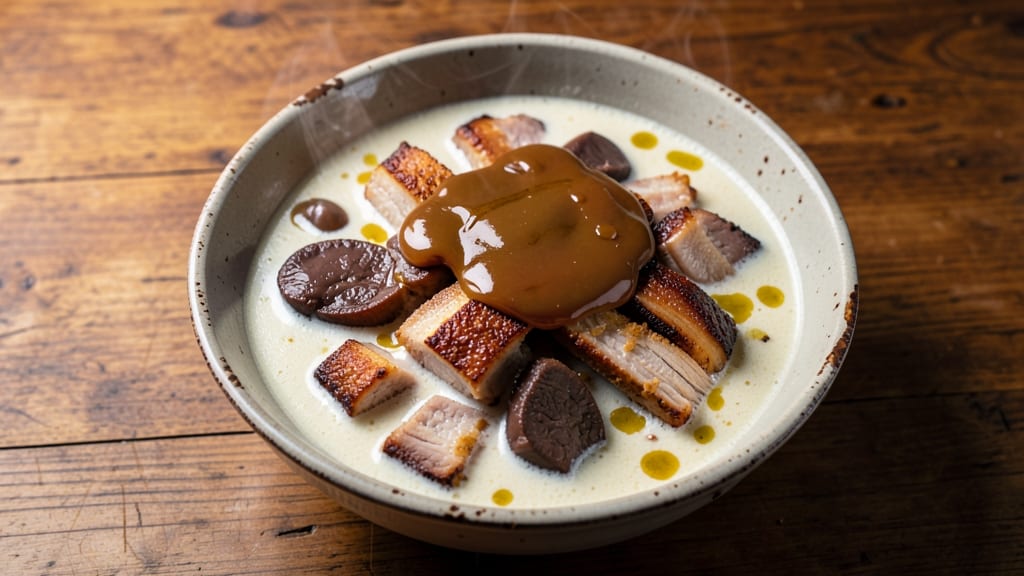
This Filipino-style balbacua soup recipe brings the rich, comforting flavors of the Philippines to your kitchen with tender pork, silky egg ribbons, and a deeply savory broth. 💛 Born from traditional Filipino stews, this dish combines pork belly or ribs with vinegar, liver, and vegetables for a hearty, aromatic experience that's perfect for family gatherings or cozy weeknight dinners.
The secret lies in slow simmering, which transforms tough cuts into melt-in-your-mouth perfection while infusing the broth with layers of umami and tang.
What sets balbacua apart is its unique blend of textures and flavors—crispy pork bits, tender meat, and delicate egg ribbons that dissolve into the broth.
The recipe relies on a few key ingredients: pork (traditionally belly or ribs), vinegar for brightness, liver for depth, and a mix of vegetables like potatoes, carrots, and cabbage. Unlike other stews, balbacua often includes offal, adding a rich, earthy note that balances the dish.
The broth is built through hours of simmering, allowing the flavors to meld into a harmonious, deeply satisfying soup.
By the time you serve this dish, you’ll have a steaming bowl of authentic Filipino comfort food—packed with protein, vegetables, and a broth so flavorful it’ll have everyone asking for seconds. The egg ribbons, a signature touch, add a luxurious texture that makes this soup feel special.
Whether you're serving it as a main course or pairing it with steamed rice, balbacua delivers warmth, tradition, and a taste of the Philippines in every spoonful.
This recipe is designed to be both authentic and approachable, making it perfect for home cooks looking to explore Filipino cuisine. The slow-cooking process ensures deep flavor, while the combination of ingredients creates a dish that’s hearty yet balanced.
Ready to bring a taste of the Philippines to your table? Let’s get started with the full recipe.
Ingredients for balbacua soup
Rich pork, tender vegetables, and delicate egg ribbons create this Filipino comfort classic.
| Ingredient | Amount | Notes |
|---|---|---|
| Pork Belly 🥓 | 3 lb | Cut into 2-inch chunks, skin on |
| Pork Ribs 🍖 | 2 lb | Baby back or spare ribs, trimmed |
| Pork Liver 🍖 | ½ lb | Fresh, trimmed of connective tissue |
| Canned Chicken Liver Spread 🥫 | 1 can | For depth of flavor (12 oz can) |
| White Vinegar 🍶 | ½ cup | For tangy brightness |
| Coconut Milk 🥥 | 1 can | Full-fat, 13.5 oz can |
| Large Potatoes 🥔 | 4 whole | Russet or Yukon gold, peeled |
| Carrots 🥕 | 4 whole | Medium-sized, peeled |
| Green Cabbage 🥬 | ½ head | Cut into wedges |
| Onions 🧅 | 2 whole | Yellow or red, sliced |
| Garlic Cloves 🧄 | 6 cloves | Minced for aromatic base |
| Tomatoes 🍅 | 4 whole | Roma or vine-ripened, crushed |
| Large Eggs 🥚 | 12 whole | For delicate ribbons |
| Bay Leaves 🌿 | 2 whole | Dried, for subtle depth |
| Ground Black Peppercorns 🌶️ | 1 tsp | Freshly cracked for heat |
| Salt 🧂 | 2 tsp | Kosher or sea salt |
| Soy Sauce 🍶 | 2 tbsp | For umami balance |
| Fish Sauce 🍶 | 1 tbsp | Red Boat preferred |
The pork cuts are non-negotiable—pork belly and ribs deliver that signature melt-in-your-mouth texture. Look for marbled pork belly at your local Asian market or butcher shop; it's worth the extra cost. The liver and chicken liver spread add depth, so don't skip them. For the best flavor, use fresh liver from a trusted source—it should smell clean and fresh, not metallic. If you can't find baby back ribs, spare ribs work just as well. The coconut milk should be full-fat for creaminess, and Red Boat fish sauce is a must for that authentic umami punch you'll find in Filipino kitchens.
No pork belly? Pork shoulder works in a pinch, though texture will differ slightly. Running short on fish sauce? Soy sauce with a splash of Worcestershire gets you close. Fresh liver too hard to find? Substitute with extra pork liver spread (up to 1.5 cans) or even mushrooms for earthiness. The egg ribbons are the star—use large eggs for the best texture, and make sure they're fresh (they'll whip up better). For the vegetables, baby carrots or pre-cut cabbage save time, but whole vegetables hold up better during simmering. The white vinegar should be pure—no flavored varieties here.
This soup tastes even better the next day, so make a big batch. Store leftovers in the fridge for up to 5 days or freeze for 3 months. The broth thickens as it cools, so add a splash of water when reheating. For serving, steamed jasmine rice is traditional, but crusty bread soaks up the broth beautifully. The egg ribbons can be made ahead and stored separately—they'll keep for 2 days in the fridge. If you're short on time, pre-cook the pork and vegetables first, then assemble everything at once for a quicker version.
Why You'll Love This Recipe
- One-Pot Magic: I swear by this recipe because it’s literally one pot—no chopping boards, no extra pans. The pork belly and ribs simmer right in the broth, while the liver spread adds depth without extra work. Honestly, the only prep is cutting the meat into chunks, and the vinegar does the rest of the flavor work for you.
- Umami Bomb: That canned chicken liver spread? It’s the secret weapon. It melts into the broth, giving this soup a rich, savory punch that’s dangerously addictive. The pork liver adds a deep, meaty sweetness, and the vinegar cuts through the richness—like a perfect balance of comfort and boldness.
- Weeknight Crowd-Pleaser: Between us, this is my go-to when friends drop by unannounced. It’s hearty enough to feed a group but simple enough to make when I’m exhausted. The leftovers? Even better the next day—if there are any, because it disappears fast.
- Budget-Friendly Luxury: I’ve made this for under $15 a serving, and it tastes like a fancy restaurant dish. Pork belly and ribs stretch far, the liver spread adds gourmet flair without costing a fortune, and the vinegar keeps it bright. Not the prettiest, but the taste makes up for it every time.
Step-by-step instructions for balbacua soup
This rich Filipino comfort dish transforms humble ingredients into a hearty, flavorful broth with tender pork and delicate egg ribbons.
🔥 Step 1: Sear the Pork for Deep Flavor
In a large Dutch oven, heat 1 tablespoon oil over medium-high heat. Working in batches, sear the 3 lb pork belly (cut into 2-inch chunks) and 2 lb pork ribs (trimmed) for 4-5 minutes per side until deep golden brown. This caramelization builds the soup's rich foundation.
Remove the pork and set aside. In the same pot, add 2 tablespoons oil and sear the 0.5 lb pork liver (trimmed) for 2-3 minutes per side until just cooked through. Transfer to a plate. Here's the thing—don't overcook the liver or it'll turn rubbery.
🍳 Step 2: Build the Aromatic Base
In the same Dutch oven, add 2 whole onions (sliced) and cook for 5 minutes until softened. Add 6 cloves garlic cloves (minced) and cook for 30 seconds until fragrant. Stir in 4 whole tomatoes (crushed) and cook for 3 minutes until the tomatoes break down into a chunky paste.
Add 1 can canned chicken liver spread, 2 tbsp soy sauce, 1 tbsp fish sauce, 2 tsp salt, and 1 tsp ground black peppercorns. Stir well and cook for 2 minutes to meld the flavors. This combination creates the signature umami depth of balbacua.
🥘 Step 3: Simmer the Pork and Vegetables
Return the seared pork to the pot. Add 8 cups water (enough to cover the pork), 0.5 cup white vinegar, and 2 whole bay leaves. Bring to a boil, then reduce heat to low and simmer uncovered for 1.5 hours until the pork is fork-tender and the broth has reduced slightly.
Add 4 whole large potatoes (peeled and cubed) and 4 whole carrots (peeled and sliced). Simmer for another 20 minutes until the vegetables are tender but still hold their shape. The potatoes should be soft enough to pierce with a fork but not falling apart.
🍳 Step 4: Finish with Coconut Milk and Cabbage
Stir in 1 can coconut milk and 0.5 head green cabbage (cut into wedges). Simmer for 10 minutes until the cabbage is tender. Taste and adjust seasoning with more salt or fish sauce if needed. The broth should be rich but not overpowering—balance is key.
Remove the pork pieces and vegetables with a slotted spoon and set aside. Strain the broth through a fine-mesh sieve into a clean pot, pressing gently on the solids to extract maximum flavor. Return the strained broth to the pot and keep it warm over low heat.
🍳 Step 5: Create the Egg Ribbons
In a separate bowl, whisk together the 12 whole large eggs until well beaten. Slowly drizzle the hot broth into the eggs while whisking constantly to create a thin, silky mixture. Here's the moment that matters: the temperature difference between the broth and eggs creates those signature delicate ribbons.
Working quickly, pour the egg mixture back into the pot of warm broth while stirring gently with a wooden spoon. The heat will immediately begin to cook the eggs into delicate strands. Stir for 2-3 minutes just until the egg ribbons form but remain tender—don't overcook or they'll become rubbery.
Pro Tips For Making Balbacua Soup
- Parboil Pork Belly First: Skip the raw pork belly straight into the pot—it’ll turn your balbacua into a greasy mess. Simmer the belly in water for 10 minutes first to render fat and tighten the meat, then drain before adding to the broth. (Yes, even if you’re impatient like me.)
- Trim Liver Thinly: Pork liver burns faster than you think. Slice it paper-thin (⅛-inch max) so it cooks through in seconds, not minutes. Thick slices turn bitter—trust me, I’ve ruined batches.
- Add Vinegar Last: Dump the white vinegar too early, and your broth will curdle like cottage cheese. Wait until the very end—just before serving—to brighten the flavors without wrecking the texture.
- Crowd the Pot: Pack the pork ribs and belly snugly in the pot. Less water = richer broth, and the meat stays tender by steaming off its own juices. (Your future self will thank you.)
Essential equipment for perfect results
Dutch Oven
This is your workhorse for balbacua—5-7 quart capacity is ideal for handling all the ingredients without overflowing. I swear by the Le Creuset Dutch oven for its even heat distribution and durable construction, but a Lodge cast iron works just as well if you're on a budget.
The thick base prevents scorching during the long simmer, and it retains heat perfectly for the egg ribbon stage. 🔥
Fine-Mesh Sieve
You'll need a stainless steel sieve with 0.04-inch mesh to strain the broth cleanly without losing flavor. The OXO Good Grips model is my go-to—it's sturdy, easy to clean, and fits snugly over your Dutch oven.
Skimping here means cloudy broth, and nobody wants that in their perfect balbacua. Press the solids gently but firmly to extract every last drop of flavor.
Slotted Spoon
A long-handled slotted spoon (at least 12 inches) is essential for removing pork and vegetables without disturbing the broth. I use a Cuisinart stainless steel one with a deep slot—it lets the broth drain while keeping your ingredients intact.
This is especially helpful when transferring the pork and veggies to a plate before straining. A regular spoon won't cut it here.
Wooden Spoon
For the egg ribbon stage, you need a heat-resistant wooden spoon (like Maple or Oak) to gently stir the eggs into the broth. Avoid metal—it can overcook the eggs instantly. My 14-inch bamboo spoon from Amazon is perfect for this delicate step.
The natural wood absorbs heat slowly, giving you better control over the ribbon formation. Trust me, this is where the magic happens. 💫
Fine-Mesh Whisk
A balloon whisk with siliconized wire (like the OXO Good Grips) is crucial for whisking the eggs and broth together smoothly. The siliconized coating prevents the eggs from sticking, and the balloon shape incorporates air perfectly for those signature ribbons.
I keep one dedicated to egg dishes—it's worth the investment for this step alone.
Instant-Read Thermometer
While not strictly necessary, an instant-read thermometer (like the ThermoWorks Thermapen ONE) helps ensure your pork reaches 165°F safely. It's especially useful if you're using tougher cuts of pork.
I check the thickest piece before straining the broth—this guarantees tender, juicy meat every time. The Thermapen is fast, accurate, and worth its price for serious home cooks. 🌡️
Nutrition facts
Frequently asked questions
Can I make balbacua without pork belly?
Yes, you can substitute with pork shoulder or pork ribs—just expect a slightly different texture. The key is using a cut with good fat content to keep the broth rich. If you're avoiding pork entirely, try beef chuck or lamb shoulder for a similar hearty experience. The slow cooking process will still work wonders with these alternatives.
Why does my balbacua broth taste too vinegary?
The 0.5 cup white vinegar adds tanginess, but if it's overpowering, you've likely used too much. Balance it with 1 extra tablespoon soy sauce or 1 teaspoon sugar to mellow the acidity. For future batches, start with 0.25 cup vinegar and adjust to taste after simmering. The broth should be tangy but not sour.
How do I make the egg ribbons look perfect?
The secret is temperature control! Use hot broth (not boiling) to temper the eggs gradually while whisking constantly. Stir gently for just 2-3 minutes—overcooking turns them rubbery. A wooden spoon works best, and avoid metal utensils that can cook the eggs too quickly. Practice makes perfect, but even slight imperfections still taste delicious!
Can I prepare balbacua in a slow cooker?
Brown the pork and liver first in a skillet, then transfer everything (except eggs) to a 6-quart slow cooker. Use low heat for 6-8 hours instead of simmering on the stove. For the egg ribbons, strain the broth into a pot, heat to 180°F, then whisk in the eggs as directed. The slow cooker method is perfect for busy days—just don't skip the initial searing!
What's the best way to store leftovers?
Store balbacua in an airtight container in the fridge for up to 5 days or freeze for 3 months. The broth thickens when chilled, so add a splash of water when reheating. Save the egg ribbons separately—they'll keep for 2 days in the fridge. Reheat gently on the stove, stirring occasionally, until warm throughout. The flavors actually improve after resting!