
Soups & Stews
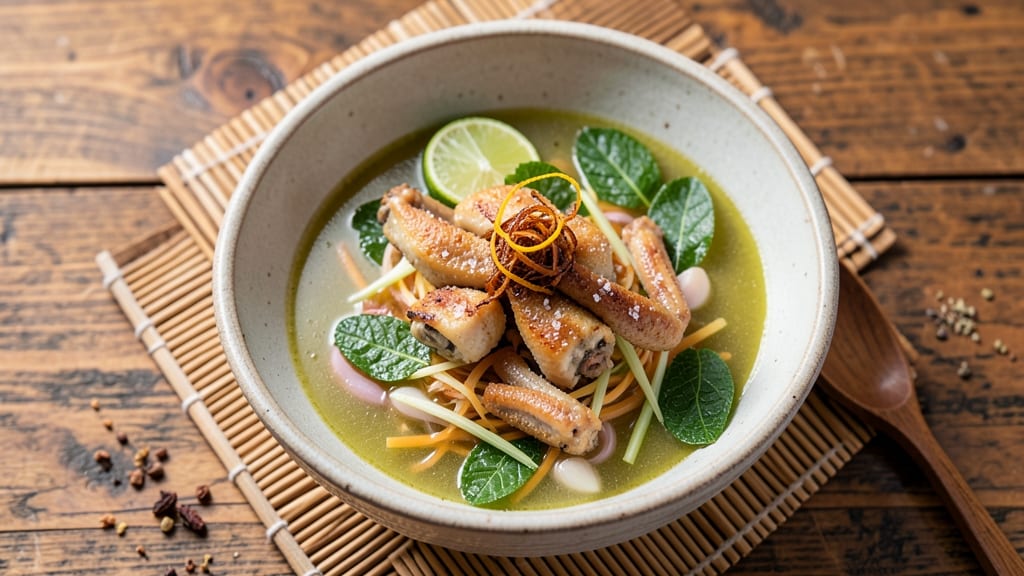
This fragrant frog soup recipe brings the bold flavors of Southeast Asian cuisine to your kitchen, where lemongrass and kaffir lime create an aromatic broth that's both complex and comforting. 💛 I've spent years perfecting the balance between tender frog meat and the vibrant herbal notes that define this dish, ensuring every spoonful delivers restaurant-quality depth.
The secret lies in proper preparation—starting with fresh, properly cleaned frog and building the broth layer by layer.
What makes this recipe truly special is the harmony of textures and flavors: the delicate, melt-in-your-mouth frog meat contrasts beautifully with the bright citrus notes of kaffir lime leaves and the earthy warmth of lemongrass. The broth simmers slowly, allowing all the aromatics to infuse while keeping the meat tender.
This isn't just a soup—it's an experience that transports you to the bustling markets of Thailand or Vietnam with every spoonful.
By the time you're done, you'll have a steaming bowl of soup where each ingredient plays its part—the crispy fried shallots add crunch, the chili oil brings heat, and the fresh herbs provide a final burst of brightness.
The frog meat should be tender yet still hold its shape, absorbing all the rich flavors of the broth. This is the kind of dish that makes weeknight cooking feel like a celebration.
Traditionally served with steamed jasmine rice, this soup is perfect for special occasions or when you want to impress guests with an authentic taste of Southeast Asia. The recipe scales beautifully, so you can make enough for a crowd or just enough for a cozy dinner for two.
Let's get started on creating this fragrant masterpiece.
Ingredients for frog soup
Fresh frog, fragrant lemongrass, and zesty lime—these aromatic ingredients create a soup that's both comforting and exotic.
| Ingredient | Amount | Notes |
|---|---|---|
| Fresh Frogs 🐸 | 1 ½ lb | Live, cleaned and prepared |
| Lemongrass Stalks 🌿 | 4 whole | Bruised and cut into 2-inch pieces |
| Kaffir Lime Leaves 🍋 | 6 whole | Torn into large pieces |
| Galangal 🍃 | 3 oz | Sliced into thin pieces |
| Garlic Cloves 🧄 | 8 cloves | Crushed for aroma |
| Shallots 🧅 | 6 whole | Sliced thinly for frying |
| Thai Chili Peppers 🌶️ | 4 whole | Sliced lengthwise for heat |
| Fish Sauce 🍶 | 2 tbsp | Red Boat brand preferred |
| Coconut Milk 🥥 | 1 cup | Full-fat for creaminess |
| Vegetable Oil 🫒 | ½ cup | For frying shallots |
| Fresh Thai Basil Leaves 🌿 | ½ cup | Chopped for garnish |
| Lime Juice 🍋 | 2 tbsp | Freshly squeezed |
| Salt 🧂 | 1 ½ tsp | Adjust to taste |
| White Peppercorns 🌶️ | ½ tsp | Ground for finish |
| Jasmine Rice 🍚 | 2 cups | For serving |
The frog is the heart of this dish, so source it from a trusted supplier—look for live frogs at Asian markets or specialty seafood shops. Red Boat fish sauce is non-negotiable for authentic umami; don't skimp on the quality. Lemongrass and galangal should be fresh, vibrant, and free of brown spots. Thai Kitchen or local Asian grocers usually carry these, but if you can't find galangal, substitute with ginger at half the amount. The kaffir lime leaves add that signature citrusy aroma—freeze extras to preserve their potency for future recipes.
No fresh galangal? Ginger works in a pinch, though it's not identical. Short on lemongrass? Double the ginger and add a splash of lime juice to compensate. The coconut milk should be full-fat—light versions won't give that creamy richness. For the shallots, fry until crispy for that perfect crunch contrast. And if you can't find Thai chilies, bird's eye chilies work beautifully—they're just hotter, so adjust to taste.
Broth keeps best for 3 days in the fridge, but the frog meat is at its peak the first day. Portion into containers with some broth to keep it moist. The fried shallots? Store them separately in an airtight container—they'll stay crisp for 2 days. For leftovers, reheat gently on low heat, adding a splash of water to restore richness. Freeze the broth without the frog meat for up to 3 months—just thaw and add fresh frog when ready to serve.
Why You'll Love This Recipe
- One-Pot Magic: Honestly, this soup comes together in a single pot with zero fuss—just the frogs, lemongrass, and galangal simmering until the broth turns golden. No chopping mountains of veggies or last-minute ingredient scrambles; the hardest part is finding the frogs (and yes, they’re worth it).
- Herb-Packed Punch: That first sip? The garlic and kaffir lime leaves hit like a bright, citrusy hug, while the galangal adds a ginger-like depth that lingers. It’s the kind of flavor that makes you pause mid-bite—like a secret Southeast Asian restaurant in your kitchen.
- Weeknight to Dinner Party: Between us, this is my go-to for lazy Fridays and when unexpected company shows up. The frogs add a protein punch that feels special, but the prep is so simple even my over-scheduled self can handle it. Serve it steaming in bowls, and suddenly, you’re the host who nailed it.
- Budget-Friendly Leftovers: Frogs are cheaper than chicken in many markets, and this recipe stretches easily for three meals. The broth gets richer overnight, so reheating it the next day tastes even better—proof that good food doesn’t have to break the bank. (My kids beg for seconds, and that’s the real win.)
Step-by-step instructions for fragrant frog soup
Here's how to create this aromatic Thai masterpiece with bold flavors and tender frog meat.
🍳 Step 1: Prepare the Aromatic Base
Heat the 0.5 cup vegetable oil in a large pot over medium heat. Add the 6 whole sliced shallots and fry until golden brown—about 3-4 minutes. This creates the flavor foundation for your soup. Remove the shallots with a slotted spoon and set aside.
In the same pot, add the 4 whole lemongrass stalks, 6 whole kaffir lime leaves, 3 oz sliced galangal, and 8 cloves crushed garlic. Sauté for 2-3 minutes until fragrant—you should smell that bright citrusy aroma from the lemongrass and lime leaves. This is where the magic happens, so don't rush this step.
🔥 Step 2: Build the Broth and Cook the Frogs
Add 6 cups water to the pot (enough to cover the frogs) and bring to a gentle boil. Add the 1.5 lb fresh frogs and cook for 5-6 minutes until they float to the surface and their legs turn translucent. This indicates they're perfectly cooked through.
Carefully remove the frogs with a slotted spoon and set them aside. Strain the broth through a fine-mesh sieve into a clean pot, pressing on the aromatics to extract every last bit of flavor. Discard the solids—you want pure, fragrant broth for your soup.
🥘 Step 3: Create the Signature Flavor Profile
Return the strained broth to the pot and add the 2 tbsp fish sauce, 1 cup coconut milk, 1.5 tsp salt, and 0.5 tsp ground white peppercorns. Stir well and bring to a gentle simmer. Add the reserved golden brown shallots back to the pot.
Here's the thing—this is where the soup gets its signature balance. The coconut milk adds creaminess while the fish sauce brings that umami depth. Let the soup simmer for 5 minutes to let all the flavors meld together. Taste and adjust seasoning if needed—you want it perfectly balanced between sweet, salty, and tangy.
🍽️ Step 4: Finish and Serve
Return the cooked frogs to the pot and gently warm through for 2 minutes. Add the 4 whole sliced Thai chili peppers and 2 tbsp lime juice—this adds just the right amount of heat and bright citrus finish. The chilis should be visible in each bowl for that authentic presentation.
Ladle the hot soup over 2 cups cooked jasmine rice in serving bowls. Garnish each serving with 0.5 cup chopped fresh Thai basil leaves just before serving. The basil adds freshness that cuts through the richness of the coconut milk. Serve immediately while the frogs are still warm and the broth is steaming.
Pro Tips For Making Frog Soup
- BLEACH FROGS FIRST: I learned this the hard way—raw frog meat tastes like mud if not prepped right. Soak the frogs in saltwater (1 cup salt to 4 cups water) for 20 minutes, then rinse thoroughly. This removes the slimy coating and keeps the broth clear. (Yes, it’s messy, but your soup will thank you.)
- SMASH GALANGAL LIKE IT’S GARLIC: Skip the grating—crush the galangal with the flat side of your knife first, then chop. It releases more oil and flavor without turning your broth into a pulp. (I used to grate it fine, and the soup just smelled like wet cardboard.)
- LOW AND SLOW FOR FROGS: Don’t rush the simmer—keep it at a gentle bubble, not a rolling boil. Frogs cook in 20-25 minutes, but if you boil them, they’ll turn rubbery. A thermometer helps: aim for 170°F (77°C). (Your future self will curse you if you skip this.)
- STEAM THE LIME LEAVES: Tear the kaffir lime leaves in half and bruise them with your palm before adding to the pot. This releases their aroma without bitterness. (Pro move: Add them 10 minutes before serving so they infuse but don’t overpower.)
Pro cooking tips for perfect results
Frog Prep Essentials
First things first—never underestimate the frog prep! I always source my frogs from trusted suppliers at Asian markets, where they're typically cleaned and ready to cook.
For live frogs, you'll need to clean them thoroughly by rinsing under cold water, removing any remaining dirt, and patting them dry with paper towels. The key is to keep them whole until cooking to preserve their shape and tenderness.
I like to use a sharp chef's knife to make a small incision on the belly before cooking—this helps them cook more evenly. 🐸
Broth Infusion Secrets
The soul of this soup lies in the aromatic broth, so don't rush the infusion step. After frying the shallots, I bruise the lemongrass stalks by gently pounding them with the side of my knife before slicing. This releases more oils and intensifies the flavor.
For the galangal, I slice it as thinly as possible—almost like matchsticks—to maximize surface area. Simmer the aromatics for at least 10 minutes before adding the frogs to let those flavors meld deeply. 🌿
Fish Sauce Balance
This is where many home cooks go wrong—the fish sauce needs to be balanced perfectly. Start with 2 tablespoons of Red Boat fish sauce (the gold standard) and taste as you go.
If you're serving to guests who prefer milder flavors, you can reduce it to 1.5 tablespoons and compensate with a splash of coconut milk. The secret is to add the fish sauce gradually while tasting—this soup should sing with umami without being overpowering.
I often add a pinch of sugar (about ½ teaspoon) to round out the flavors if the broth tastes too sharp. 🍶
Coconut Milk Technique
Never add coconut milk directly to the boiling broth—it will curdle and ruin the texture. Instead, I strain the broth first, then stir in the coconut milk off the heat.
For extra richness, I heat the coconut milk separately in a small saucepan until it's just steaming (about 2-3 minutes
And here's my pro tip: use full-fat coconut milk—light versions lack the body this soup deserves. 🥥 Thai chilies pack serious heat, so adjust to your tolerance. I like to leave the chilies whole and sliced lengthwise so guests can see them and remove them if needed. For a milder version, remove the seeds and membranes first. If you're feeling adventurous, add a ½ teaspoon of chili oil at the end for extra depth. Always taste the broth before adding the chilies—this soup should dance on your palate, not overwhelm it. 🌶️ The last touches make all the difference. I always garnish with fresh Thai basil right before serving—it adds a bright, almost minty freshness that cuts through the richness. For extra visual appeal, I sprinkle the soup with crispy fried shallots and a few drops of lime juice around the rim of the bowl. The contrast of textures and temperatures (hot soup, cool lime, crispy shallots) is what makes this dish truly special. Serve immediately while everything is at its peak! ✨Chili Heat Control
Final Garnish Magic
Nutrition facts
Frequently asked questions
Where can I find fresh frogs for this recipe?
Look for live frogs at Asian markets, specialty seafood shops, or online suppliers that specialize in exotic meats. Many urban areas with large Asian communities have vendors selling them cleaned and ready to cook. If you can't find fresh frogs, some international grocery stores carry frozen frog legs as an alternative.
Can I substitute galangal if I can't find it?
Yes! Use ginger as a substitute, but reduce the amount to half what the recipe calls for. For example, if the recipe calls for 3 oz galangal, use 1.5 oz ginger instead. Galangal has a citrusy, peppery flavor that ginger lacks, but it still adds warmth to the broth.
How do I know when the frogs are properly cooked?
The frogs are done when they float to the surface and their legs turn translucent, which typically takes about 5-6 minutes of simmering. Overcooking can make them rubbery, so keep a close eye on them. If you're unsure, cut into one—it should be tender and opaque all the way through.
Can I make this soup ahead of time?
The broth can be made 3 days ahead and stored in the fridge, while the fried shallots keep for 2 days in an airtight container. Reheat the broth gently and add fresh frog meat when ready to serve. The texture and flavor will be just as vibrant as when freshly made.
What if I don't like spicy food?
No problem! Simply remove the seeds and membranes from the Thai chilies before adding them to the soup. For an even milder version, you can omit the chilies entirely and add a pinch of sugar or a splash of lime juice to balance the flavors without heat.